
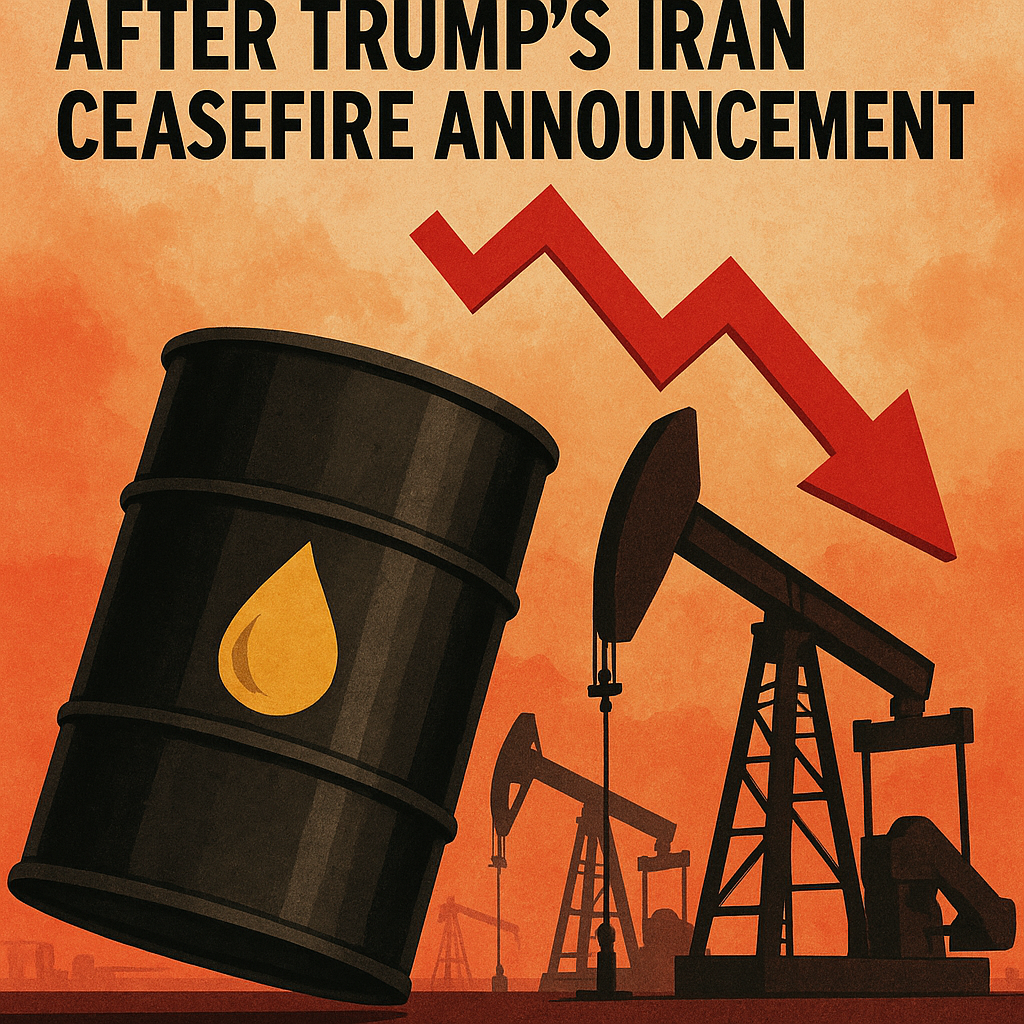
Oil Prices Drop Sharply After Trump’s Iran Ceasefire Announcement

Oil Prices Drop Sharply After Trump’s Iran Ceasefire Announcement
In a surprising diplomatic twist, oil prices have experienced a significant drop following former President Donald Trump’s announcement of a two-week ceasefire in the ongoing tensions with Iran. This sudden pivot in the geopolitical landscape has stirred a flurry of reactions, illustrating the intricate relationship between political decisions and global oil markets.

Understanding the Immediate Impact on Oil Prices
The announcement of the ceasefire has led to a near-immediate response in oil markets, with prices plummeting. According to Sky News, crude oil futures fell by more than 4% following the announcement, illustrating how sensitive the market is to geopolitical shifts. Al Jazeera corroborates this, noting that investors view the cessation of hostilities as a stabilizing factor that could potentially enhance oil supply.


Market analysts have diverse views on what this ceasefire means for future oil prices. On one hand, there is optimism that the ceasefire may lead to a more sustained period of stability in the Middle East, a region critical to global oil supply. However, there remains a counter-narrative among some experts who caution that the volatile nature of the region could reignite tensions, ultimately affecting oil supply.


A Mixed Bag of Perspectives
One perspective from RT emphasizes the unpredictable nature of the Iranian situation, stating, “While a ceasefire may temporarily ease market fears, the underlying tensions are far from resolved.” As tensions can flare up again, especially over issues like U.S. sanctions and Iran’s nuclear ambitions, this viewpoint suggests that the fall in oil prices may only be a brief respite.
On the other hand, Al Jazeera argues that, historically, periods of reduced hostility typically allow for increased oil production and a more stable supply chain. They highlight previous instances in which such diplomatic efforts have led to a decrease in oil prices, asserting that current market conditions could stabilize if negotiations lead to longer-lasting resolutions.
The Broader Consequences for Global Economies
The recent drop in oil prices is not merely an isolated occurrence; it impacts various global economies differently. Countries that rely heavily on oil exports, such as Saudi Arabia and Iraq, could face budgetary challenges if prices remain low for any extended period. Conversely, nations that import oil stand to benefit from the lowered costs, potentially aiding their economic recovery efforts post-pandemic.
It’s also worth noting the energy transition underway in many nations, which may temper the effects of fluctuating oil prices. For instance, countries like Canada and the United States are investing heavily in alternative energy sources and technologies, creating a diversified energy economy. This diversification could mitigate the economic shocks experienced during periods of volatility in oil prices.
What Lies Ahead: A Clouded Outlook
While the ceasefire is a welcome development, the uncertainty surrounding future Iranian-U.S. relations looms large. Some analysts remain skeptical about the longevity of this ceasefire. Quotes from market experts suggest that while the short-term implications favor a decline in oil prices, the longer-term scenario could depend on the durability of diplomatic progress.
Moreover, ongoing discussions in international forums to address energy security could also play a pivotal role in shaping future oil price trends. The importance of multilateral agreements and cooperative actions cannot be overstated when navigating such complex global dynamics.
Conclusion
In summary, Trump’s announcement has triggered a mixed array of reactions across the oil market and broader economic landscapes. The immediate decline in oil prices reflects a temporary alleviation of tensions, but the overall geopolitical environment remains unstable. While some believe this ceasefire could be a turning point for more stable oil prices, the unpredictable spirit of global politics reminds us that this development offers no guarantees.
As we continue to watch the geopolitical landscape unfold, the interplay between diplomacy and oil prices will remain a focal point for researchers and economists alike. Further insights will depend on how negotiations pan out and whether they lead to sustainable peace or renewed instability.















