NATO Allies Foil Alleged Russian Plot to Sabotage Arctic Undersea Cables
The United Kingdom, Norway and the United States disrupted an alleged Russian GUGI operation near Svalbard in spring 2026. The vessels were monitored and confronted before leaving, and no undersea cables were damaged.
The incident raised concerns about potential Russian sabotage of critical European infrastructure. NATO allies have expanded surveillance through initiatives such as Baltic Sentry and Nordic Warden, as the cables carry satellite data, internet traffic, financial transactions and government communications.
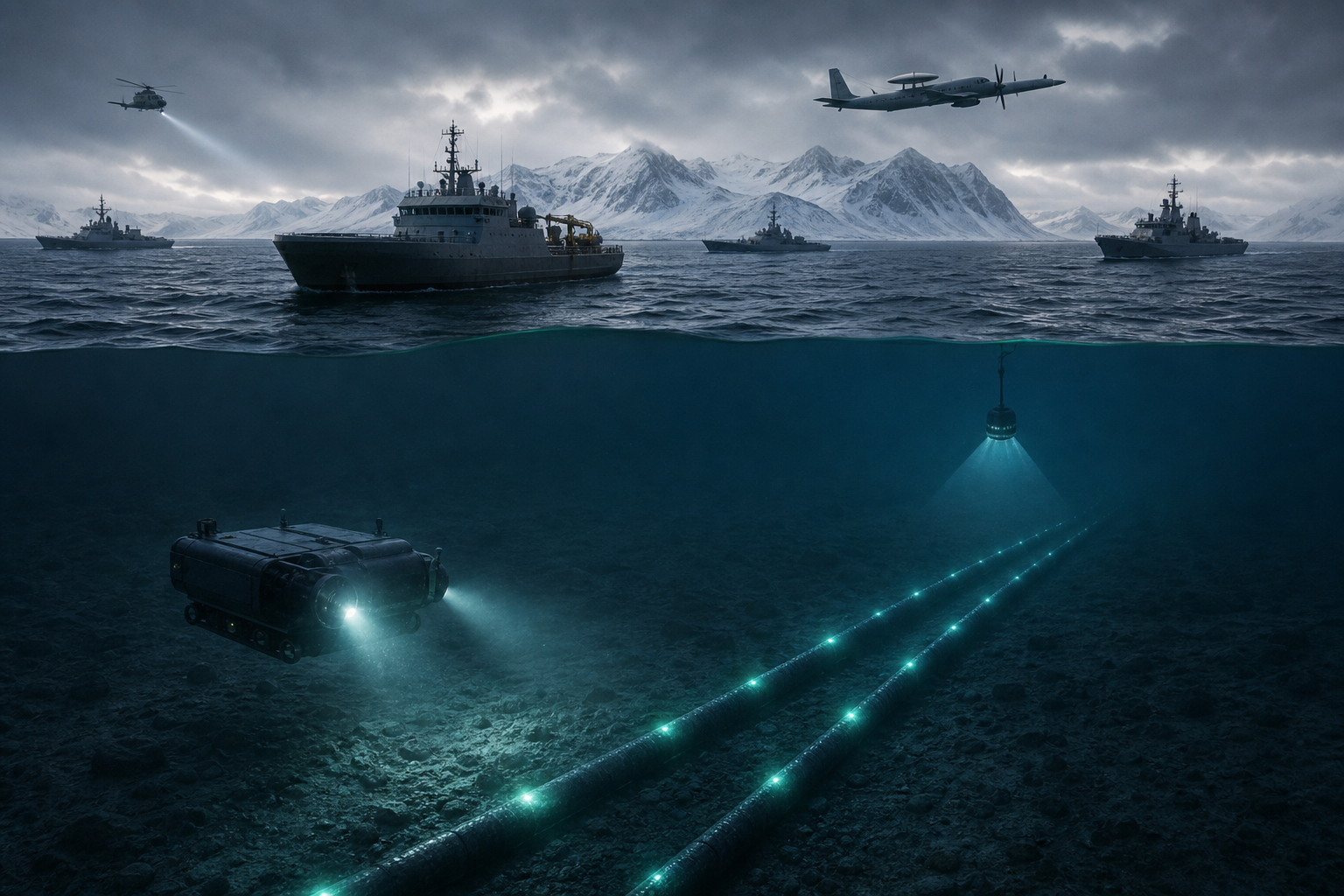
Deep in the Arctic waters near Norway’s Svalbard archipelago, NATO allies disrupted a covert Russian operation aimed at practicing how to disable critical undersea communication cables. The operation took place in spring 2026 and involved Russia’s GUGI deep-sea warfare unit.

The United Kingdom, Norway and the United States tracked and confronted the Russian vessels during the operation. Western officials said the Russian vessels were prevented from completing the exercise and eventually left the area. No undersea cables were damaged during the incident.

The cables near Svalbard are strategically important because they connect the Arctic archipelago with mainland Norway and carry large amounts of satellite data. Two fiber-optic cables stretch about 1,400 kilometers and reach depths of roughly 2,700 meters below the sea.

The incident has increased concerns among Western officials that Russia could be preparing for potential sabotage against critical infrastructure in Europe. Undersea cables are essential not only for internet communications but also for financial transactions, government communications and the transfer of large amounts of digital data.
NATO countries have increased surveillance of underwater infrastructure following several incidents involving cables and pipelines in European waters. Initiatives including NATO’s Baltic Sentry and the UK-led Nordic Warden have been created to strengthen monitoring and protection of critical infrastructure.
Norwegian Defence Minister Tore Sandvik said the joint operation sent a clear message that Russia could not operate covertly around critical infrastructure without being detected. Russia has consistently denied carrying out sabotage operations against NATO countries, while the latest incident adds to growing concerns about the security of Europe’s increasingly important undersea networks.