From “Hidden Work” to “Arrest at Home”: Afghan Women’s Last Economic Lifeline Is Closing
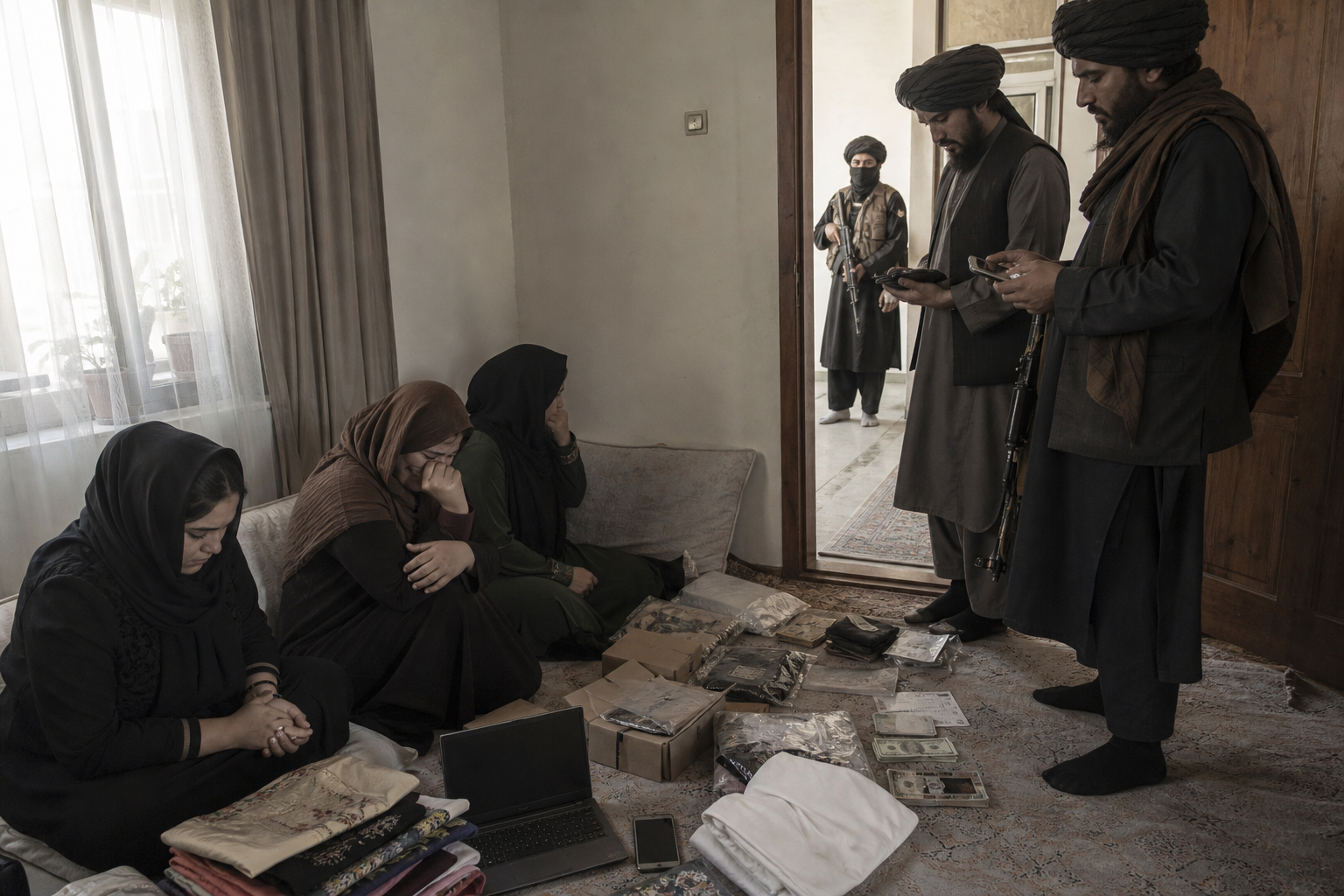
Taliban morality police detained at least 10 Afghan women running online businesses from a residential unit in western Kabul, seizing goods, cash, phones, and identity documents. Some were released, while others remain detained. The arrests have prompted some women to suspend online sales, despite relying on the income for household expenses and medical care.
The detentions coincide with broader restrictions and arbitrary arrests targeting women, who are barred from education, most employment, and many public spaces. Activists and UN officials warn that growing repression and Afghanistan’s underfunded humanitarian response are worsening women’s economic vulnerability and limiting their remaining means of livelihood.
AnalysisTaliban morality police detained at least 10 Afghan women running online businesses from a residential unit in western Kabul last week, according to local sources. Goods, cash, mobile phones, and identity documents were seized. Some women were later released; others remain in detention. The fate of those still held is unknown.Since 2021, Afghan women have been systematically erased from public life — banned from secondary and higher education, barred from most jobs, and restricted from parks, gyms, and public spaces.

In this vacuum, online selling became the only remaining way for many women to earn a living. It was work done from home, invisible to the morality police, and it kept families fed. That gray zone is now closing.One woman, who asked to be identified only as Kubra, shut down her online shop after hearing about the raids. “I closed my shop for a few days,” she said. “My mental state collapsed.

I was afraid to continue.”Another woman, Zulaikha, supports her family and pays for her sick father’s treatment through online sales. “My only hope is this online business,” she said. “If I can’t work, I don’t know how to cover my family’s expenses.”The detentions come amid a broader wave of arbitrary arrests of women in Kabul. Taliban morality police have increased patrols in neighborhoods like Taimani, detaining women who leave home to meet basic needs.

In recent months, at least 449 people — women and men — have been subjected to corporal punishment for issues ranging from dress code to beard length to listening to music. UN High Commissioner for Human Rights Volker Türk has described the systemic exclusion of Afghan women as “gender apartheid,” warning that “with every month that passes, the de facto authorities are normalizing and institutionalizing repression.”Afghanistan’s humanitarian crisis is deepening. Some 21.9 million people — 45 percent of the population — need humanitarian assistance. The 2026 response plan is only 30 percent funded. Narges Nehan, an Afghan women’s rights activist, told the UN Security Council: “Solidarity must translate into action. Afghan women cannot wait another year for the world to decide what to do with Afghanistan.
“The detention of women online sellers sends a clear message: even the private space of the home is no longer safe for women’s economic activity. Online commerce had become a quiet form of resistance — a way for women to survive without being seen. Closing this door doesn’t just deepen economic vulnerability. It eliminates the last remaining model of quiet resilience for millions of Afghan women. In a world accused of “deafening silence” on Afghanistan, the Taliban are not responding to international pressure. They are tightening control over women who were trying to survive in silence.