AI-Driven Diagnostics: Best Hyper-Customized Daily Cosmetic Routines
AI-driven diagnostics are changing the way people think about skincare and beauty, moving daily cosmetic routines away from generic advice and toward highly personalized care. Instead of following a one-size-fits-all regimen, consumers can now use intelligent tools that analyze skin condition, lifestyle habits, climate exposure, product history, and even short-term changes like stress or sleep. The result is a shift toward hyper-customized routines that adjust to the individual in real time, making cosmetic care more targeted, efficient, and potentially more effective.

What AI-Driven Diagnostics Mean for Beauty
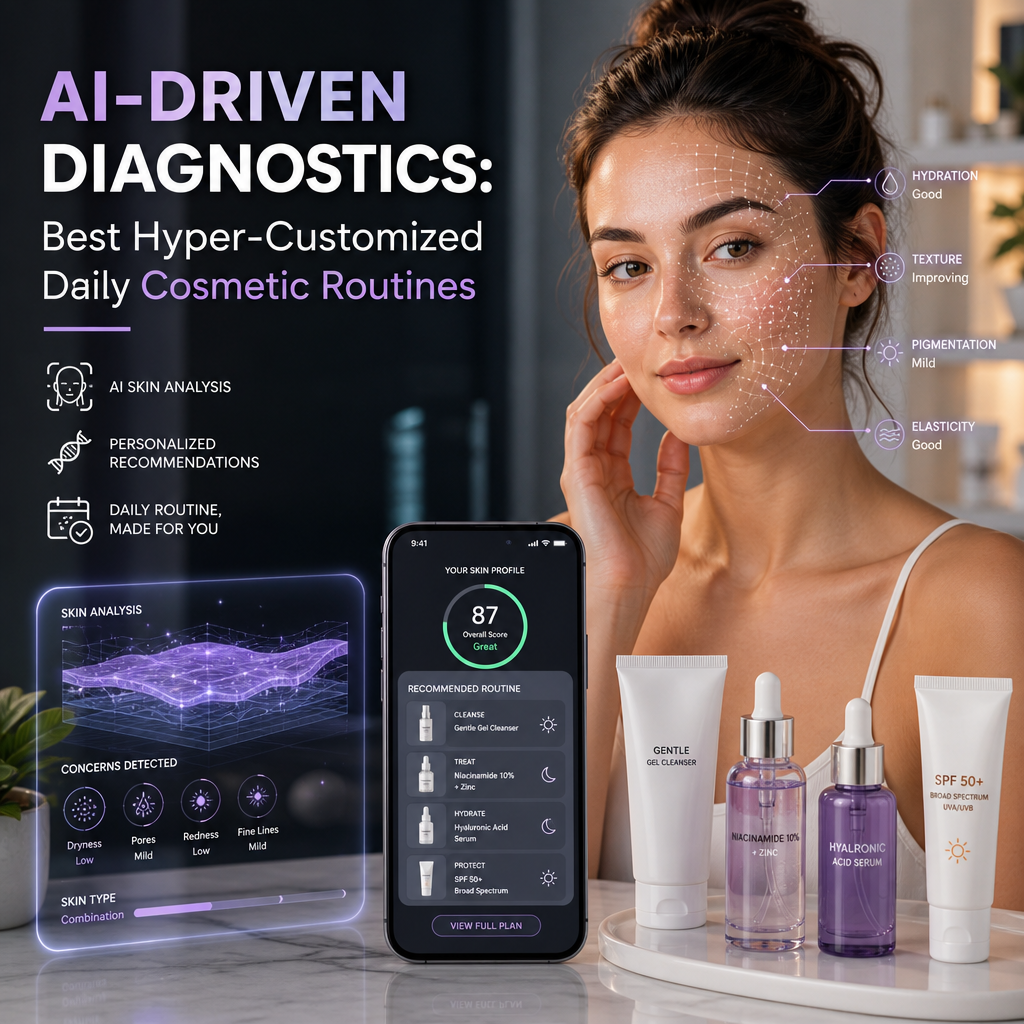
At its core, AI-driven diagnostics use machine learning, image analysis, and data interpretation to evaluate the condition of skin and cosmetic needs. These systems can scan a face through a smartphone camera, compare it against large datasets, and identify concerns such as dryness, oiliness, redness, pigmentation, enlarged pores, or early signs of irritation. Some platforms go further by combining visual input with questionnaires about age, environment, product use, and personal goals.

This is a major departure from traditional beauty advice, which often relies on broad skin types like oily, dry, combination, or sensitive. While those categories are still useful, they rarely capture the full picture. Two people with the same skin type may need completely different care because of differences in diet, hormone cycles, city pollution, sun exposure, or routine habits. AI helps reveal these nuances and translate them into practical product recommendations.

The Rise of Hyper-Customized Daily Cosmetic Routines
Hyper-customized routines are built around the idea that skincare should not remain static. Skin changes from morning to evening, season to season, and year to year. A routine that works in winter may feel too heavy in summer. A product that is helpful during a dry week may become irritating after travel or increased sun exposure. AI makes it possible to respond to these changes with more precision.
Instead of recommending the same cleanser, serum, and moisturizer for months on end, AI-driven tools can suggest adjustments based on current skin needs. For example, the system may recommend a stronger hydrating serum after detecting low moisture levels, or a lighter formula if excess oil is becoming more prominent. It may also flag a product ingredient that appears linked to irritation in a user’s ongoing history.
This adaptability is one of the main reasons the beauty industry is embracing AI. Consumers increasingly expect experiences that feel tailored, convenient, and smart. Just as streaming platforms suggest content and fitness apps adjust workouts, cosmetic routines are now being personalized with data-backed guidance.
How AI Analyzes Skin and Routine Patterns
The value of AI-driven diagnostics lies in pattern recognition. A single snapshot can provide useful information, but the real power comes from tracking changes over time. By comparing images taken over days or weeks, AI tools can identify trends that are easy for people to miss.
Some systems analyze texture, tone, and pore appearance. Others study how different parts of the face respond to products or environmental stressors. Advanced platforms may combine facial analysis with external data such as weather, humidity, UV index, and pollution levels. In this way, the routine recommendation is not just based on skin type, but on a broader view of the person’s daily reality.
This layered analysis can help answer questions such as:
- Is the current moisturizer too rich for the climate?
- Is redness increasing after a new cleanser was introduced?
- Does the skin need more barrier support after travel?
- Are breakouts more likely during stressful periods?
By turning observations into actionable insights, AI helps users make more informed choices without having to guess which products are working.
Benefits of AI-Driven Diagnostics in Cosmetic Care
One of the biggest benefits of AI-driven diagnostics is efficiency. Many people spend significant money and time trying products that do not suit them. Personalized recommendations reduce trial and error, which can lead to fewer wasted purchases and less irritation from unsuitable ingredients.
Another advantage is consistency. Most people are not experts in ingredient lists, skin barrier function, or formulation science. AI tools can make complex information more accessible by simplifying it into practical daily guidance. That can be especially valuable for users with acne, sensitivity, hyperpigmentation, or other concerns that often require a more careful routine.
AI-driven diagnostics may also improve long-term habits. When users receive feedback tailored to their current skin, they are more likely to follow a routine consistently. They may be encouraged to use sunscreen more reliably, avoid over-exfoliation, or introduce actives gradually instead of all at once. This kind of support can help prevent common mistakes that lead to irritation or disappointment.
The Role of Daily Cosmetic Personalization
Daily cosmetic routines are no longer just about cleansing and moisturizing. They often include serums, exfoliants, treatment masks, SPF, eye care, and makeup products that interact with the skin throughout the day. AI can help personalize each step, not only by suggesting which products to use, but also when and how to use them.
For example, a morning routine may prioritize hydration, antioxidant support, and sun protection, while an evening routine may focus on repair and treatment. AI can adjust those steps based on the skin’s observed condition. If the skin appears stressed or dehydrated, the system might recommend reducing active ingredients temporarily and increasing soothing care. If the skin looks balanced and resilient, it may suggest adding a targeted treatment more confidently.
This level of personalization also extends into cosmetics beyond skincare. Foundation shade matching, finish preferences, and compatibility with skin condition are increasingly influenced by AI. A user’s preferred makeup look can be paired with product recommendations that complement current skin texture and tone rather than simply matching a static profile.
Challenges and Considerations
Despite its promise, AI-driven diagnostics is not without limitations. Accuracy depends heavily on the quality of data, image conditions, and algorithm design. Lighting, camera quality, and user input can affect results. A poorly lit selfie may lead to misleading conclusions, and a system trained on narrow datasets may not perform equally well across all skin tones or skin concerns.
Privacy is another important consideration. Facial scans and cosmetic habits are personal data, and users need transparency about how that information is stored and used. Trust will remain essential as these tools become more common. Brands and platforms must be clear about security, consent, and the boundaries of diagnostic claims.
It is also important to recognize that AI should support, not replace, professional care when needed. Persistent rashes, severe acne, or sudden changes in skin may require evaluation by a dermatologist or healthcare professional. AI can help with routine guidance and early detection, but it should not be treated as a substitute for medical expertise.
What This Means for the Future of Beauty
The future of beauty is likely to be increasingly data-informed, adaptable, and user-centric. AI-driven diagnostics are setting the stage for a new standard where cosmetic products are not chosen just because they are popular or suitable for a general audience, but because they align with a person’s changing needs.
As technology improves, personalization may become even more detailed. Future systems could factor in hormonal patterns, sleep quality, emotional stress, medication use, or biometric data from wearable devices. This would make daily routines even more responsive, transforming cosmetic care into an ongoing feedback loop rather than a fixed regimen.
For brands, this shift creates opportunities to design smarter products and more meaningful customer experiences. For consumers, it offers the chance to better understand their skin and make choices that feel more precise and less wasteful. The beauty routine of the future is likely to be less about following trends and more about listening to the skin itself.
Conclusion
AI-driven diagnostics are redefining daily cosmetic routines by making them more adaptive, individualized, and data-driven. Instead of relying on broad assumptions, users can now benefit from personalized guidance that reflects real-time skin conditions and changing environmental factors. While challenges around privacy, accuracy, and accessibility remain, the direction is clear: beauty is becoming more intelligent, more responsive, and far more customized than ever before.