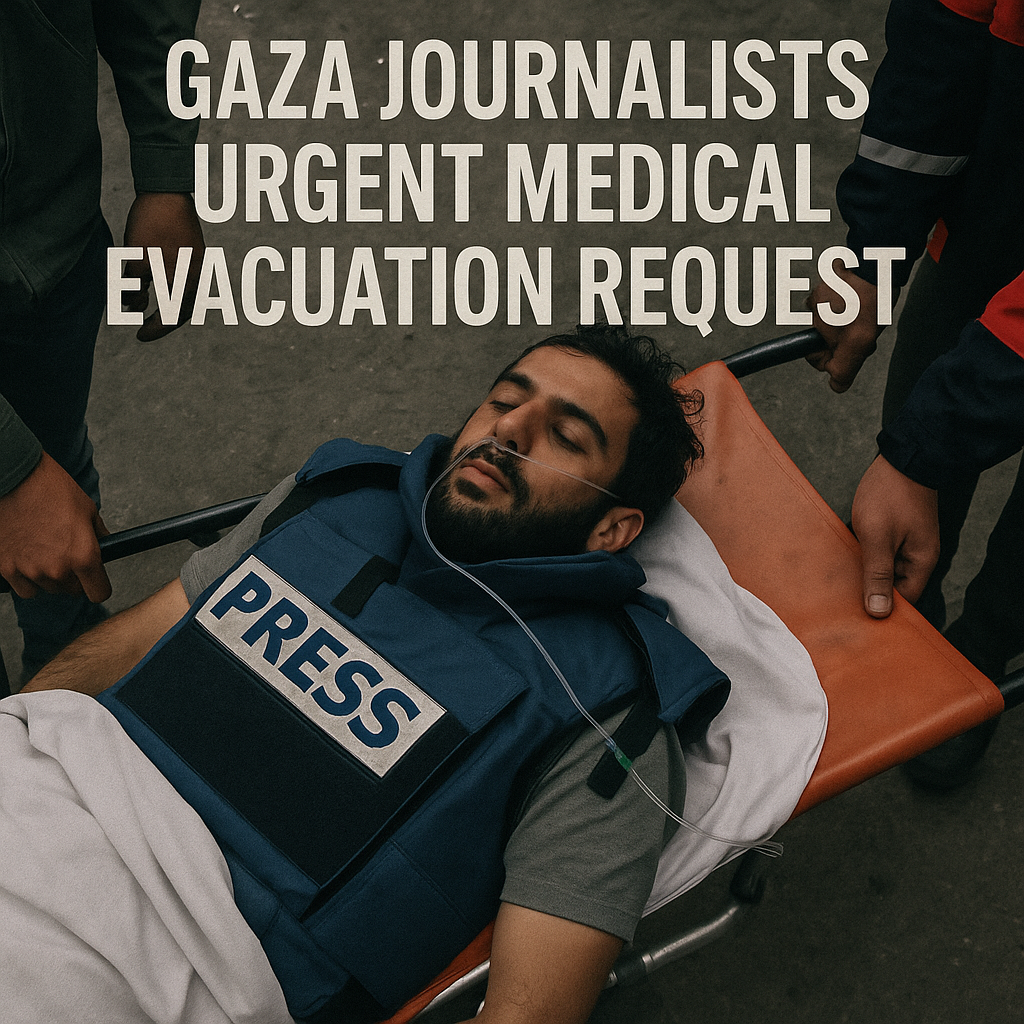
Gaza Journalists Urgent Medical Evacuation Request
Gaza Journalists Urgent Medical Evacuation Request
The ongoing conflict in Gaza has raised serious concerns about the safety and well-being of journalists covering the situation. Recent reports have highlighted the pressing need for medical evacuations for wounded journalists who find themselves at risk amid escalating violence. This call for urgent intervention has drawn attention from various stakeholders, revealing differing perspectives on how best to address the plight of these individuals.

The Situation on the Ground
In Gaza, the environment for journalists has become increasingly hazardous. Coverage from Al Jazeera indicates that several journalists have suffered injuries while reporting on the ground, a reflection of the broader dangers faced by media personnel in conflict zones. Eyewitness accounts reveal that heavy shelling and airstrikes have not only undermined civilian safety but also targeted news teams that strive to deliver critical updates to the world.

Sky News elaborates on this precarious situation, detailing how certain areas have effectively become no-go zones for journalists due to the intensified military actions. The fear of injury or death looms large, compelling many reporters to adapt their methods of coverage. This predicament has sparked urgent calls for evacuation to ensure the health and safety of those injured.

Perspectives on Medical Evacuation
The situation has catalyzed differing opinions surrounding the urgent medical evacuation request for journalists in Gaza. On one side, the international community has been called upon to provide immediate support—an action deemed not just humanitarian, but essential for the integrity of journalism itself. Supporters argue that freeing journalists from dangerous conditions is a moral imperative, reinforcing the need for a free press that can operate without fear of censorship or harm.
Conversely, there are concerns regarding the complexities of such evacuations, particularly in a conflict zone. RT News has reported that the logistics of conducting medical evacuations involve numerous risks, including the potential for further violence during transit. Critics emphasize the necessity of a coordinated approach that involves local authorities, medical teams, and international organizations to ensure that these efforts are safe and efficient. Failure to properly coordinate may not only endanger the lives of evacuated journalists but could also hinder the operations of rescue teams.
The Broader Implications
The urgent medical evacuation request for Gaza journalists highlights broader implications for press freedom and safety in conflict areas. Journalistic integrity often depends on the ability to report from the front lines, yet the threats faced by reporters have grown exponentially in volatile regions. As suggested by various sources, the international community’s response—or lack thereof—could set a precedent not just for the situation in Gaza but for future conflicts worldwide.
Furthermore, the response to this crisis might influence public perception of the media’s role in such conflicts. If urgent medical evacuations are not authorized or implemented efficiently, it could contribute to a narrative that downplays the risks journalists undertake. Conversely, prompt action could reinforce the importance of a free press and the need for protective measures for those gathering information in dangerous environments.
Conclusion
The urgent medical evacuation request for journalists in Gaza serves as a critical reminder of the vulnerabilities faced by media personnel amid conflict. While there are differing views on the feasibility and implementation of such evacuations, the consensus points towards the pressing need for action.
Ensuring the safe passage of wounded journalists not only addresses humanitarian concerns but also affirms the principles of press freedom. As the situation evolves, maintaining a dialogue about the protection of journalists and their right to report will be essential in fostering a safer environment for all media personnel. Without decisive action, the risks they face will continue to be a grave concern, highlighting the inherent dangers of reporting in war zones.