
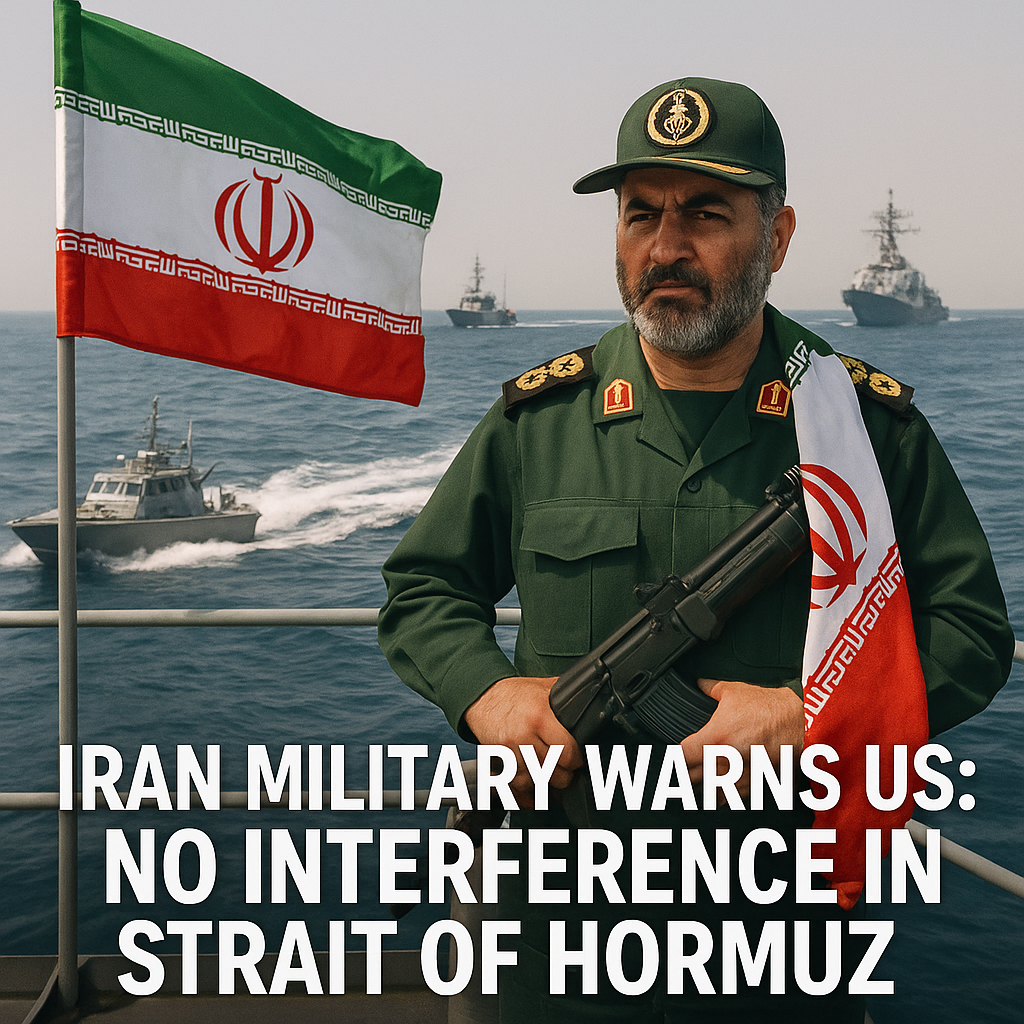
Iran Military Warns US: No Interference in Strait of Hormuz
In recent months, the geopolitical landscape in the Strait of Hormuz has become increasingly tense as the Iranian military issued a stern warning to the United States against any interference in this strategically vital waterway. The Strait of Hormuz, which is the conduit for roughly a fifth of the world’s oil supply, serves as a critical artery not only for global trade but also for regional security dynamics.

Rising Tensions in the Strait of Hormuz
Iran’s military leadership has taken a firm stance, accusing the U.S. of escalating tensions in the region. According to reports from various news outlets, Iranian officials have claimed that any American attempts to patrol or intervene in these waters would be met with decisive resistance. This warning comes amidst heightened military deployments and sanctions from the U.S., aiming to curb Iran’s nuclear ambitions and influence in the Middle East.

In a clear message, Iranian military spokespersons emphasized their right to safeguard national sovereignty and their commitment to maintaining control over the Strait. Iran’s warnings are deeply rooted in a historical narrative that frames the U.S. presence as an occupation, exacerbating existing tensions between the two nations. The Iranian perspective reflects a belief that U.S. military maneuvers not only threaten their national security but also undermine the stability of the region.

The U.S. Response and Global Implications
Contrasting sharply with Iran’s assertive rhetoric, U.S. officials have maintained that their naval presence in the region is intended to ensure the free flow of commerce and safeguard international waters from hostile threats. According to sources, the U.S. Navy has intensified patrols in the Strait of Hormuz in recent months, which they argue is essential to counteract any potential disruption that could arise from Iranian forces.
The implications of this standoff extend beyond the immediate region. Should confrontations escalate, there is the potential for significant repercussions on global oil markets, which could lead to increased prices and economic instability. The crux of the matter lies in a delicate balance—while the U.S. seeks to protect its interests and allies in the Middle East, Iran views these actions through the lens of sovereignty and defense.
Diverse Perspectives on the Issue
Both Iran and the U.S. are drawing criticisms from various sectors for their respective approaches. Proponents of a more conciliatory method argue that diplomatic engagement is necessary to de-escalate tensions. They highlight that military posturing only serves to heighten conflict and that both countries would benefit from quieter, negotiation-based solutions to the ongoing issues related to Iran’s nuclear program and regional influence.
Conversely, some analysts assert that Iran’s aggressive posturing in the Strait of Hormuz could be a strategy to enhance its bargaining position in international negotiations. By demonstrating readiness to confront perceived threats, Iran aims to solidify its internal support while sending a message to both regional adversaries and its allies that it will not back down under pressure.
Navigating a Complex Landscape
As both nations stand firm on their positions, uncertain outcomes loom. The potential for miscalculation remains high, as military encounters in such a contested area could spiral into broader conflicts. International observers advocate for a renewed focus on diplomatic channels and negotiations, highlighting that ongoing escalation will only perpetuate a cycle of conflict.
In the midst of these tensions, collaboration and dialogue appear to be missing links. The ongoing complexities of Middle Eastern geopolitics necessitate not just military readiness but also strategic dialogue that includes all relevant stakeholders.
In conclusion, the evolving narrative surrounding U.S.-Iran relations in the Strait of Hormuz illustrates the intricate interplay of power, security, and economic interests. As both sides navigate their respective stances, the world watches closely, recognizing that the stability of this critical maritime chokepoint is essential for global economic health and peace in the region. The urgency for diplomatic engagement has never been greater, as the stakes rise amid simmering tensions.















