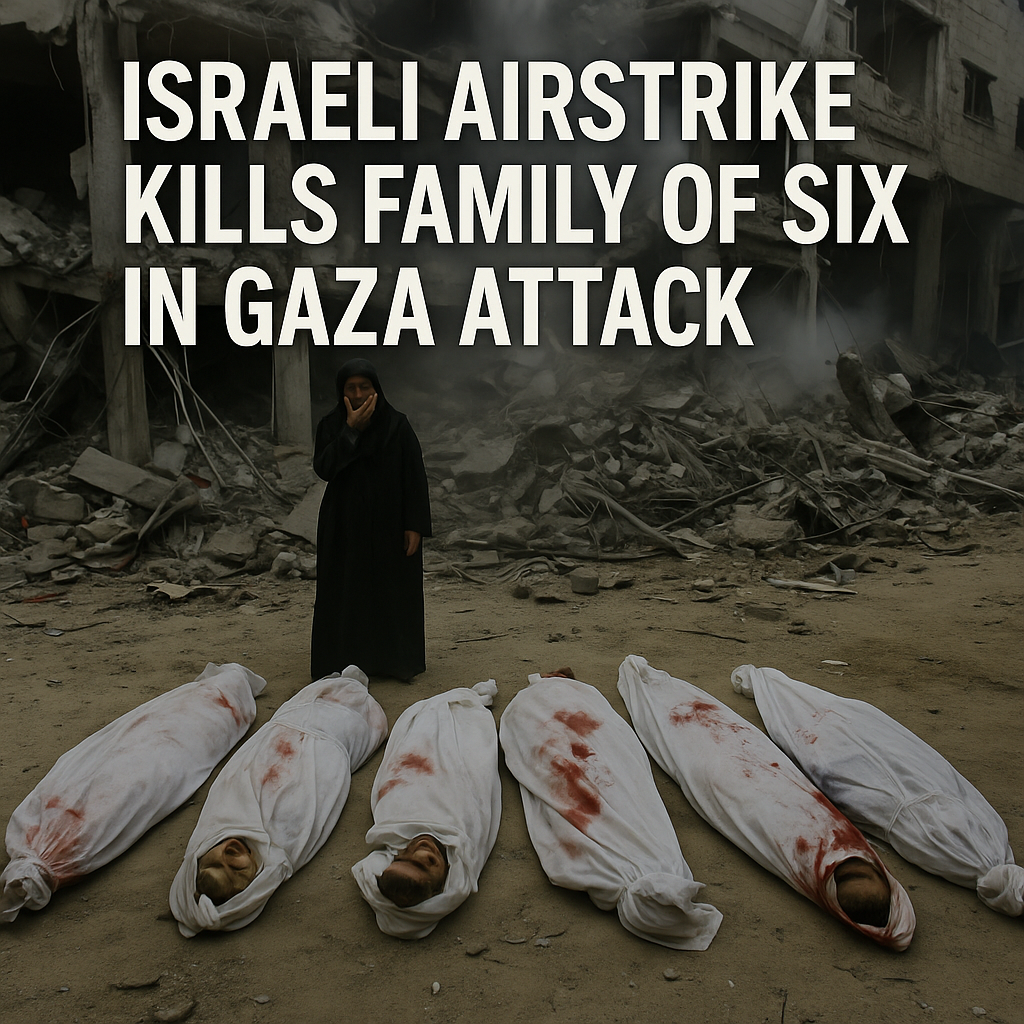
Israeli Airstrike Kills Family of Six in Gaza Attack
Escalating Conflict: Israeli Airstrike Claims Family of Six in Gaza
The recent tragedy of an Israeli airstrike that resulted in the deaths of a family of six in Gaza has reignited discussions around the ongoing conflict between Israel and Palestine. This incident, which occurred amid heightened tensions in the region, underscores the complex humanitarian issues entwined with military actions.

The Incident: A Snapshot of Tragedy
According to reports, the airstrike took place late at night, targeting what the Israeli military described as a site linked to Hamas, the governing body in Gaza. Eyewitness accounts reveal that the strike was devastating. A family of six, including children, was killed, leading to widespread grief and outrage among local communities and advocacy groups.

Sky News reported the incident in detail, highlighting the emotional ramifications for surviving family members and the immense grief felt throughout the community. Al Jazeera corroborated these accounts, emphasizing the tragic loss of life and calling for accountability from all parties involved. The airstrike has not only resulted in fatalities but has also exacerbated an already dire humanitarian situation in Gaza, where many residents live under extreme conditions.

Divergent Perspectives on Military Actions
The Israeli government has defended its military operations as necessary measures aimed at safeguarding its citizens from ongoing rocket attacks and threats posed by militant groups. Officials assert that these airstrikes are targeted and aimed at minimizing civilian casualties. However, the death of non-combatants, especially families such as the one affected, raises critical questions about the proportionality and ethics of such operations.
On the other side, numerous human rights organizations express deep concern over the collateral damage resulting from Israel’s military actions. Critics argue that the aerial bombardments disproportionately affect civilians and violate international humanitarian laws. They urge for a reassessment of military strategies, advocating for humanitarian considerations to take precedence over military objectives.
The Broader Context of Violence and Humanitarian Crisis
This tragic incident is not an isolated occurrence but part of a larger tapestry of conflict that has persisted for decades. The cycle of violence between Israel and Palestinian factions has resulted in considerable loss of life and destruction, contributing to an ongoing humanitarian crisis in Gaza. The United Nations and various NGOs have reported alarming statistics reflecting the dire situation, including widespread displacement and a lack of basic necessities for many residents.
Moreover, the division within Palestinian territories complicates the narrative. While Hamas governs Gaza, the Palestinian Authority operates in the West Bank, and the rivalry exacerbates the challenges in aligning a unified approach to peace talks. This fragmented governance not only mystifies the international response but also undermines efforts aimed at achieving lasting peace.
The Path Forward: Seeking Consensus in a Divided Landscape
As pressure mounts following the airstrike, both local and international communities are calling for accountability and a renewed push for peace negotiations. While Israeli officials maintain that their military actions are a response to threats, critics demand measures that safeguard civilian lives. The calls for a ceasefire or at least a reassessment of military tactics grow louder, as casualties continue to mount.
Public sentiment is divided: many Israelis feel justified in military responses, while Palestinians express a strong desire for protection from violence and assurance of their fundamental rights. The challenge lies in bridging the gap between these perspectives to foster dialogue instead of further escalation.
Conclusion: A Call for Reflection and Action
The heartbreaking loss of a family of six in Gaza serves as a somber reminder of the human cost associated with armed conflict. As discussions evolve around this tragic incident, it is crucial for all stakeholders to reflect on the implications of military actions and strive towards compassionate solutions. While achieving peace in such a deeply divided landscape is complex, it is through empathy and accountability that a more just and lasting resolution could be realized.