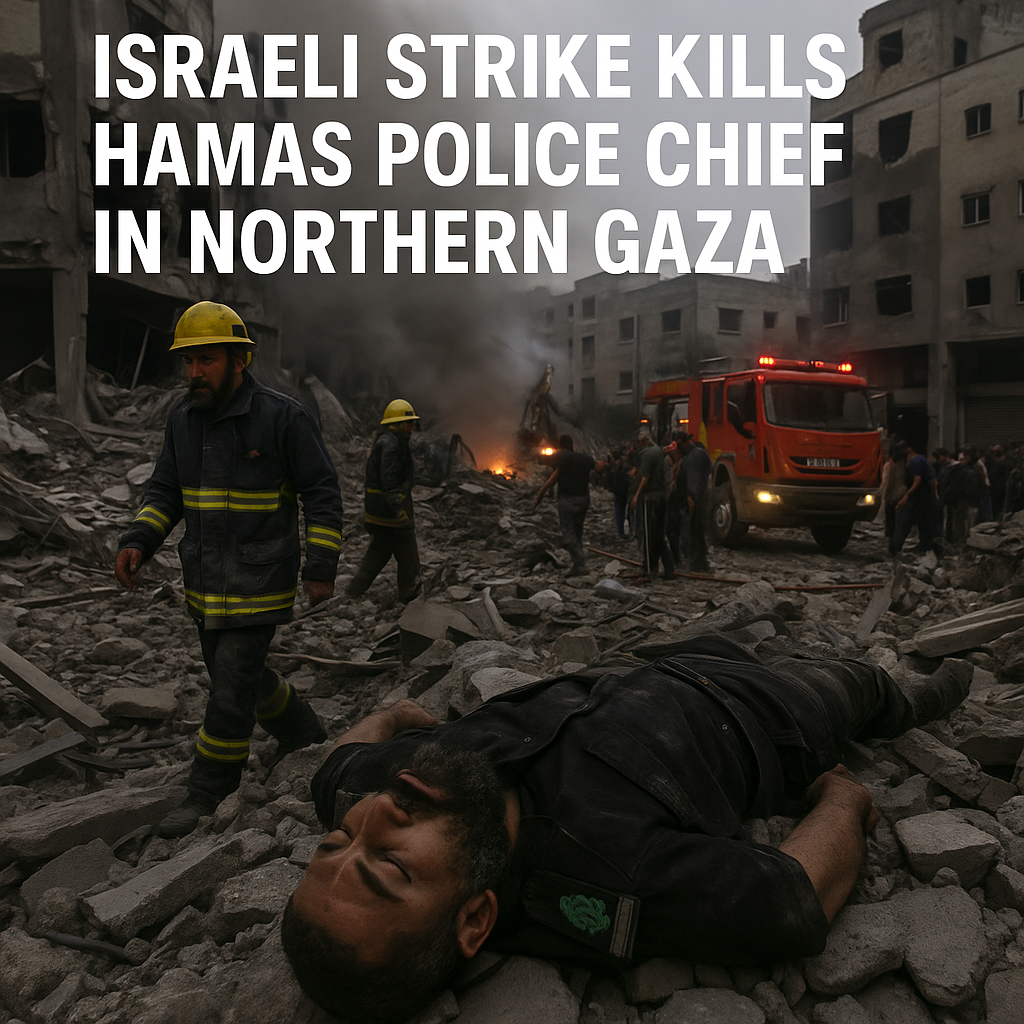
Israeli Strike Kills Hamas Police Chief in Northern Gaza
Israeli airstrikes have intensified in recent days, with one notable incident resulting in the death of the head of Hamas-led police in northern Gaza. This incident raises multifaceted questions regarding the ongoing conflict, characterized by differing narratives and responses from various stakeholders.

Context of the Strike
The airstrike that eliminated the senior Hamas figure was positioned by Israeli authorities as a necessary action in their ongoing operations against what they refer to as terrorist threats. This strike, part of broader military actions aimed at combating Hamas’s influence in the region, has drawn significant international attention. Israeli Defense Forces (IDF) have stated that such operations aim to undermine Hamas’s infrastructure, which they believe contributes to instability in the region.

Conversely, Hamas has portrayed the strike as another instance of Israeli aggression that exacerbates the humanitarian crisis in Gaza. In their communications, they emphasize the collateral damage of military actions, including civilian casualties and the impact on essential services. This incident, they argue, further intensifies the cycle of violence and retaliation, stressing the need for diplomacy over military engagement.

Reactions and Implications
International reactions to the strike reflect a spectrum of views. Some analysts argue that Israel’s actions are justified within the context of self-defense. They note that, with ongoing rocket attacks emanating from Gaza, Israel’s military response might be seen as a necessary deterrent. However, critics caution that such military actions often do more harm than good, risking civilian lives and contributing to a cycle of violence that makes peaceful resolution even more challenging.
In recent statements, human rights organizations have called for accountability regarding civilian casualties resulting from such strikes. They urge both sides to consider the ramifications of escalating military actions in densely populated areas like Gaza, where the potential for collateral damage is significantly elevated. The concern is that, while targeting specific individuals may seem strategically beneficial, it can undermine long-term security by breeding resentment and creating new cycles of violence.
The Role of International Diplomacy
Amidst this turmoil, the role of international diplomacy cannot be overlooked. Various nations and organizations, including the United Nations, have consistently advocated for a ceasefire and a return to negotiations. The challenge remains that both sides have entrenched positions, which complicates the prospect of meaningful dialogue.
The nuances of the conflict are informed not only by military actions but also by social and economic factors. The blockade that has been in place for years has contributed to dire humanitarian conditions for Palestinians. The ongoing hostilities often overshadow these pressing humanitarian concerns, hindering progress towards an agreement that could address the root causes of conflict.
Conclusion
In conclusion, the Israeli strike that killed the Hamas police chief underscores the complexity of the Israeli-Palestinian conflict. It highlights the contrasting narratives that emerge from such incidents—one framed through the lens of security and the other through humanitarian concern. While military responses may provide immediate tactical advantages, they also carry long-term implications that must be considered. As history has shown, lasting peace will likely require more than military engagements; it will necessitate a genuine commitment to dialogue and understanding, both locally and internationally. The current trajectory, fueled by retaliation and conflict, poses a grave challenge not only to regional stability but also to the prospects of future peace.