
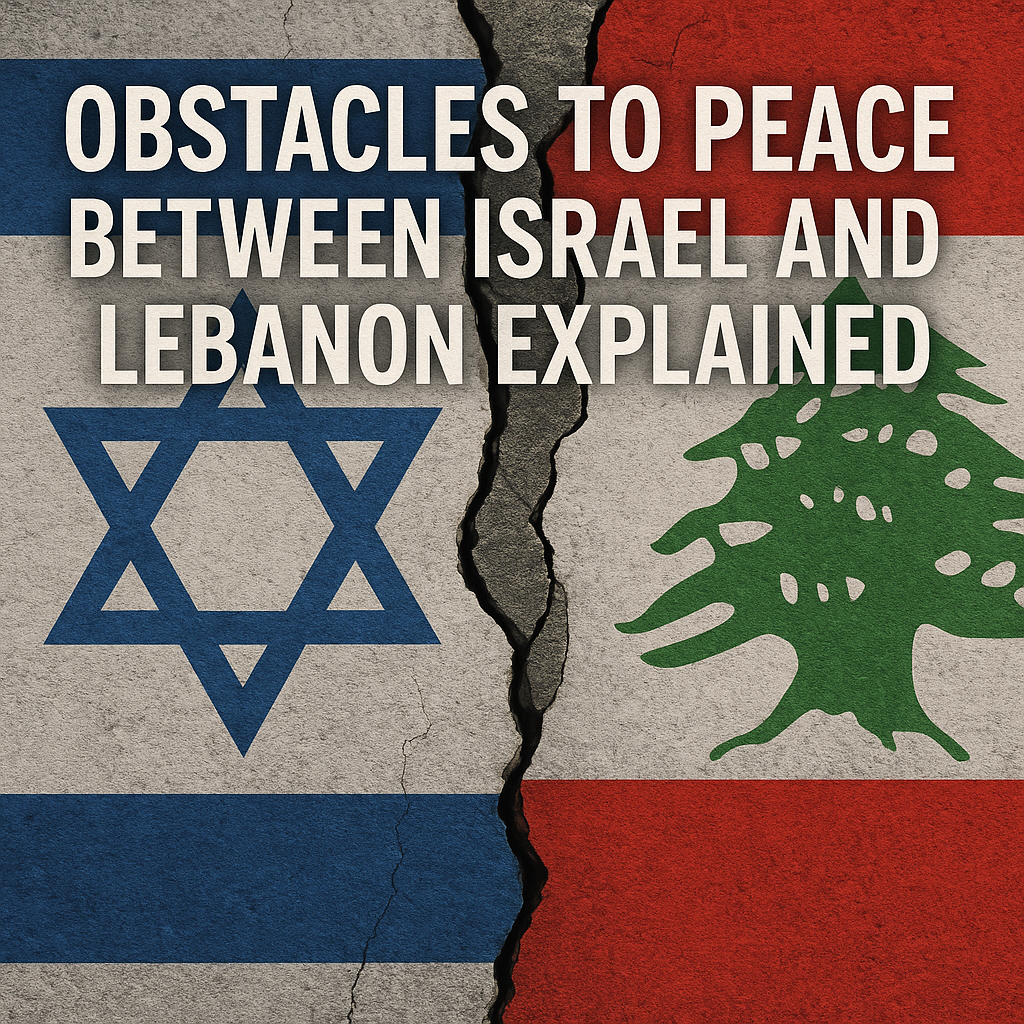
Obstacles to Peace Between Israel and Lebanon Explained
The ongoing tension between Israel and Lebanon presents a complex web of challenges that obstruct potential pathways to peace. Understanding these obstacles requires a nuanced examination of historical grievances, political maneuvering, and social dynamics affecting both nations.

Historical Context and the Role of Regional Actors
To comprehend the current state of affairs, it is essential to delve into the long-standing history of hostilities and conflicts that have shaped relations between the two nations. The escalation of tensions can be traced back to the mid-20th century. The Lebanese Civil War (1975-1990) saw Israel intervening multiple times, most notably during the 1982 invasion, aimed at combating Palestinian militancy. These actions fostered enduring animosities and a robust resistance movement within Lebanon, notably represented by Hezbollah.

Hezbollah, a Shiite militia group with significant political influence in Lebanon, stands as a central factor in the contemporary conflict. The organization has positioned itself as a defender against Israeli actions, garnering support among large segments of the Lebanese population. Analysts argue that this has resulted in an entrenched militaristic stance that complicates diplomatic negotiations. As RT News highlights, the group’s military prowess and political clout have solidified its position against any form of reconciliation that may appear to undermine Lebanon’s sovereignty or its interests.

Moreover, regional players, particularly Iran and Syria, play influential roles in the Israel-Lebanon dynamic. Iran’s support for Hezbollah, both militarily and financially, complicates Israel’s security calculations. The close ties between the Lebanese group and Tehran manifest in a shared ideological commitment against Israel, thus perpetuating a cycle of confrontation.
Domestic Politics and International Pressures
The intricate domestic politics of both Israel and Lebanon significantly impact the prospects for peace. In Israel, political fragmentation often leads to shifting priorities regarding security and foreign policy. Various Israeli leaders have diverging views on how to address Hezbollah, with some advocating a hardline military approach, while others push for possible diplomacy or containment strategies. Each stance reflects broader party ideologies, making consensus difficult.
On the Lebanese side, the government is frequently paralyzed by internal divisions, fueled by economic crises and the pressures of regional dynamics. Lebanon struggles with a dysfunctional political system riddled with sectarianism, which often stymies effective governance. These internal challenges limit the Lebanese government’s capacity to negotiate peace with Israel, as factions like Hezbollah exist outside formal state authority and frequently oppose any conciliatory steps.
The international landscape further complicates the situation. External pressures from allies, notably the United States for Israel and Iran for Hezbollah, can hinder progress. A consensus appears to be lacking among global actors regarding a unified approach to foster negotiations that could lead to peace. As reported by Al Jazeera, any peace effort must contend with not just the historical animosities but with the ongoing geopolitical interests that each nation represents.
Economic and Social Implications
Reports discuss how the economic crises gripping Lebanon, characterized by hyperinflation and significant unemployment, add another layer of complexity to the peace process. Citizens, suffering from a deteriorating standard of living, may view the Israel-Lebanon conflict as a secondary concern compared to more immediate, pressing issues. This widespread disillusionment can lead to disengagement from the political process, rendering the popular will unaccounted for in peace negotiations.
Furthermore, there’s a perception among Lebanese that any peace agreement with Israel would compromise national dignity and sovereignty. Nationalist sentiments often become conflated with resistance against Israel, making peaceful dialogue appear as an undesirable outcome. As various commentators have observed, public sentiment can be a formidable obstacle, particularly in a society that has faced years of conflict and instability.
To forge a lasting peace, it is crucial to address the underlying socio-economic issues while also working towards reconciliation that does not diminish national pride. Trust-building measures, such as economic collaboration or shared infrastructure projects, could provide a foundation for easing tensions.
Conclusion: Navigating the Path Ahead
The obstacles to peace between Israel and Lebanon are vast and multifaceted, encompassing historical grievances, domestic political turmoil, external influences, and existential economic challenges. Despite the complexities, there remains a shared need for both nations to explore avenues for dialogue. Any realistic attempt at peace must consider the sentiments on both sides, acknowledge the regional dynamics at play, and aim to improve the socio-economic conditions of the populations involved.
The road ahead is fraught with difficulties, but constructive engagement—not only between Israel and Lebanon but involving international actors—could provide pathways to diminishing hostilities and building trust. Only time will reveal whether genuine resolve can lead to enduring peace or whether the cycle of conflict will continue to dominate the narrative of these two nations.















