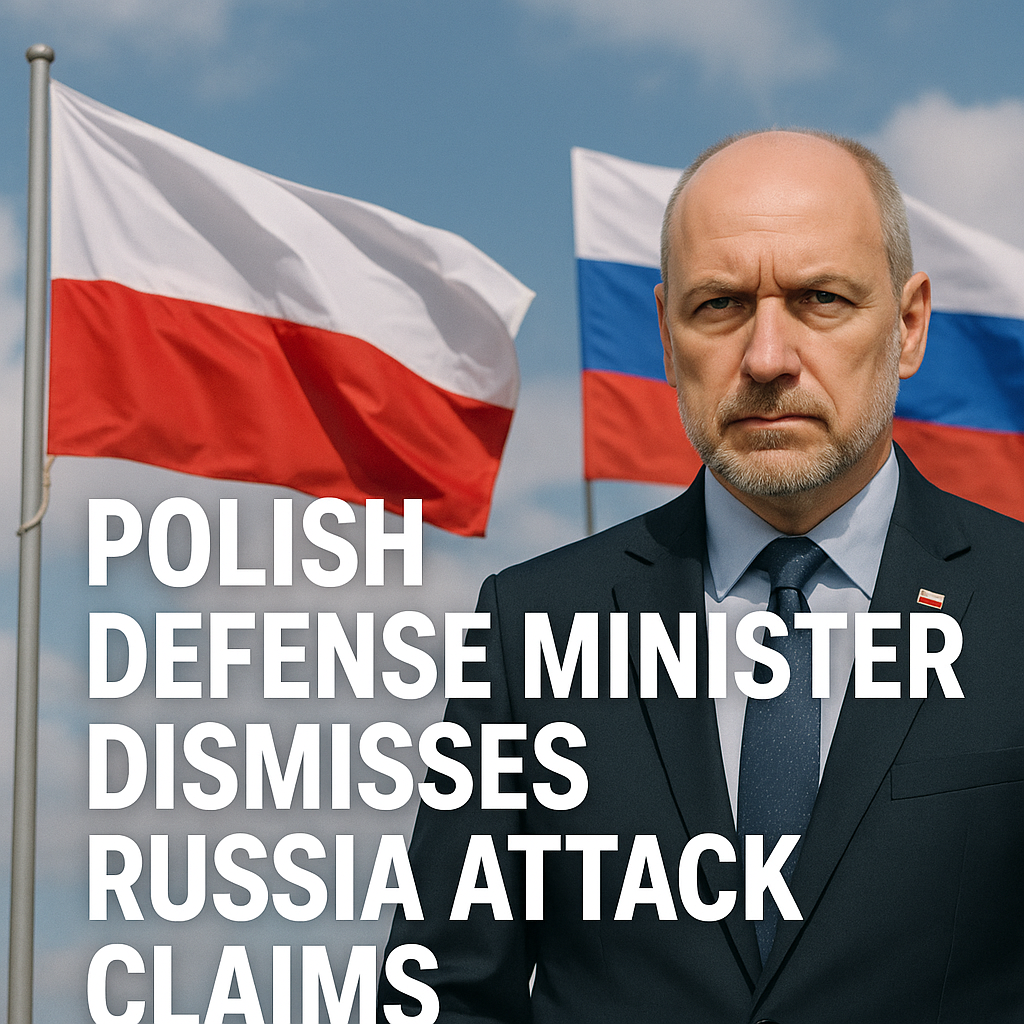
Polish Defense Minister Dismisses Russia Attack Claims
Polish Defense Minister Dismisses Russia Attack Claims
Poland’s stance on the escalating tensions in Eastern Europe took center stage when the Polish Defense Minister recently dismissed claims of an alleged Russian attack on Polish territory. In the context of heightened geopolitical anxieties following Russia’s interventions in Ukraine and its broader military ambitions, such assertions invite scrutiny and necessitate a deeper understanding of the dynamics at play.

The Context of Rising Tensions
Russia has been systematically increasing its military presence along its western borders and adopting aggressive postures towards neighboring countries, fueling concerns in NATO and the EU. Polish Defense Minister Mariusz Błaszczak’s outright dismissal of claims regarding a Russian attack reflects both a steadfast confidence in Poland’s defense capabilities and a carefully measured response to prevent panic among the Polish populace. Błaszczak emphasized that Poland’s military readiness is robust and that the claims merely stem from disinformation campaigns.

Sources indicate that the Polish government has remained vigilant and prepared to counter any threats, with Błaszczak stating that “Poland is a safe country,” reinforcing that necessary defenses are in place. This aligns with previous actions, such as the increased troop deployments along the borders and collaborative exercises with NATO allies, showcasing Poland’s commitment to maintaining security in an increasingly volatile region.

Diverging Perspectives on the Claims
While Błaszczak’s viewpoint encapsulates the Polish government’s confidence, not all sources agree on the complete dismissal of potential threats. Various analysts suggest that while the threat of immediate military confrontation may be overstated, Russia’s aggressive maneuvers warrant caution. Some experts argue that dismissals may contribute to complacency, potentially undermining the seriousness of the broader geopolitical context.
Reports surfaced in outlets such as Al Jazeera, highlighting the range of perspectives on the issue. Analysts emphasize that countries in the region must remain alert to Russia’s tactics, which often involve hybrid warfare—comprising disinformation campaigns and strategic military deployments rather than overt attacks. The differences in perception illustrate the complexities of regional security dynamics, as the narratives from both Polish officials and independent analysts offer valuable insights into the ambiguity surrounding Russian intentions.
Implications for Regional Security
The dismissal of Russian attack claims invites further examination of the security landscape in Eastern Europe. Poland’s position as a frontline state in NATO’s eastern flank makes its response to perceived threats particularly significant. With NATO members reassured by Poland’s robust military posture, the united front is crucial for regional stability.
Moreover, the fluid nature of disinformation requires vigilance from both government institutions and the public. Poland’s strategic communications must ensure that citizens are informed without inducing unnecessary alarm. This balancing act is pivotal in maintaining both national security and public trust.
The responses from neighboring nations also reflect a spectrum of beliefs regarding the authenticity of such claims. While some align with Poland’s cautious optimism, others remain skeptical, advocating for continued monitoring of Russian military activities. This scenario creates a dynamic where dialogue and diplomacy within NATO may play a vital role in de-escalating tensions.
Conclusion: A Balancing Act in Geopolitics
The Polish Defense Minister’s swift dismissal of Russian attack claims illustrates a larger narrative of confidence interlaced with prudence. As geopolitical tensions remain a pressing concern, Poland’s military readiness emphasizes a proactive stance against any form of aggression. However, divergent viewpoints underline the complexities of this issue, suggesting that even amidst affirmations of security, a measured approach towards potential threats is paramount.
In navigating these uncertainties, maintaining open channels of communication, both domestically and internationally, will be essential. The evolving security landscape calls for continuous assessment, ensuring that peace is not merely an assumption but a carefully guarded reality.