Russian Missile Explosion Caught on Security Camera in Poland
Russian Missile Explosion Caught on Security Camera in Poland
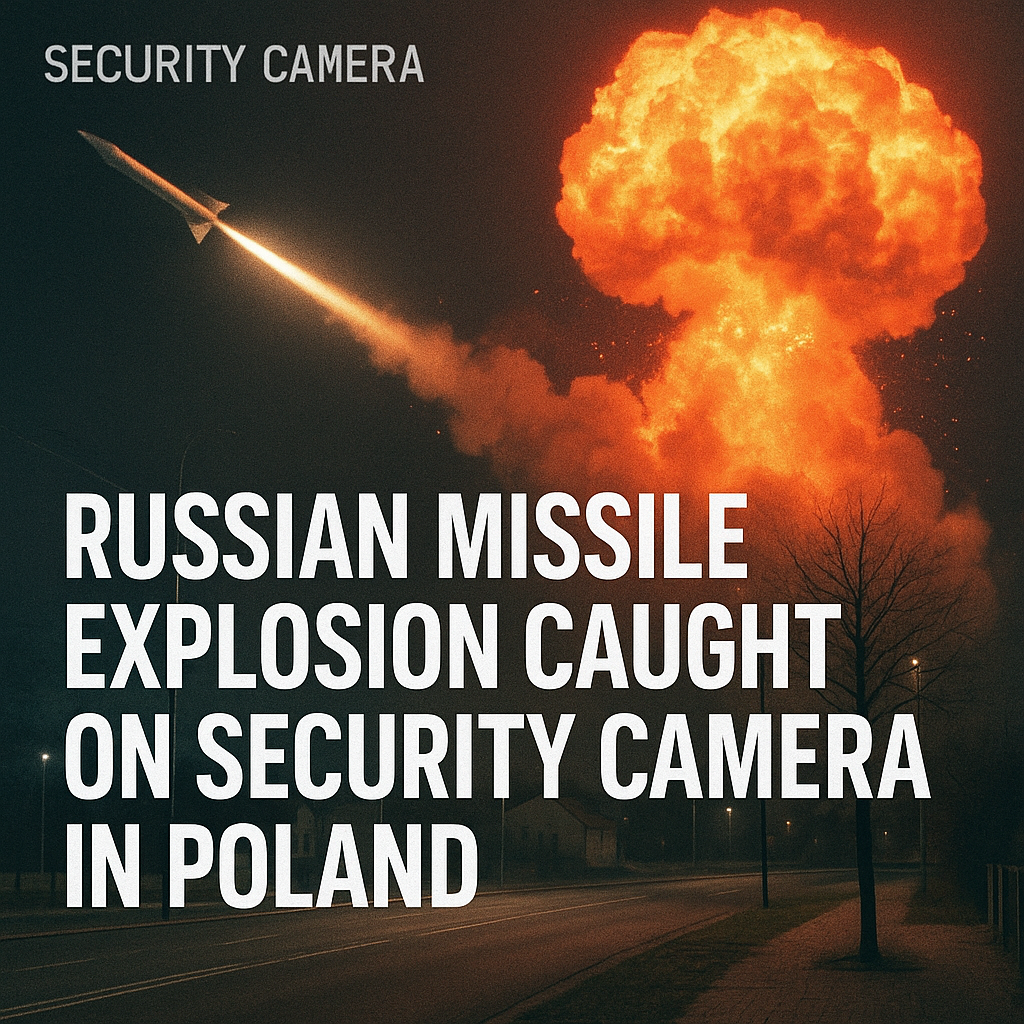
A shocking incident recently unfolded in Poland when a Russian missile explosion was captured on a security camera, raising significant concerns about regional security and international relations. This event underscores the broader geopolitical tensions currently at play, particularly in light of ongoing conflicts involving Russia.

Implications of the Missile Explosion
The video, which has circulated widely on news platforms, shows the missile striking a location in Poland, sparking immediate discussions about the implications for NATO and the European Union. Poland’s government reacted with urgency, emphasizing the need for thorough investigation and diplomatic discussions. The presence of such weaponry near NATO borders feeds into the larger narrative of escalating confrontations with Russia, a notion echoed by several analysts.

Expert opinions gathered from diverse channels reveal contrasting sentiments regarding Poland’s response. Some commentators argue that this incident could act as a wake-up call for NATO allies, highlighting the necessity for a unified defense strategy. Al Jazeera pointed out that Poland may be compelled to reassess its security measures in light of the explosion, stating, “This incident should prompt a serious review of NATO’s eastern flank defenses.”

Conversely, some observers, particularly from Russian state media like RT, downplay the incident’s significance, suggesting it may be part of a broader media narrative aimed at vilifying Russia. They argue that such explosions could happen during military exercises or as collateral damage, diminishing the notion of an intentional attack. This perspective raises questions about media interpretation and the framing of Russia in the Western world.
Why This Incident Matters
The explosion’s occurrence in Poland—a NATO member—could provoke serious diplomatic repercussions, potentially spiraling into heightened military readiness among allied nations. Western analysts warn of a precarious balancing act, where increased military presence could lead to misunderstandings or unintentional escalations.
1. Regional Security: With NATO’s Article 5 stipulating collective defense, the stakes are particularly high for Poland, as an attack on one member is considered an attack on all. The missile incident, therefore, threatens to ignite discussions around military deployments in Eastern Europe.
2. International Discourse: The interpretations surrounding the incident reflect wider narratives in international relations. While Western outlets emphasize the threat posed by Russian military actions, Russian narratives focus on potential misinterpretations of military activity, reflecting a clash of worldviews.
The Path Forward
There remains uncertainty about how this incident will alter ongoing discussions in international forums such as NATO summits or the United Nations. The responses from NATO members will likely play a pivotal role in shaping future relations with Russia.
Polish officials have indicated a cautious approach, advocating for sanctions and increased military capabilities while emphasizing the importance of diplomacy. Meanwhile, NATO leadership appears to be assessing the situation closely, balancing deterrent measures with diplomatic engagement.
Moreover, the international community faces a substantial dilemma in addressing such incidents. Should responses lean more toward military readiness to safeguard against potential threats, or should they prioritize diplomatic avenues to de-escalate tensions?
Conclusion
The security camera footage of the Russian missile explosion in Poland encapsulates a multifaceted dilemma that intertwines national security, international relations, and media representation. As narratives continue to develop, it is essential for global leaders to navigate these turbulent waters carefully, balancing immediate concerns with long-term strategies for peace and stability in the region. Understanding the complex interplay of these factors will be crucial as the world watches how this incident unfolds in the broader context of Russian-Western relations.