
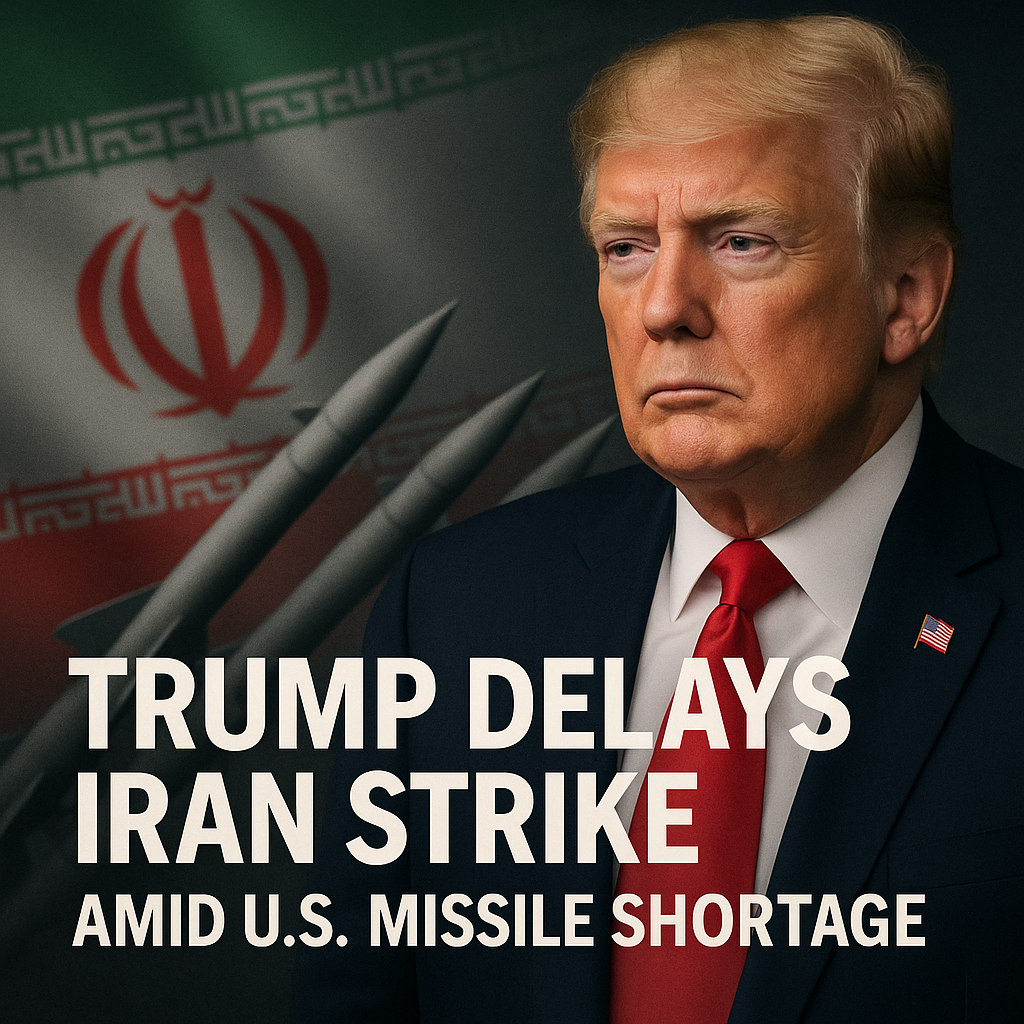
Trump Delays Iran Strike Amid U.S. Missile Shortage
Trump Delays Iran Strike Amid U.S. Missile Shortage
In a move that has garnered widespread attention, former President Donald Trump has reportedly postponed a military strike against Iran, citing a critical shortage of U.S. missiles. This decision unfolds amidst escalating tensions between the two nations, raising questions about the implications for U.S. foreign policy and military readiness.

The Context of Tensions
For years, U.S.-Iran relations have been fraught with animosity, particularly following the U.S. withdrawal from the Joint Comprehensive Plan of Action (JCPOA) in 2018 and the imposition of stringent sanctions on Iran. Recently, calls for military action against Iran intensified, especially after its involvement in regional conflicts and alleged support for groups that threaten U.S. interests.

Experts have weighed in on the motivations behind Trump’s strike considerations. Some analysts argue that military action was seen as a necessary deterrent against Iranian provocations, including its nuclear program and regional influence through proxy groups. Meanwhile, others caution that military engagement risks further destabilizing the Middle East and could have unpredictable consequences for U.S. strategic interests.

U.S. Missile Shortage: A Critical Factor
The complexity of modern warfare necessitates advanced munitions, and the reported missile shortage has left military planners grappling with limited options. During a recent press briefing, sources indicated that the U.S. stockpile of precision-guided missiles has dwindled due to ongoing commitments in other regions, particularly Ukraine, where U.S. military aid has been significant. This development raises critical questions about the U.S. military’s capacity to engage in multiple theaters simultaneously.
Military analysts have pointed out that delays in replenishing missile inventories could hinder the U.S. response to emerging threats. As one defense analyst noted, “The U.S. military is facing an unprecedented period of resource allocation, and the shortage of missiles might be indicative of broader supply chain issues exacerbated by global events.”
Diverging Perspectives
While some proponents of military action see this postponement as a necessary caution, others argue that it reflects deeper systemic challenges within the U.S. military. Critics from various sectors argue that the failure to take decisive action could embolden Iran and lead to further aggression, complicating diplomatic efforts in the long run.
On the flip side, scholars advocating for diplomacy emphasize the importance of engagement rather than confrontation. They argue that a military strike might rally Iranian nationalism and hinder potential negotiations regarding Iran’s nuclear ambitions. They maintain that the focus should remain on diplomatic avenues to resolve disputes, supporting efforts that would involve international partners in conversations with Tehran.
Furthermore, there are concerns regarding the long-term implications of military fatigue on U.S. forces. The U.S. military must address both domestic and international pressures, thus requiring a strategic re-evaluation of its commitments. This recalibration could lead to broader implications not only for U.S.-Iran relations but also for its relationships with allies in the region.
Looking Ahead: What’s Next for U.S.-Iran Relations?
The delay in military action against Iran introduces uncertainty into an already volatile situation. With the U.S. straddling the line between military deterrence and diplomatic efforts, the next steps are crucial. Each potential avenue—whether it be renewed sanctions, military preparedness, or diplomatic initiatives—carries with it unique risks and rewards.
While Trump’s postponement might provide the U.S. military with some breathing room to address its inventory issues, it also signals a moment of reflection on the viability and implications of military interventions in foreign policy. As both sides remain poised, the future of U.S.-Iran relations will likely unfold on a tightrope, balancing the demands of security with the need for strategic foresight.
As the situation evolves, one thing remains clear: American military capability, diplomatic strategies, and global perceptions will all play integral roles in shaping the prospects of any future engagements with Iran. The unfolding narrative will not only impact the U.S. approach to the Middle East but also redefine its military strategies and alliances in an increasingly complex world.















