
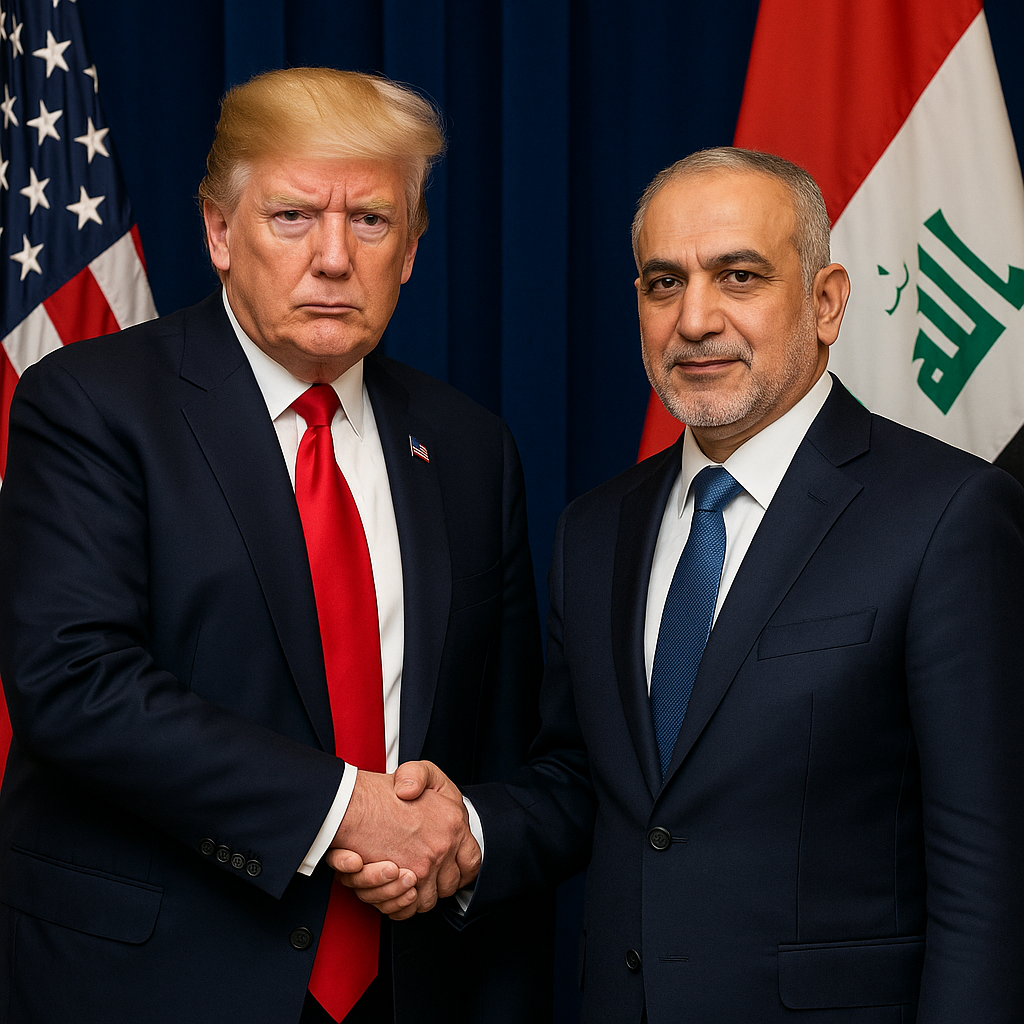
Trump Meets Iraqi PM Ali al-Zaidi: A Stronger America
Trump Meets Iraqi PM Ali al-Zaidi: Strengthening Ties for a Stronger America
The recent meeting between former President Donald Trump and Iraqi Prime Minister Ali al-Zaidi highlights the complexities of U.S.-Iraq relations and the broader implications for regional stability. The discussions took place amid an evolving geopolitical landscape that calls for fortified alliances and cooperative infrastructure.

A New Era of Collaboration
During their meeting, Trump and al-Zaidi underscored the importance of a strong bilateral relationship, emphasizing mutual interests in economic cooperation and security. Al-Zaidi, a proponent of a robust U.S. presence in Iraq, referred to the U.S. as a “friend of Iraq,” advocating for continued American support in the fight against terrorism and the stabilization of the region.

Supporters of this partnership argue that American resources and expertise can significantly aid Iraq as it navigates its socio-economic challenges. Additionally, it is seen as a strategic step to counter threats posed by groups like ISIS and Iranian influence in the area. Economic ties between the nations could be bolstered further through joint projects that focus on infrastructure development and trade.

Moreover, the backdrop of the discussions reflects a shifting power dynamic in the Middle East. As Trump aims to reaffirm America’s global standing, fostering a strong relationship with Iraq could be seen as a pivotal move to re-establish U.S. leadership in the region.
Diverging Perspectives on U.S. Involvement
Despite the optimistic narrative from both leaders, there are contrasting viewpoints regarding the implications of U.S. involvement in Iraq. Critics argue that past American military interventions have often led to prolonged instability rather than enhancement of national sovereignty. They express concerns about the risks of renewed military entanglement, which could further fuel anti-American sentiments among certain segments of the Iraqi population.
Opponents contend that focusing on military aid overlooks urgent domestic issues within Iraq, such as corruption and governance challenges. They emphasize that a sustainable partnership should prioritize empowering local institutions rather than fostering dependency on external forces.
Furthermore, there is skepticism regarding the long-term strategy of American presence in Iraq. Detractors question whether a reliance on U.S. support will ultimately yield a secure and democratic Iraq or if it merely serves to extend American interests without fostering genuine stability.
Seeking Balance amidst Complexity
The conversation between Trump and al-Zaidi is emblematic of the intricate interplay of relationships within international politics. While the relationship’s potential for economic and security benefit seems promising, various risks must be acknowledged. These include evaluating the historical context of U.S. engagements in the Middle East, the evolving nature of insurgent groups, and the influence of neighboring Iran.
As discussions continue, the focus should be on creating frameworks for collaboration that genuinely uplift Iraqi sovereignty while addressing the pressing security needs in the region. The future trajectory of U.S.-Iraq relations will depend on navigating these complexities with transparency and an awareness of historical gravitas.
In conclusion, while the prospects of a stronger America through enhanced relations with Iraq could pave the way for significant developments, it is crucial to maintain a nuanced perspective that considers both the potential benefits and the inherent challenges. An informed dialogue that balances the interests of both nations will be essential for fostering a stable future.















