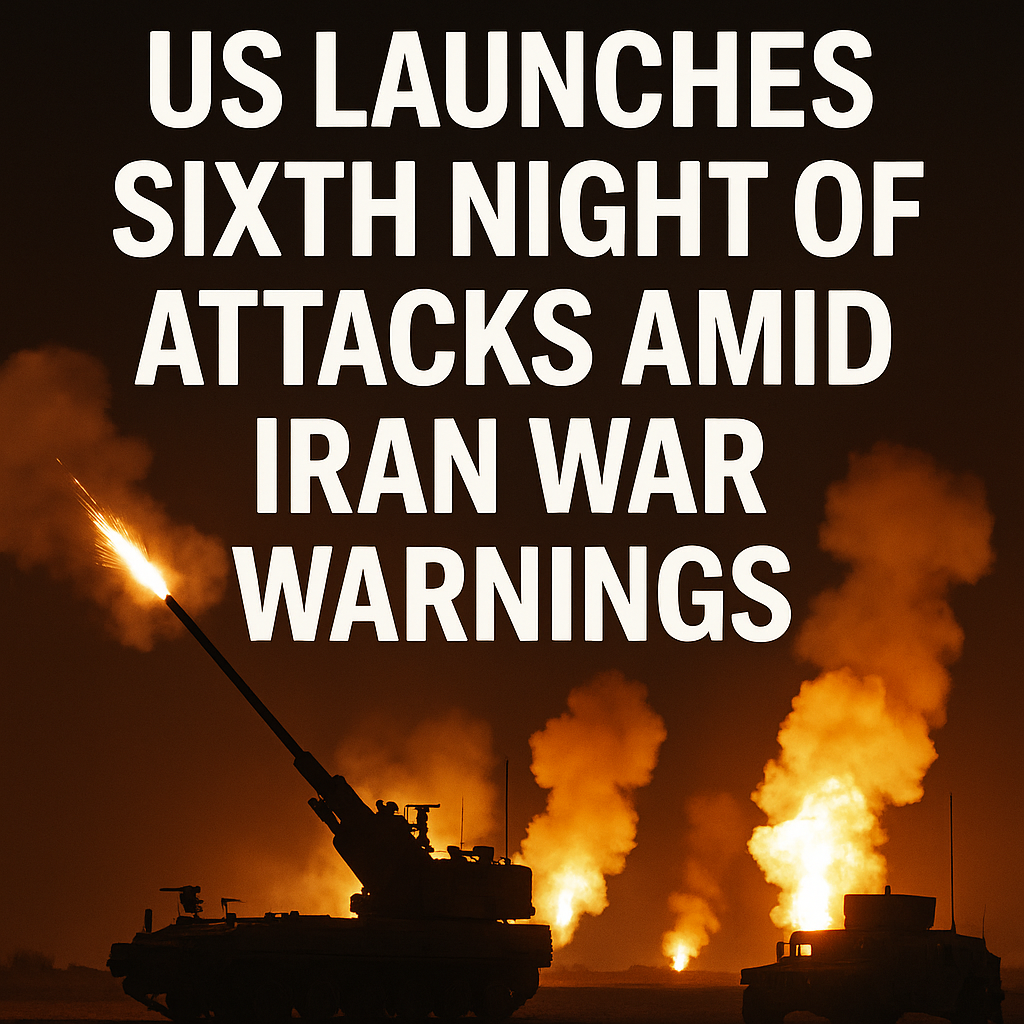
US Launches Sixth Night of Attacks Amid Iran War Warnings
US Launches Sixth Night of Attacks Amid Iran War Warnings
Recent developments have thrust the United States back into the forefront of discussions around military engagement in the Middle East. For the sixth consecutive night, the US launched airstrikes, a move described as a response to various threats including those perceived from Iran. As the situation continues to evolve, it raises complex questions about the implications of these strikes and the possibility of a wider conflict.

Context of the Attacks
The recent escalation began after a series of provocative actions in the region. Reports indicate that the US military is conducting these strikes primarily against Iranian-affiliated targets. These operations come on the heels of Iran’s warnings that any further military actions could lead to an expanded conflict. Iranian officials have characterized the attacks as aggressive and have pledged to defend their sovereignty, stating that they will retaliate if necessary.

Conversely, US officials frame these operations as crucial to maintaining stability and deterring further aggression. They emphasize that the actions are limited in scope and intended to protect US interests and allies in the region. The Pentagon has underscored that the US will continue to target those who threaten American lives, pointing to multiple incidents involving drone strikes and missile attacks allegedly tied to Iranian proxy groups.

Diverging Perspectives
The information surrounding the series of attacks is laden with differing viewpoints, reflecting the complexities of international relations. On one side, proponents of the US military action argue that it is essential for national security. They contend that failing to respond to Iranian provocations could embolden Tehran, leading to broader destabilization in the region. This perspective is bolstered by historical examples where inaction has resulted in larger confrontations.
On the flip side, critics of the US strategy warn against the potential for escalation into a wider conflict. Some analysts note that the aggressive posture risks drawing the US deeper into a situation that could spiral out of control. The sentiment resonates with voices in Congress, where there are calls for a more restrained approach to military engagement. Instead of airstrikes, these critics advocate for diplomatic channels and negotiations to ease tensions.
Unfinished Business: The Road Ahead
As the situation stands, uncertainty looms large over the future of US-Iran relations. The airstrikes have seemingly created a loop where both sides may remain locked in a cycle of provocation and retaliation. While supporters of the US actions posit that the strikes will effectively deter Iranian aggression, the risk of miscalculation remains a pressing concern.
Furthermore, the complexity of alliances in the region complicates the situation further. Some Gulf states have aligned closely with US interests and support military actions against Iranian forces. However, public opinion in those countries is not uniform, and there’s a palpable anxiety around potential ramifications, particularly the impact on civilian populations.
In the context of these developments, the international community is closely monitoring the situation. Calls for restraint are coming from various quarters, advocating for renewed diplomatic efforts. The potential for increased military operations raises pertinent questions about regional stability and humanitarian concerns.
Conclusion
In summary, the US’s recent airstrikes mark a significant escalation in a fraught and complex geopolitical landscape. Critics on both sides of the debate highlight the lack of a clear exit strategy and the possible outcomes of an extended conflict. As tensions remain high and both sides prepare for potential retaliatory measures, the pressing need for dialogue and diplomacy becomes ever more critical. The situation remains fluid, and the coming days and weeks will be crucial in determining whether the current trajectory leads to de-escalation or deepening military engagement.