
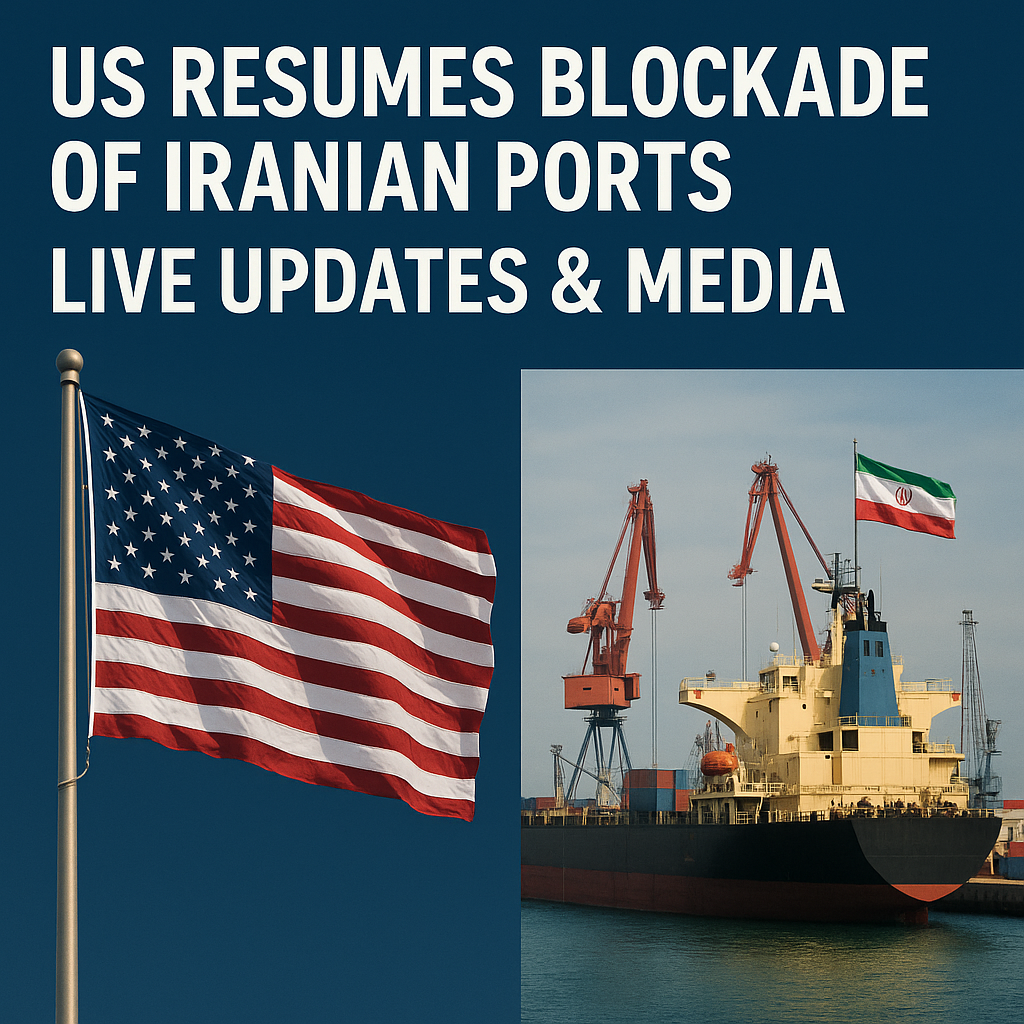
US Resumes Blockade of Iranian Ports: Live Updates & Media
US Resumes Blockade of Iranian Ports: Implications and Reactions
The recent decision by the United States to resume its blockade of Iranian ports has significant implications for regional stability, international trade, and diplomatic relations. This article explores multiple viewpoints surrounding the situation, incorporating various perspectives from diverse news sources.

The Rationale Behind the Blockade
The U.S. government has framed its renewed blockade as a response to Iran’s purported aggression in the region, including its support for proxy groups and alleged violations of international maritime laws. According to a report from Al Jazeera, U.S. officials claim that the blockade is aimed at curbing Iran’s influence and preventing it from further developing its ballistic missile program.

Conversely, Iranian officials have characterized the blockade as an act of economic warfare. They argue that it exacerbates the already challenging humanitarian situation in Iran, where the economy has been severely affected by prior sanctions and ongoing geopolitical tensions. This perspective emphasizes that the blockade may inadvertently harm ordinary citizens more than it targets the government or military capabilities.

International Reactions and Regional Dynamics
The reimplementation of the blockade has sparked varied reactions internationally. Some Middle Eastern countries, particularly those allied with the U.S., have expressed support, viewing it as a necessary measure to counteract Iranian aggression. According to reporting from Sky News, these countries believe that Iran’s actions disregard maritime laws and threaten regional security.
On the other hand, European allies have called for a more diplomatic approach. Nations like France and Germany urge the U.S. to reconsider the effectiveness of such blockades, emphasizing that they can lead to heightened tensions rather than constructive dialogue. They argue that diplomatic avenues have not been fully exhausted, suggesting that continued engagement could yield better outcomes.
The Economic Impact of the Blockade
The reimposition of the blockade raises economic concerns not just for Iran but also for global markets. The disruption of trade routes through the Persian Gulf can impact oil prices and supply chains. Recent articles from various news outlets indicate that instability in this region often leads to fluctuations in global oil prices, affecting economies worldwide.
Moreover, analysts warn that sustained economic pressure on Iran could lead to increased desperation and potential escalation of military conflicts. Reports highlight that when the Iranian economy suffers, the regime may double down on its aggressive posturing as a means of rallying domestic support and diverting attention from internal issues.
Concluding Thoughts: The Path Forward
As the U.S. resumes its blockade of Iranian ports, the outlook remains uncertain. The differing opinions highlight a complex landscape where geopolitical strategies, humanitarian considerations, and economic repercussions are tightly interwoven.
While the U.S. aims to strengthen its position against what it perceives as a volatile threat from Iran, the humanitarian implications cannot be ignored. The potential for increased regional tensions raises pertinent questions: Is the blockade a sustainable strategy for promoting stability, or does it risk further entrenching animosities?
In conclusion, the ongoing situation necessitates careful monitoring and a willingness to engage in dialogue. As diverse viewpoints continue to emerge, the hope remains that a more balanced approach might pave the way for peace and stability in a historically turbulent region.















