
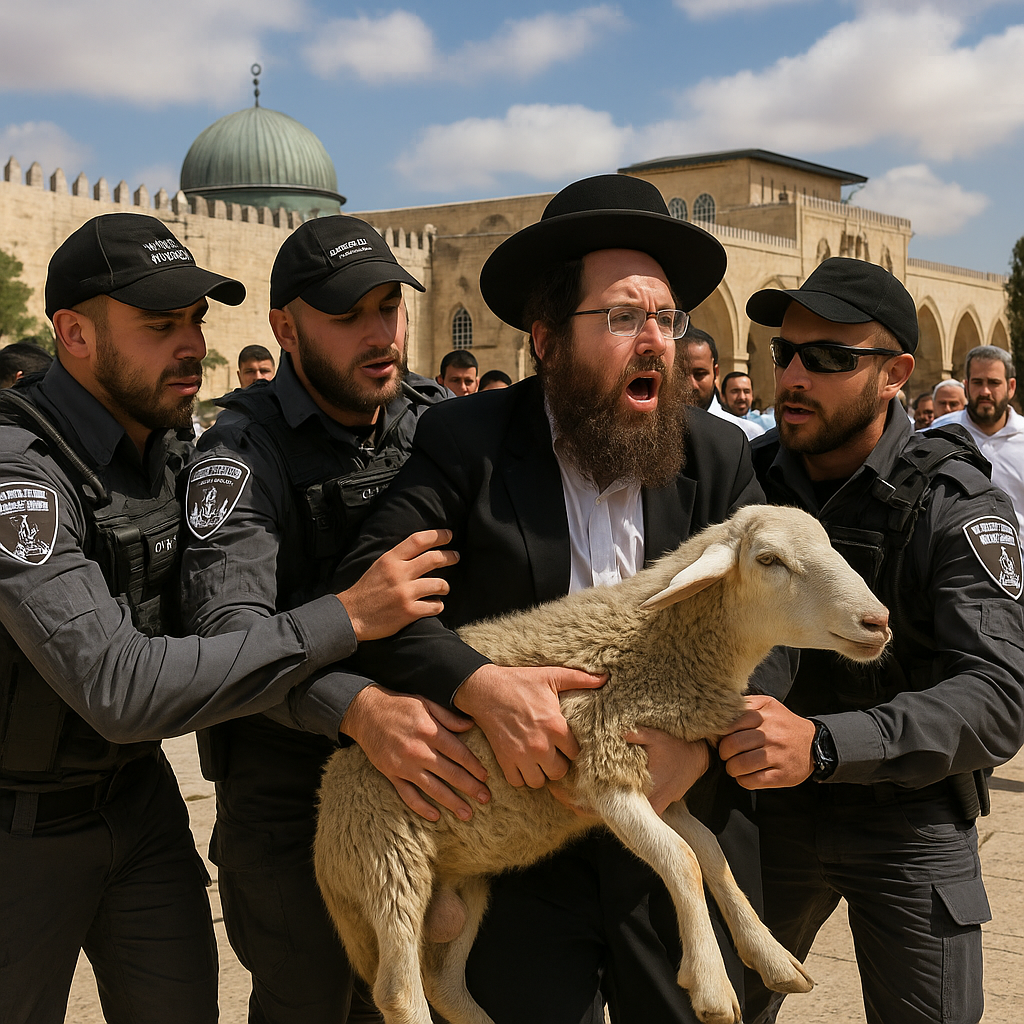
Passover Sacrifice Attempt by Israelis at Al-Aqsa

Understanding the Controversial Passover Sacrifice Attempt at Al-Aqsa
The recent attempt by a group of Israelis to perform a Passover sacrifice at the Al-Aqsa Mosque has ignited significant debate and concern, highlighting the complex interplay between religious traditions and political sensitivities in the region. This incident underscores ongoing tensions and differing perspectives among various stakeholders.

Historical Context of the Al-Aqsa Mosque
The Al-Aqsa Mosque, located in Jerusalem’s Old City, holds profound significance for both Muslims and Jews. While Muslims regard it as the third holiest site in Islam, Jews see it as the location of the ancient Temple, where sacrifices were traditionally offered. For many, the site is not merely a historical landmark but a symbol deeply intertwined with religious identity and nationalism.


According to various reports, the group that attempted the Passover sacrifice aimed to reconnect with this ancient ritual, which they believe has profound spiritual meaning. Passover, or Pesach, commemorates the Exodus from Egypt, where the sacrifice of a lamb was a key element of the biblical narrative. This annual ritual has been preserved within Jewish tradition, even as its practice has shifted over the centuries.


Diverse Perspectives on the Incident
The attempt at the Al-Aqsa Mosque has drawn varied reactions, reflecting the polarized perspectives surrounding this significant location.
1. Israeli Jewish Views: Many Israelis support the idea of reclaiming religious practices associated with their heritage, viewing the Passover sacrifice as a legitimate expression of their faith. They argue that such actions are part of a broader movement aimed at restoring Jewish rites at historically significant sites. Proponents of the sacrifice claim that it aligns with their spiritual beliefs and cultural identity, as reported by Al Jazeera.
2. Palestinian Muslim Perspectives: Conversely, Palestinian leaders and Muslim citizens view this event as a provocation. The Al-Aqsa Mosque is seen as a red line in the Islamic faith, and attempts to conduct rituals there are perceived as invasions of their religious space. Reports from RT emphasize that such actions exacerbate tensions and can lead to violence, citing historical incidents where similar provocations have escalated conflicts.
3. International Reaction: The international community also reacts with concern. Many governments and organizations view the incident as a potential flashpoint that could destabilize an already fragile situation. Both Al Jazeera and Sky News highlight calls for restraint to prevent further deterioration of relations between Israelis and Palestinians.
The Broader Implications of the Sacrifice Attempt
The act of attempting a Passover sacrifice at such a hotly contested site raises pressing questions about the intersection of tradition, politics, and identity.
– Impact on Peace Efforts: Actions like these can undermine ongoing peace efforts between Israelis and Palestinians by inflaming sentiments on both sides. The international community has emphasized the importance of dialogue and mutual respect, warning that provocations could permanently damage relations.
– Cultural and Religious Tensions: The incident further complicates the cultural and religious dynamics of Jerusalem, which has historically been a melting pot of diversity but is also a flashpoint for conflict. By exploring these diverse layers, the article highlights how deeply entrenched beliefs can clash, leading to heightened tensions.
While some may argue that the incident represents a legitimate expression of faith, others maintain that it signals a troubling trend towards increasing provocations and a disregard for the sacredness of shared spaces.
Conclusion: An Uncertain Path Forward
The attempt to perform a Passover sacrifice at Al-Aqsa is emblematic of larger conflicts between faith, nationalism, and the quest for cultural identity. It remains clear that both sides are fueled by deeply held convictions but are moving towards increasingly divergent paths. As tensions mount, the need for dialogue and understanding becomes ever more crucial.
In the end, the complexity of this issue reflects the ongoing struggles that permeate not only Jerusalem but the broader Middle Eastern landscape, where historical grievances and contemporary politics often collide. The future may hold uncertainty, but the call for mutual respect and peaceful coexistence is undeniable.















