
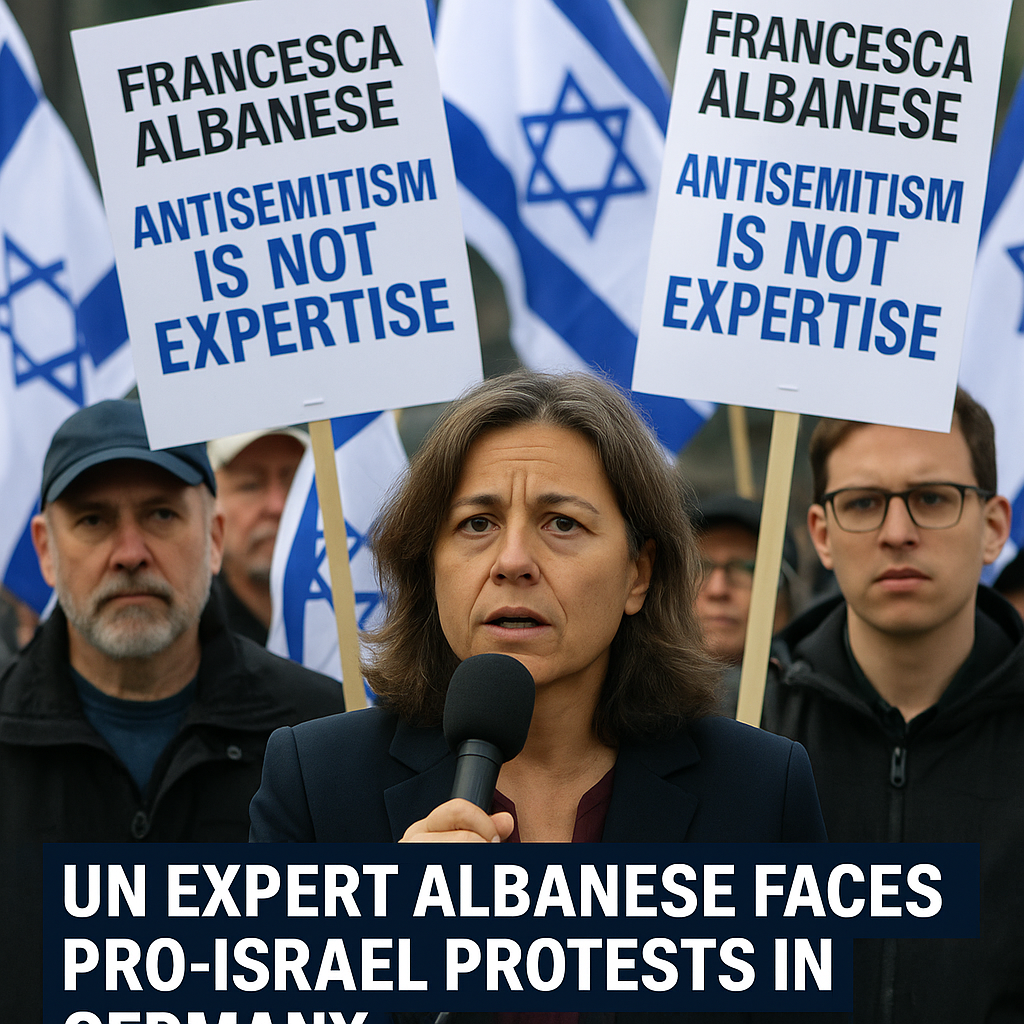
UN Expert Albanese Faces Pro-Israel Protests in Germany

UN Expert Albanese Faces Pro-Israel Protests in Germany
The ongoing Israeli-Palestinian conflict continues to spur passionate debate and activism worldwide. Recently, UN Expert Francesca Albanese encountered heated protests from pro-Israeli demonstrators during her tenure in Germany, igniting discussions about the complexities surrounding international perspectives on the region.

Context of the Protests
Francesca Albanese, a UN Special Rapporteur on the occupied Palestinian territories, was in Germany to present her findings and perspectives on ongoing human rights issues. Her reports often highlight the systemic injustices faced by Palestinians, which have made her a polarizing figure, particularly among pro-Israel groups.


During her visit, which coincided with increasing tensions in Israel and Gaza, Albanese was met with fervent protests organized by pro-Israel supporters who accused her of bias against Israel. These protests reflect the ongoing polarization regarding the Israeli-Palestinian conflict, with both sides holding deeply entrenched views that often clash in public discourse.


Perspectives from Across the Spectrum
The protests were multifaceted, echoing sentiments from various community members both supportive and critical of Albanese’s position. Pro-Israel activists argued that her critiques demonize Israel and fail to acknowledge the complexities of security concerns that the Israeli government faces. They cited instances where Albanese’s statements have seemed one-sided, arguing that discussions should include the threats posed by militant groups.
On the other hand, advocates for Palestinian rights defended Albanese, stating that her work is crucial for raising awareness about human rights violations in the occupied territories. They view her as a vital voice helping to draw attention to a prolonged plight often overlooked by mainstream media and political dialogues. They argue that the protests against her are an attempt to silence criticism of Israel and frame genuine human rights advocacy as anti-Semitic.
Weighing the Evidence
It is essential to acknowledge that both perspectives have valid points. Albanese’s reports draw on a wealth of human rights documents and testimonies, and criticism of her work points to a broader tendency to sideline Palestinian narratives. On the flip side, the concerns raised by pro-Israel advocates about Albanese’s approach may reflect a genuine fear of bias that needs addressing in any balanced discourse regarding the conflict.
Moreover, the protests themselves indicate a broader societal struggle in Germany regarding how to approach the Israeli-Palestinian issue, especially as conversations about anti-Semitism have become increasingly prevalent in recent years. Various organizations, including Jewish groups, have voiced concerns over the rise of anti-Israel sentiment, which they argue can sometimes manifest into anti-Semitism. This dimension complicates Albanese’s presence even further, as her work becomes entwined with narratives that risk conflating legitimate criticism of Israel with broader forms of hatred.
The Complexity of Dialogue
The dynamic of the protests highlights a critical aspect of international dialogues concerning Israel and Palestine: the challenge of fostering a constructive discussion. When voices like Albanese’s are met with protests, it reflects a polarizing atmosphere where compromise and nuanced conversations become exceedingly difficult.
Dialogue requires a willingness to understand differing viewpoints, even if they provoke emotional responses. The situation calls for stronger frameworks that seek to reconcile the often adversarial narratives surrounding these discussions.
The protests against Albanese, while illustrative of passionate activism, also serve as a reminder of the work that lies ahead in promoting dialogue rooted in empathy and respect. Both sides of the conflict harbor legitimate grievances that must be acknowledged for any progress towards resolution to be made.
Conclusion
Albanese’s experience in Germany embodies the challenging landscape that surrounds discussions on the Israeli-Palestinian conflict. It reveals how deeply intertwined personal beliefs and political ideologies can lead to public demonstrations that often lack the subtleties of respectful debate. As the global community continues to grapple with issues surrounding this long-standing conflict, fostering understanding through open dialogue may be the essential step forward, allowing for a broader and more inclusive conversation about peace, justice, and reconciliation.
Ultimately, while the protests against Albanese spotlight the divisions in international conversations about Israel and Palestine, they also illuminate the need for frameworks that promote mutual understanding and constructive engagement. The path to lasting peace requires not just tolerance but an earnest effort to bridge the gap between conflicting perspectives.















