
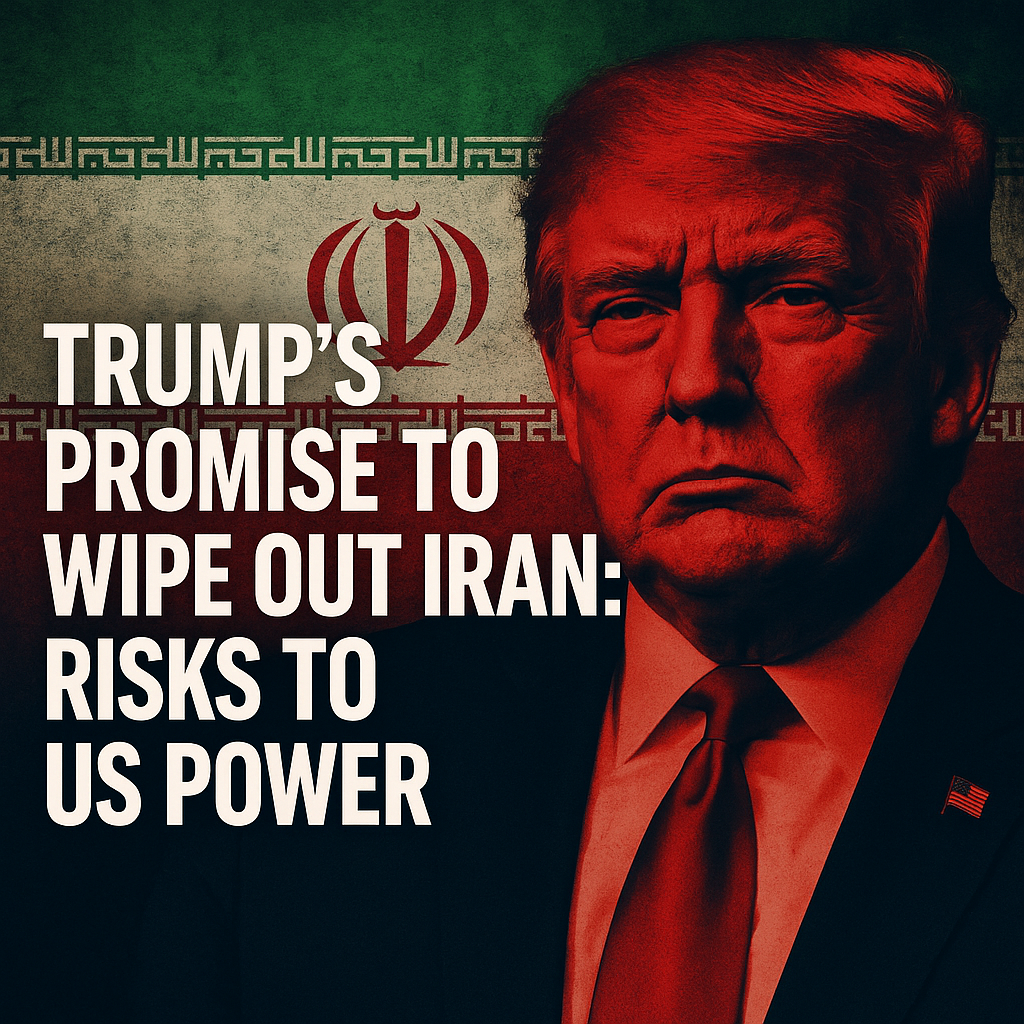
Trump’s Promise to Wipe Out Iran: Risks to US Power

Trump’s Promise to Wipe Out Iran: Risks to US Power
Former President Donald Trump’s recent statements regarding Iran have reignited a tumultuous debate about U.S. foreign policy and its implications for national security. As Trump promises to obliterate Iran’s military capabilities if re-elected, analysts and policymakers are grappling with the potential fallout of such aggressive rhetoric.

Understanding Trump’s Position
Trump’s rhetoric about Iran has been assertive and antagonistic. During recent engagements, he has claimed that his administration will ensure “no more threats from Iran.” This bold promise reflects a broader trend of tough-on-Iran policies that began during his presidency, centered around the withdrawal from the Iran nuclear deal in 2018. Proponents of this approach argue that a strong stance against Iran is necessary to curb its influence in the Middle East, which they often depict as destabilizing due to its support for groups like Hezbollah in Lebanon and its involvement in Yemen’s conflict.


However, detractors warn that the risks of such an aggressive strategy could outweigh the benefits. Analysts suggest that Trump’s promises could escalate tensions in an already precarious region and further entangle the U.S. in protracted military engagements. The potential for miscalculation in such high-stakes interactions raises critical questions about U.S. strategy in the Middle East.


The Middle Eastern Landscape: Allies and Adversaries
Iran’s geopolitical influence cannot be overlooked. It serves as a critical player in a complex web of regional alliances, with supporting factions in countries like Iraq and Syria. Some analysts argue that merely focusing on a military solution could undermine diplomatic avenues that might stabilize the region. Countries like Saudi Arabia and Israel have welcomed a tougher U.S. stance against Iran, yet they also stand to lose if the situation deteriorates into armed conflict.
A key point of contention is whether a direct confrontation with Iran might provoke a broader regional war that could compromise U.S. interests in neighboring countries. The potential for retaliatory attacks on U.S. assets or allies could escalate tensions significantly. This concern is compounded by the stability of Iraq and Afghanistan, where U.S. military presence remains a contentious issue.
Echoes of the Past: Lessons Unlearned?
History often serves as a cautionary tale. The imposition of military interventions in Iraq and Libya serves as a reminder of how regime change can lead to long-term instability. Observers note that Trump’s approach shares similarities with decisions made by previous administrations, leading some to express skepticism about the efficacy of military solutions. The devastation that followed the 2003 Iraq invasion has made many wary of engaging in uncalculated optimisms regarding military interventions.
In contrast, some insist that the U.S. must leverage its military power to convey strength and commitment to its allies. Supporters of Trump’s position argue that maintaining a show of force can dissuade adversaries and strengthen the U.S.’s negotiating position in future talks. The delicate balance between diplomacy and military readiness remains a contentious issue among experts.
Risks to U.S. Power: The Broader Implications
One of the most critical considerations in analyzing Trump’s remarks is the long-term implications for U.S. power. A potential military campaign in Iran could theoretically signal U.S. unwavering strength. Conversely, it may also provoke anti-American sentiment, potentially uniting various factions within Iran against a common perceived enemy. This could further complicate U.S. relations not just with Iran but with other countries that may perceive a U.S.-led operation as unjustified aggression.
Furthermore, the economic impact of military aggression should not be underestimated. The costs of war are extensive and will invariably draw funding away from domestic concerns at a time when many Americans are seeking investment in infrastructure and healthcare.
In conclusion, while Trump’s decisive language may resonate with specific constituencies keen on an aggressive policy toward Iran, the risks to U.S. power are considerable. The potential for escalating conflict, adverse regional reactions, and economic repercussions are critical factors that warrant careful consideration. As U.S. policymakers navigate this complex landscape, a balanced approach that weighs military readiness against the value of diplomatic engagement seems vital for the preservation of both American and global stability.















