
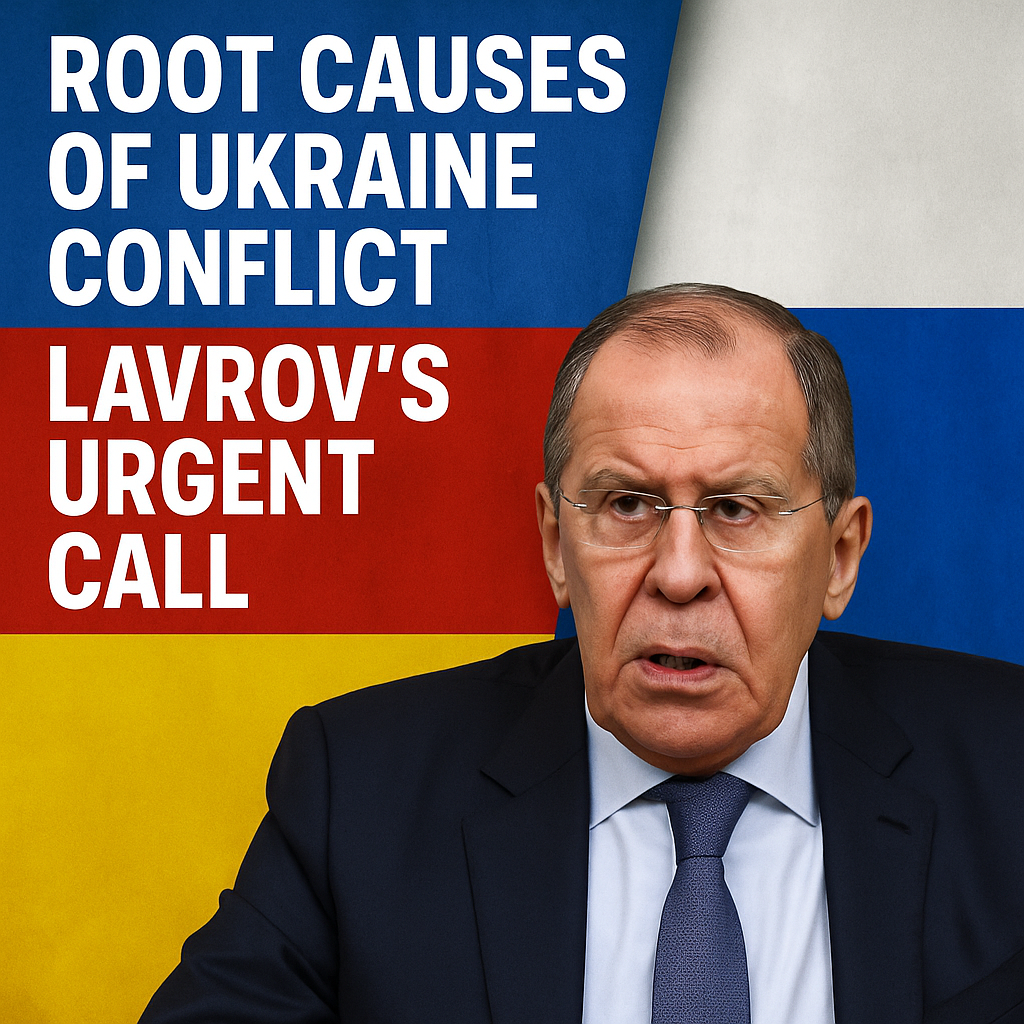
Root Causes of Ukraine Conflict: Lavrov’s Urgent Call

Root Causes of Ukraine Conflict: Lavrov’s Urgent Call
The ongoing conflict in Ukraine continues to generate substantial discourse among policymakers, academics, and the general public, raising questions about its root causes. Recently, Russian Foreign Minister Sergey Lavrov made headlines by issuing an urgent call for a deeper understanding of these fundamental issues. While various narratives exist, it is essential to examine multiple viewpoints to foster a more balanced understanding of this complex situation.

Understanding the Historical Context
A Divide Deepened by History
To appreciate the nuances of the Ukraine conflict, one must look at its historical backdrop. The relationship between Russia and Ukraine has been fraught with tension, particularly since Ukraine’s independence from the Soviet Union in 1991. Issues surrounding national identity, language, and political alignment have played significant roles. Lavrov emphasized in a recent statement that “the pain of division between nations is palpable,” noting historical grievances that have spiraled into contemporary conflict.


On one side, critics of Russia argue that its actions are rooted in a desire to reassert influence over former Soviet territories, perceiving Ukraine’s westward shift towards NATO and the EU as a direct threat to Russian sovereignty. Conversely, Russian officials contend that they have legitimate concerns regarding the treatment of ethnic Russians in Ukraine and the threats posed by NATO’s eastward expansion. This contrast reveals deeply rooted sentiments from both sides, often shaped by historical legacies.


Perspectives from Aljazeera and Sky News
A review of coverage from diverse sources like Aljazeera and Sky News presents a spectrum of opinions. Aljazeera underscores the intricate interplay of regional politics, suggesting that the conflict arises not just from Russian aggression but also from internal Ukrainian divisions. The network portrays the situation as a failure of governance and national consolidation in Ukraine, where different cultural identities vie for prominence. They argue that without addressing these internal fractures, any solutions will be superficial and temporary.
Sky News, meanwhile, emphasizes the geopolitical dimensions that have permitted this conflict to fester. Their coverage highlights the international community’s role, particularly the responses from Western nations to Russia’s actions, suggesting that sanctions and diplomatic isolation have only deepened Russia’s resolve. In this framing, the call for a balanced understanding of the roots of discord becomes critical—not merely as a matter of policy, but as a pathway toward a sustainable peace.
The Role of National Identity
Language and Culture as Points of Contention
One pivotal factor that Lavrov flags is the complex national identity that exists within Ukraine. Ethnic, linguistic, and regional identities have contributed to a societal schism. In western Ukraine, pro-European sentiments often clash with the more pro-Russian perspectives found in the east. This division has historically been an exploitable point for external actors, influencing Ukraine’s political landscape and leading to unrest.
Both Aljazeera and Sky News have reported on incidents of discrimination against Russian speakers in Ukraine, a point often raised by Lavrov to legitimize Russian intervention. Conversely, Ukraine’s response to such allegations has been one of sovereignty and self-determination, arguing that they are a sovereign nation with the right to establish their own cultural and political identity. Such contrasting narratives complicate the international understanding of the conflict.
Insights from Lavrov’s Urgent Call
In his recent statements, Lavrov urged the international community to not ignore these foundational issues, arguing that “lasting peace cannot be achieved without acknowledging the historical grievances that exist.” This sentiment resonates with the need for dialogue that considers both Ukrainian national identity and Russian historical perspectives.
The search for lasting peace, as Lavrov has articulated, is contingent upon addressing these deeply ingrained issues, which will require cooperation and understanding from both sides. Yet, critics question the sincerity of Russia’s call for dialogue, suggesting that it may serve as a strategic ploy to distract from ongoing military actions and territorial ambitions in Ukraine.
A Path Forward: Striving for Understanding
The Importance of Dialogue
The complexities of the Ukraine conflict necessitate a willingness to engage with multiple perspectives. As Lavrov puts forth his urgent call for recognizing the root causes, it becomes essential for all involved parties—both national stakeholders and international actors—to foster a dialogue that prioritizes understanding over blame. This involves recognizing the multiplicity of Ukrainian voices and the legitimate historical concerns raised by Russia.
The Role of the International Community
The international community has a critical role to play in facilitating this dialogue. Rather than merely imposing sanctions or diplomatic isolation, a more nuanced approach that encourages openness, bilateral discussions, and grassroots peace initiatives may provide a pathway toward resolution. Engaging in constructive dialogue could help alleviate fears and misconceptions on both sides, creating a foundation for healing and reconciliation.
In conclusion, while Lavrov’s call for understanding the root causes of the Ukraine conflict underscores the complexity of the situation, it also offers an opportunity for a more balanced conversation. By focusing on the diverse perspectives that shape this conflict, stakeholders can move toward a more constructive dialogue aimed at fostering a sustainable and acknowledged peace.















