
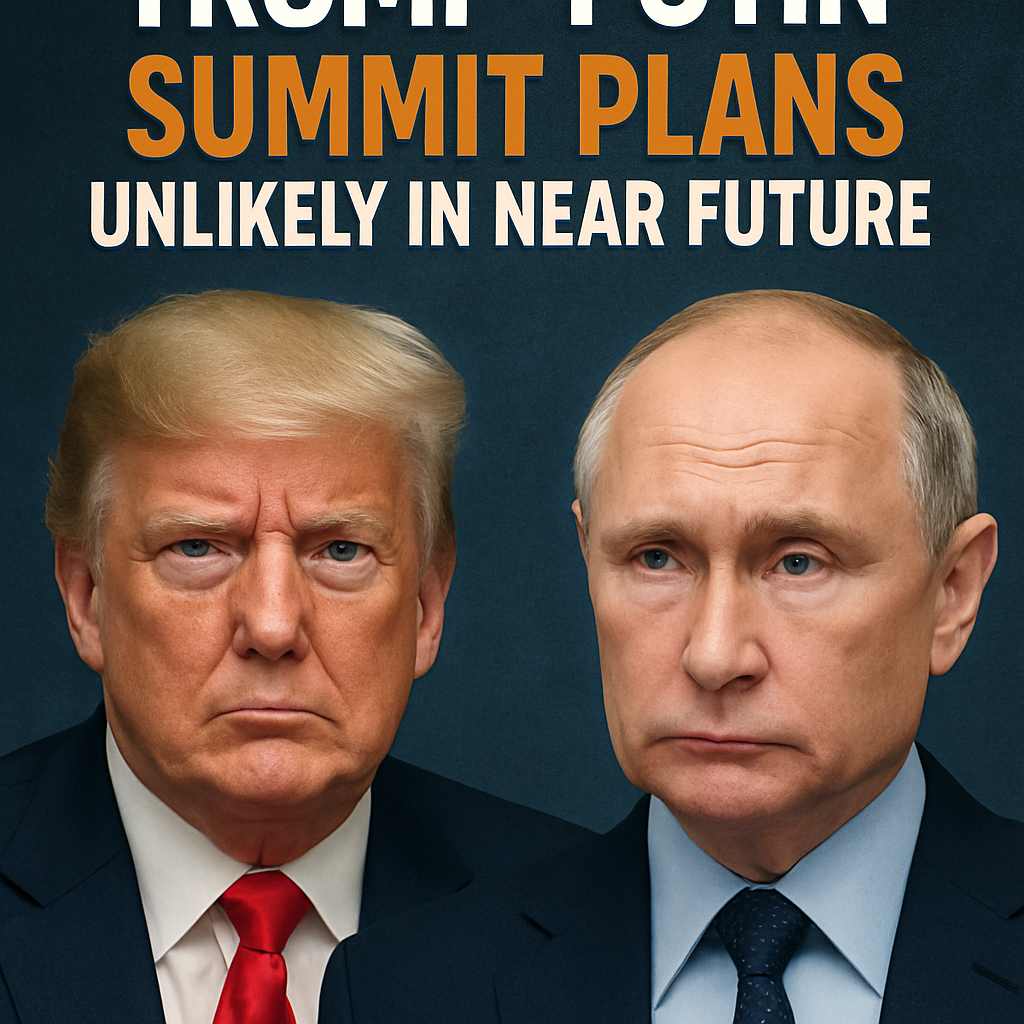
Trump-Putin Summit Plans Unlikely in Near Future

Doubts Surround Trump’s Plans for a Putin Summit
In the ever-evolving landscape of international diplomacy, the likelihood of a Trump-Putin summit appears increasingly uncertain. Recent developments highlight both the complexities surrounding the proposed meeting and the divergent viewpoints that underscore global reactions.

The Current Landscape of U.S.-Russia Relations
The relationship between the United States and Russia remains fraught with tensions, particularly in the wake of ongoing geopolitical conflicts. As highlighted by Al Jazeera, uncertainties over a potential summit were magnified following new sanctions imposed on Russia amid escalating military activities in Ukraine. The Biden administration’s focus on strengthening alliances in Europe, especially with NATO members, further complicates any potential rapprochement between Trump and Putin.


On the other hand, RT provides a different perspective, noting how Trump views a summit as an opportunity to reset relations, emphasizing mutual interests such as security discussions and economic cooperation. However, this view is met with skepticism; critics argue that Trump’s past approach to foreign policy has often undermined established diplomatic norms.


Reactions from Politicians and Analysts
Politicians and analysts have been quick to weigh in on the summit’s feasibility. For instance, some Democratic commentators in the U.S. have expressed apprehension, positing that any engagement with Putin could legitimize authoritarian practices and undermine the U.S.’s position on human rights. This sentiment echoes concerns raised in various media outlets about the implications of such a meeting, particularly in light of Putin’s recent actions that challenge democratic institutions worldwide.
Conversely, some Republican supporters of Trump advocate for dialogue with Russia, believing that constructive engagement could lead to meaningful discussions on nuclear disarmament and global security—areas where cooperation might yield benefits for both nations. However, even within the Republican Party, there’s a palpable divide. Figures like Senate Minority Leader Mitch McConnell have adopted a more cautious approach, questioning the wisdom of engaging with a leader perceived as a global aggressor.
The Stakes of an Unprecedented Summit
The potential consequences of a Trump-Putin summit are significant. While some view it as a chance to rebuild ties, the implications of such an event should not be overlooked. Critics contend that a summit might send the wrong message to authoritarian regimes worldwide, suggesting that aggression can be rewarded through high-level meetings.
Moreover, the vast chasm between U.S. and Russian interests makes finding common ground challenging. Key issues—ranging from interference in democratic processes to military confrontations in Eastern Europe—remain unresolved. As a result, many analysts echo the sentiment that while diplomacy is crucial, the timing for a summit may be misguided.
What Lies Ahead?
As we analyze these multifaceted perspectives, it becomes evident that the likelihood of a Trump-Putin summit remains clouded by political tensions and conflicting narratives. The complexities involved require careful navigation, with many arguing that the focus should instead be on reaffirming alliances and maintaining pressure on Russia to adhere to international norms.
In conclusion, while a summit might serve as a platform for dialogue, significant hurdles remain. The consensus across various political and analytical viewpoints is that any meeting must be strategically planned, with clear objectives that prioritize national interests and democratic values. The uncertain landscape of U.S.-Russia relations will likely continue to shift, leaving the possibility of a Trump-Putin summit an open question for the foreseeable future.















