
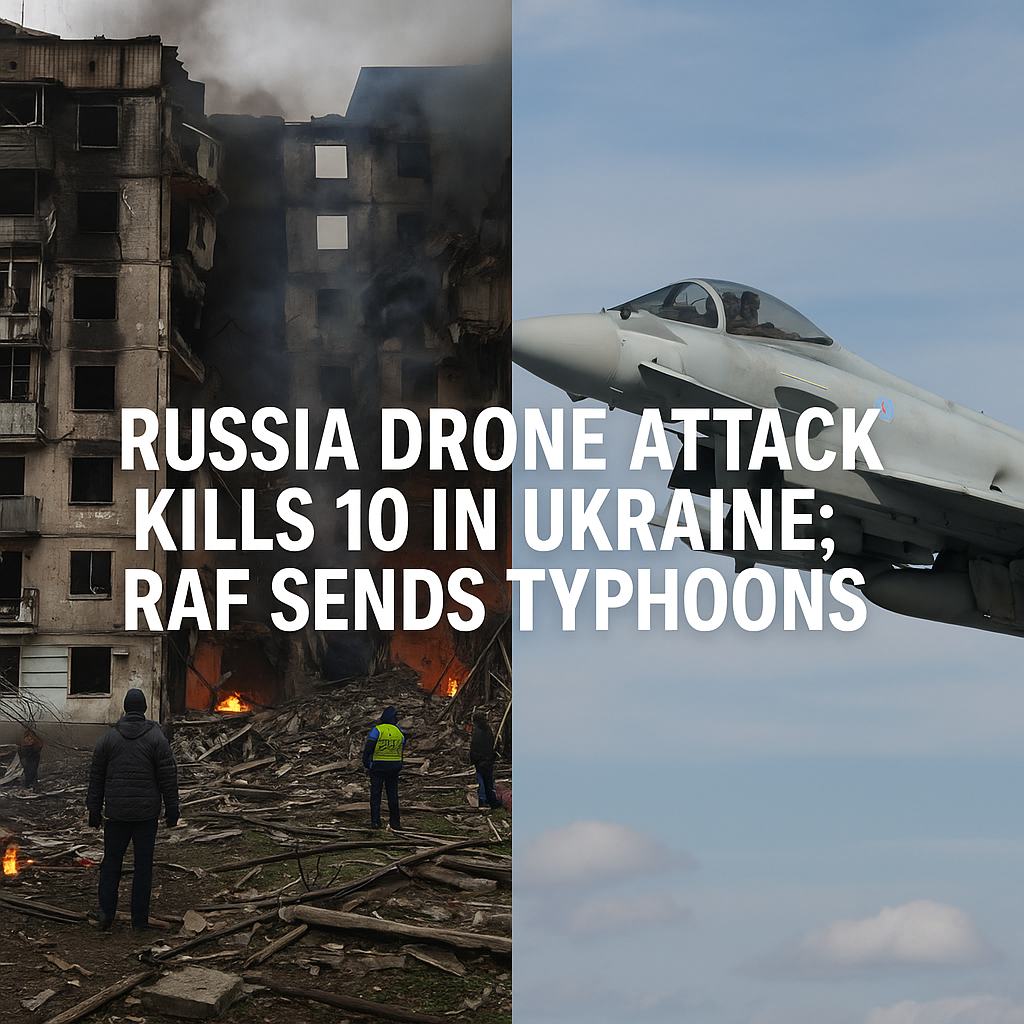
Russia Drone Attack Kills 10 in Ukraine; RAF Sends Typhoons

Russia Drone Attack Kills 10 in Ukraine; RAF Sends Typhoons
In recent weeks, a troubling escalation in military conflict has been highlighted by a devastating drone attack attributed to Russia, resulting in the deaths of at least ten individuals in Ukraine. This event underscores not only the ongoing tensions in the region but also the international community’s response, particularly regarding military support for Ukraine.

The Human Cost of Conflict
The drone attack, which primarily targeted civilian areas, led to significant casualties and has drawn widespread condemnation. Reports indicate that many of the victims were not involved in the conflict, raising alarms about the tactics employed in this war. Some analysts argue that such attacks reflect a shift in strategy by Russian forces, who may be employing drone warfare more extensively to inflict psychological as well as physical damage on Ukraine.


One eyewitness described the chaos following the strikes, stating, “You could hear the drones overhead before the explosions. It felt surreal, knowing that everyday life was suddenly filled with terror.” This sentiment echoes across multiple reports, emphasizing the profound impact of military actions on civilian life.


International Responses and Military Support
In response to the escalating violence, the United Kingdom has sent Royal Air Force (RAF) Typhoon jets to Romania as a show of strength and support for NATO allies. This move can be seen as part of a broader strategy to reinforce defenses against perceived Russian aggression. Military analysts note that such operations not only bolster the presence of Western forces in Eastern Europe but also serve as a deterrent against further aggression.
The UK’s Secretary of Defence stated, “We are committed to supporting Ukraine in this difficult time. Our deployments are part of a wider effort to ensure stability in the region.” However, this position does not come without controversy. Critics argue that escalating military involvement could widen the conflict, risking a direct confrontation that might drag in more nations.
A contrasting viewpoint emphasizes the necessity of military aid for Ukraine to defend its sovereignty. Supporting this, numerous political leaders across Europe and the U.S. have voiced their commitment to provide necessary resources and intelligence to help Ukraine withstand Russian advances. “The international community must stand firm in its support for Ukraine’s right to defend itself,” a European Union representative noted, highlighting the complexity of international relations in the wake of conflict.
The Nuances of Military Engagement
Despite the clear articulation of support for Ukraine, the situation remains complex. There are voices within European and NATO circles that advise caution regarding further military engagement. Some analysts believe that while military support is essential, diplomatic solutions should remain a priority to ultimately de-escalate tensions. “Increased military presence may be necessary in the short term, but a long-term sustainable solution requires dialogue and negotiation,” said a senior diplomat familiar with the dynamics of the region.
Moreover, public opinion within countries that support Ukraine varies significantly. While many citizens express solidarity with Ukraine, others fear the implications of getting involved in a protracted war that could draw in neighboring countries and result in larger-scale military conflict. As such, national leaders must navigate these sentiments carefully to maintain political support at home while also fulfilling international obligations.
Conclusion: A Path Forward
The drone attack that has claimed lives in Ukraine serves as a stark reminder of the conflict’s ongoing brutality. The international response, led by military support from the UK and other allies, reflects a commitment to safeguarding Ukraine’s sovereignty but also raises questions about the potential for escalation.
As this situation evolves, it will be imperative for world leaders to weigh their military strategies with diplomatic initiatives that can lead toward a peaceful resolution. The complexities of geopolitical relationships, public sentiment, and the ethical implications of military engagement will continue to shape the narrative of this conflict, making it crucial for stakeholders involved to remain vigilant, strategic, and compassionate in their responses.
In the end, while the path forward may be fraught with challenges, a balanced approach involving both support for Ukraine and a commitment to dialogue could be key in preventing further tragedy in the region.















