
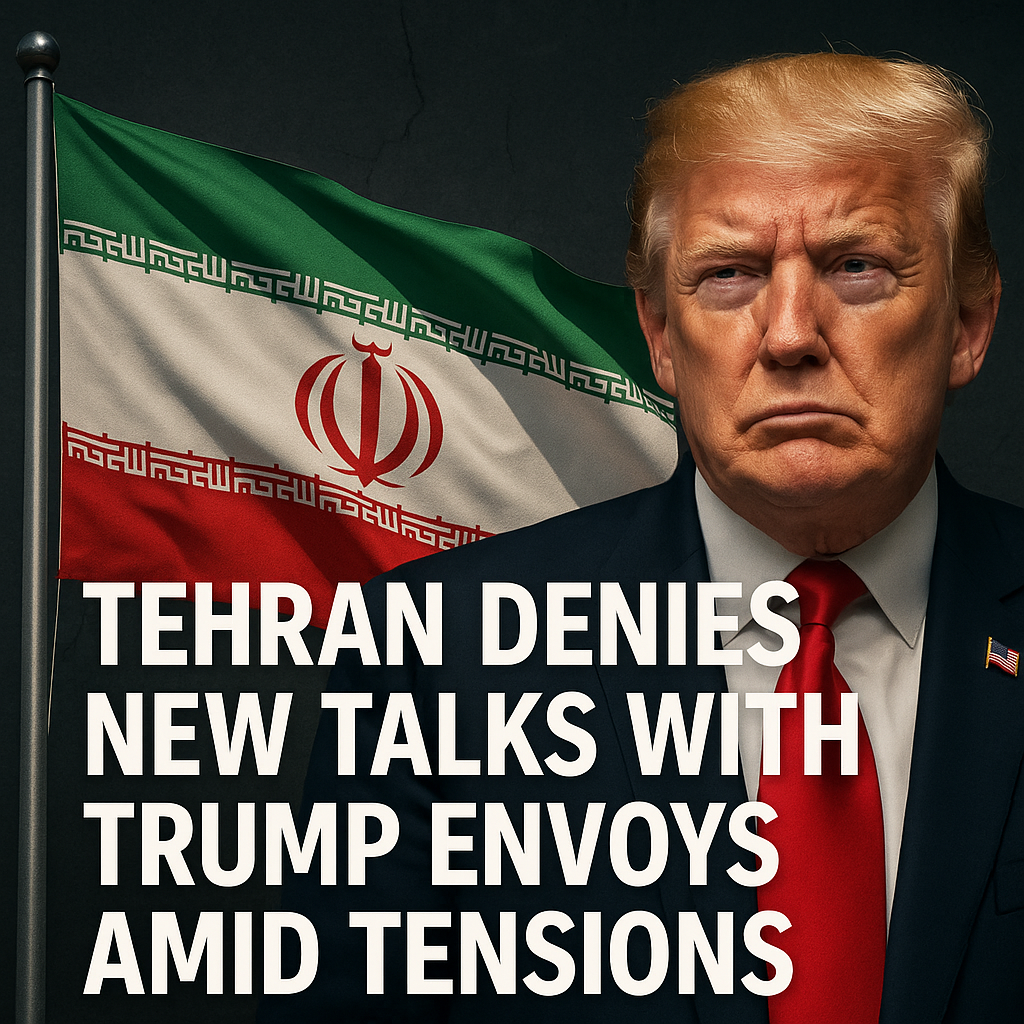
Tehran Denies New Talks with Trump Envoys Amid Tensions

Tehran Denies New Talks with Trump Envoys Amid Tensions
Tehran has recently pushed back against claims suggesting that it is engaged in fresh discussions with envoys linked to former U.S. President Donald Trump. This development comes amid heightened tensions in the Middle East, characterized by complicated narratives, varying perspectives, and an increasingly intricate geopolitical landscape. As the situation evolves, understanding the multiplicity of viewpoints is essential for grasping the implications of these claims.

The Iranian Perspective: Firm Denial
Iran’s government has unequivocally denied any new dialogue with individuals associated with the Trump administration. According to Iranian Foreign Minister Hossein Amir-Abdollahian, claims that Tehran is in conversations with Trump’s envoys are unfounded. State media reports have echoed this sentiment, asserting that these allegations are part of a broader strategy to create disarray within Iranian politics.


The Iranian leadership appears to be focused on consolidating its position in the region, and engaging with figures linked to Trump—who many in Iran regard as a primary architect of their current economic woes due to harsh sanctions—would not align with that strategy. Amir-Abdollahian emphasized that Iran would only consider dialogue if it occurs on mutually respectful terms, which he argues has not been established with the United States post-Trump’s presidency.


U.S. Perspectives: Mixed Reactions
Reactions to Tehran’s firm stance from the United States have varied. Some analysts suggest that the abrupt denial from Iran indicates a fear of internal dissensions caused by external pressure. Others believe that the Iranian government is employing a tactical response, hoping to leverage any potential negotiations when it sees a more favorable position.
Sources from Sky News indicate that while the Trump administration may have been keen to establish some form of communication, the present geopolitical climate—with shifts in U.S. foreign policy under President Biden—complicates matters. The Biden administration has indicated a willingness to reengage with Iran under the framework of the nuclear deal, which further clouds the waters surrounding any informal negotiations.
The Underlying Dynamics
The fractures in U.S.-Iran relations are not merely caused by personalities but are deeply rooted in ideological and strategic differences that span decades. The Trump era saw economic sanctions tighten and diplomatic channels fray, painting a complex picture that both countries are still navigating. Some analysts argue that while Tehran may aim to project an image of strength, the pressure of sanctions and the potential for future negotiations could exploit divisions within Iranian leadership.
Potential Outcomes:
– Continuation of Hostility: If diplomatic efforts continue to stagnate, Iran might further entrench itself against U.S. interests in the region, potentially escalating conflicts, especially in places like Syria and Yemen.
– Possibility of Dialogue: Should there be a substantial shift in U.S. policy or a new political landscape in Iran, the door could open for negotiations. Yet, the lack of trust remains a significant barrier.
Conclusion: The Uncertain Road Ahead
The denial from Tehran serves as a reminder of the intricate, often paradoxical nature of international relations today. As both nations navigate their historical grievances while also facing new geopolitical challenges, it is clear that the path forward remains fraught with obstacles.
While proponents of more diplomatic engagement call for open channels of communication, both Tehran and Washington’s complex motivations render any future discussions tentative at best. This situation underscores the necessity for continued observation and analysis, acknowledging that what appears as a straightforward geopolitical maneuver may very well be a web of interests, fears, and aspirations that complicate simple narratives.
As we move forward, one thing is certain: understanding diverse perspectives and grasping the nuances of international diplomacy will remain crucial in deciphering how these tensions may evolve or resolve in the future.















