
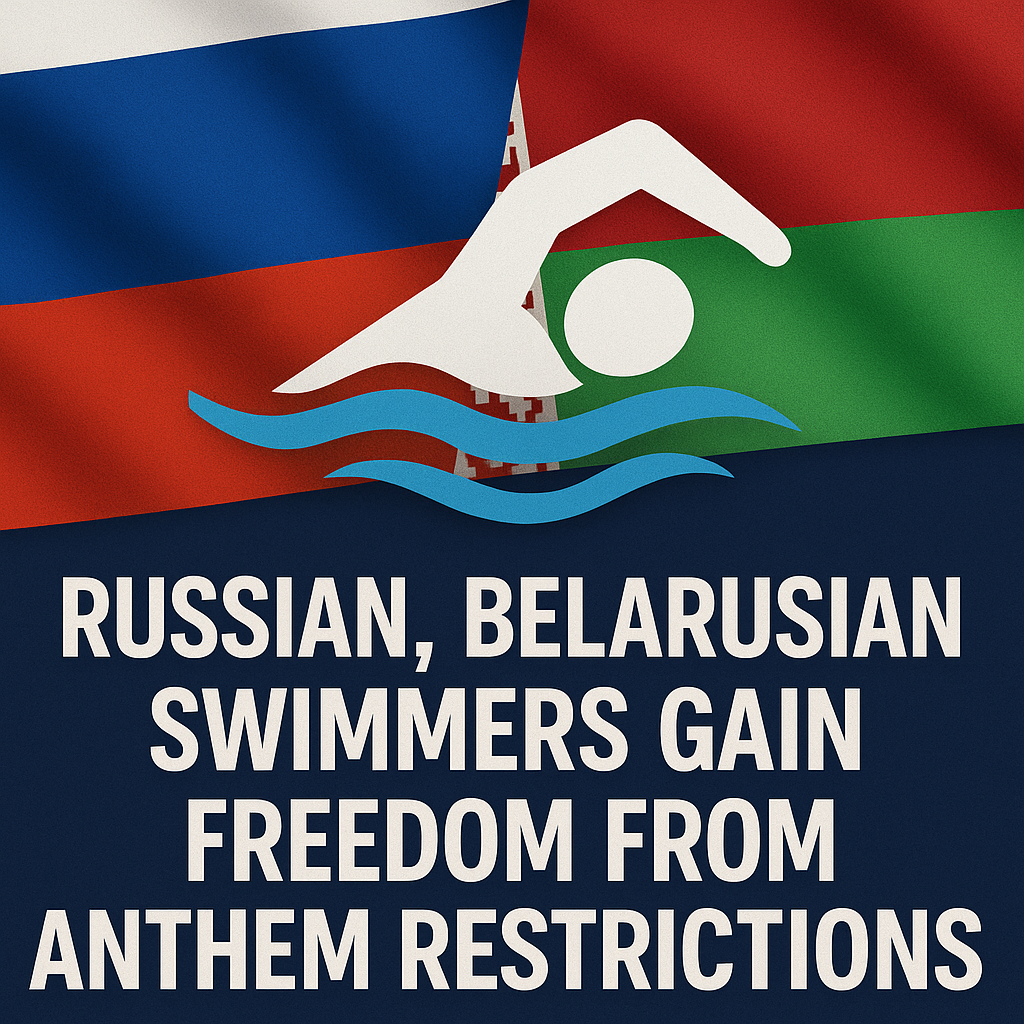
Russian, Belarusian Swimmers Gain Freedom from Anthem Restrictions

Russian and Belarusian Swimmers Gain Freedom from Anthem Restrictions
The recent decision to lift anthem restrictions for Russian and Belarusian swimmers marks a pivotal moment in the world of competitive sports. This change reflects a broader context surrounding international sporting events, nationalism, and the ongoing geopolitical tensions affecting athletes from these nations.

A Shift in Policy: What Does It Mean?
The lifting of restrictions regarding the national anthem and flag for Russian and Belarusian swimmers is widely viewed as a significant step. According to reports from Al Jazeera, this policy shift allows these athletes to represent their countries in global competitions without the previous limitations imposed due to political controversies arising from international relations and conflicts.


This decision aligns with a growing sentiment among sports governing bodies that aims to promote inclusivity and mitigate the effects of political divisions on athletes. However, opinions on this development are notably varied.


The Positive Reaction from Athletes and Supporters
Many athletes from Russia and Belarus have expressed relief and gratitude over the new policy. They argue that sport should transcend politics and be an arena for showcasing talent and hard work. Some athletes, such as swimmer Dmitry Balandin, emphasized that their identity as athletes is tied deeply to their national heritage. “For us, representing our country is a great honor, and being able to hear our anthem again is incredibly meaningful,” he stated.
Furthermore, advocates for the policy change argue that athletes should not be punished for the political actions of their governments. This viewpoint stresses that competitive sports can provide a platform for peace and dialogue, suggesting that the lifting of such restrictions can foster goodwill among nations.
Criticism and Concerns: A Divided Landscape
Conversely, not everyone views this policy change as beneficial. Critics argue that allowing Russian and Belarusian athletes to compete under their flags and anthems could be seen as an implicit endorsement of their governments’ actions, particularly concerning the ongoing conflict in Ukraine.
As reported by RT, some sporting organizations and international figures have voiced concerns that this decision may undermine the integrity of global sporting events, potentially alienating fans and athletes from nations affected by the geopolitical landscape. They fear that the normalization of Russian participation could provoke backlash, affecting the overall spirit of sportsmanship.
Additionally, there is a legitimate concern regarding the message this sends about accountability. Critics assert that lifting restrictions could be interpreted as a lack of consequence for the actions taken by these nations on the global stage, which may inadvertently downplay the seriousness of international law and ethical considerations.
Navigating the Waters: A Complex Reality
The situation surrounding Russian and Belarusian swimmers reflects a broader trend of how sports are interwoven with national identity and politics. While some see this decision as a return to normalcy in a sport that has been disrupted by conflict, others fear it is a step backward in the pursuit of global ethics in sports.
This complexity illustrates that while athletes desire a space to compete, the implications of their participation reach far beyond the swimming pool. Athletes are often seen as ambassadors for their countries, and the decisions made by governing bodies will undoubtedly impact how they are viewed on the international stage.
Conclusion: Balancing Performance and Politics
As swimming competitions proceed with these new guidelines, the focus will undoubtedly remain on the athletes and their performances. The lifting of national anthem restrictions may open avenues for athletes to perform freely, but the broader implications in terms of political accountability and the ethical responsibilities of sporting bodies will linger in discussions.
Finding a balance between allowing athletes to express their national pride and recognizing the geopolitical realities of their countries will remain a challenging endeavor for international sports organizations. Ultimately, while many are excited for the athletes who will now have the chance to compete under their national symbols, the debates regarding the intersection of sports and politics will likely continue, highlighting the complexities inherent in a globalized world.
In this evolving landscape, only time will tell how these decisions will shape the future of sports and international unity.















