
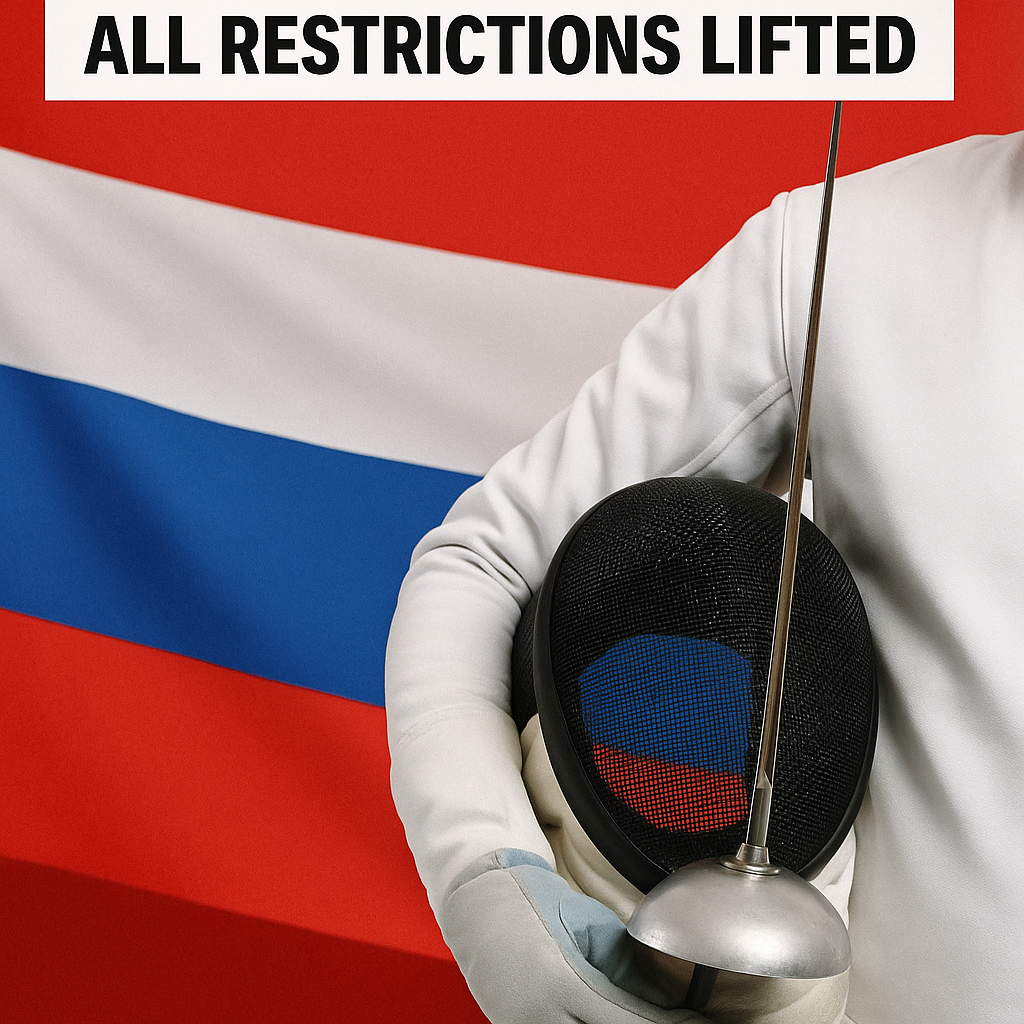
Russian Fencers Free to Compete: All Restrictions Lifted

Russian Fencers Free to Compete: All Restrictions Lifted
In a significant shift within the realm of international sports, Russian fencers are now free to compete in events following the recent lifting of restrictions that had previously sidelined them from many competitions. This development marks a turning point that impacts not only the athletes but also the larger discourse around sportsmanship, nationality, and global competition.

The Lifting of Restrictions
The decision to lift restrictions comes amid ongoing debates about the inclusion of Russian athletes in international sports, particularly in light of geopolitical tensions. Historically, sanctions and bans have often been wielded as tools of political expression, and sports have frequently been the stage where such issues intersect. In this case, the lifting of restrictions has been framed as a return to normalcy, allowing Russian fencers to once again showcase their skills on the international stage.


References from various news sources indicate a nuanced response to this change. While Russian outlets like RT celebrate the lifting as a victory for the athletes, emphasizing the narrative of fairness and equality in sports, Western media, exemplified by outlets such as Al Jazeera and Sky News, provide a more cautious perspective. They highlight the ongoing debates regarding how sports should navigate complex political landscapes.


Diverse Reactions
The reactions to this announcement have been mixed. On one side, supporters argue that the inclusion of Russian fencers is essential for maintaining the spirit of competition and bridging divides. They posit that sports should transcend political animosities and serve as a common ground for all athletes, irrespective of their nationality.
Conversely, critics caution that allowing Russian athletes back into the competitive arena could detract from accountability regarding international conduct. One of the primary concerns centered around whether the actions of the Russian government in international affairs should influence the opportunities available to its athletes. These concerns reflect a deeper ethical dilemma about the intersection of nationalism and global sportsmanship.
Compounding the issue, various fencers have expressed their mixed feelings about the lifting of restrictions. Some athletes are relieved and eager to return, as it allows them to pursue their professional careers and fulfill their ambitious aspirations. Others, however, feel a sense of unease, fearing that their participation might inadvertently lend support to broader issues that they do not condone.
The Broader Implications
From a strategic standpoint, the decision to allow Russian fencers back into international competitions raises questions about the future dynamics of global sports. Potentially, it could pave the way for further discussions about athlete representation and inclusion from nations facing similar scrutiny. Sports organizations may need to establish clearer protocols for handling similar situations, particularly where political conflict is involved.
The decision also illustrates the evolving nature of sporting regulations and their relationship with international politics. Sports bodies often find themselves treading a fine line between advocating for fair competition and responding to pressures concerning political representation and human rights.
In conclusion, the lifting of restrictions on Russian fencers opens a dialogue about the balance between competition and geopolitics in sports. While it represents an opportunity for athletes to return to their passion and profession, it simultaneously stirs a complex discussion on accountability and representation. As global sports continue to face challenges in aligning competitive integrity with ethical considerations, the response to this recent change will surely set precedents for governing bodies and athletes alike.















