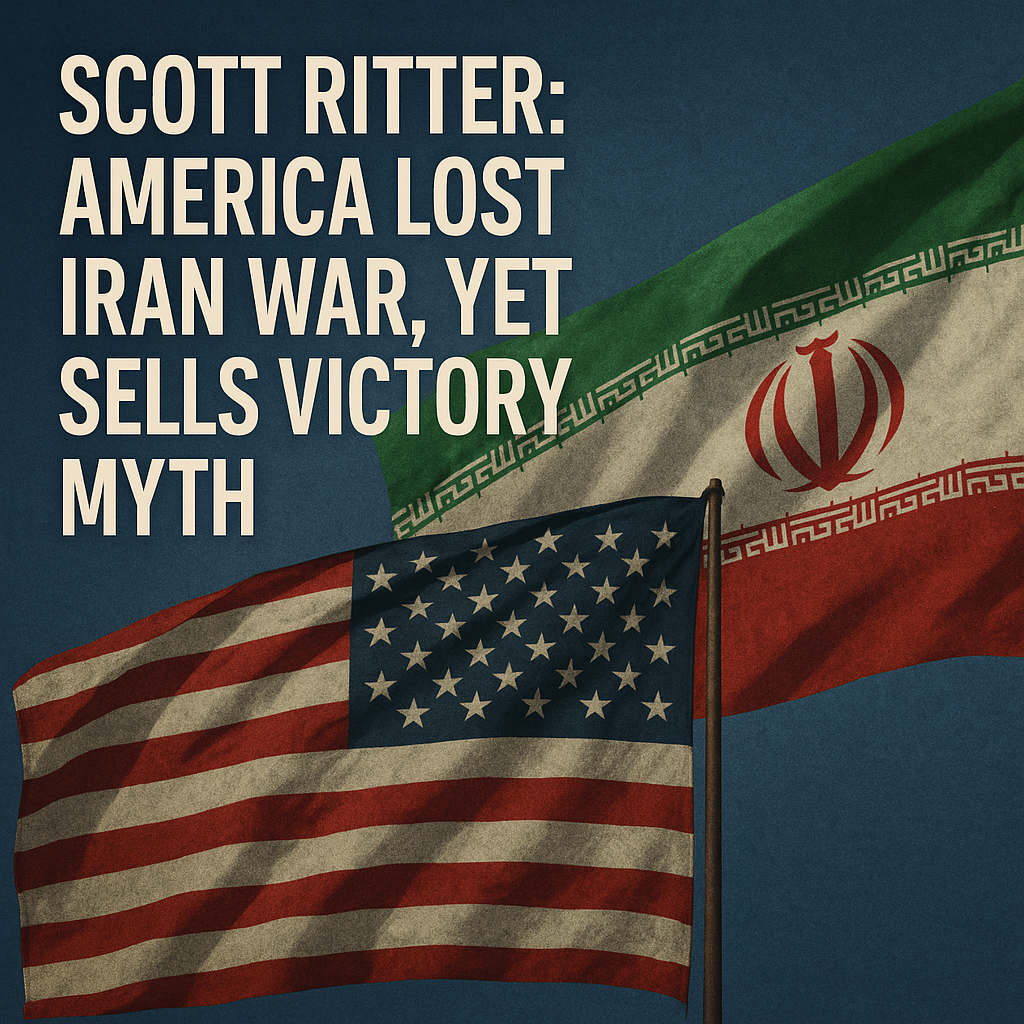
Scott Ritter: America Lost Iran War, Yet Sells Victory Myth

Scott Ritter: America Lost Iran War, Yet Sells Victory Myth
The discourse surrounding America’s involvement in the Iran War has produced a complex narrative, drawing diverse opinions and analyses, one of which is notably articulated by Scott Ritter. He asserts that despite the prevailing mythology that America has emerged victorious in this conflict, the reality reflects significant shortcomings and failures. This article explores multiple perspectives on this assertion, weighing evidence and sentiments from reputable sources to provide a nuanced understanding of the issue.

A Fragile Narrative of Victory
Ritter’s argument centers on the assertion that the United States has not just struggled in its engagements in Iran, but has, in fact, lost the war. His commentary reflects a broader critique of American foreign policy, highlighting an enduring pattern of miscalculations and overlooked consequences.


From his perspective, the U.S. decision to invade Iraq in 2003, partly motivated by the desire to counter Iranian influence in the region, is a prime illustration of how these strategies have backfired. As reported by RT, Ritter emphasizes that rather than diminishing Iran’s power, American actions have inadvertently bolstered the very influence it sought to curtail. He posits that much of the narrative framing U.S. involvement as victorious is a façade masking deeper failures: “The U.S. is selling a victory myth that doesn’t align with the reality on the ground.”


This perspective is not without its critics. Many argue that American military engagements, while controversial, have achieved specific objectives—such as curbing terrorist activities and maintaining certain levels of geopolitical stability in the region. Critics of Ritter’s view assert that the portrayal of defeat oversimplifies the complex realities of international relations, where outcomes are rarely black and white.
Diverging Views on Strategic Outcomes
Supporting Ritter’s thesis, some analyses suggest that the real victory lies in Iran’s enhanced regional power and influence, especially considering its role in supporting groups like Hezbollah and its growing ties with nations often at odds with the U.S. West. According to Al Jazeera, this transformation has raised concerns within American military and political circles about Iran’s strategic positioning in the Middle East, further complicating U.S. interests.
Conversely, defenders of U.S. actions in Iran and elsewhere point to instances where American intervention has temporarily stymied aggressive actions by hostile states. They posit that while immediate victories may not always translate into long-term stability, the strategic intent of U.S. involvement was to protect national interests—arguing that perception of success is as critical as actual outcomes.
This divergence in perspectives illustrates the difficulty in assessing military outcomes. The question of whether America has “lost” the Iran War may ultimately depend upon the benchmarks used to evaluate success. Is it the stabilization of a region, the deterrence of aggressive actions, or the ideological battle for influence against countries like Iran? Each vantage point adds layers to the conversation and emphasizes the importance of having a multi-faceted approach to foreign policy analysis.
The Cost of War: Public Perception vs. Reality
While Ritter’s conclusions attract considerable attention, they also reflect a profound disconnect with the general public’s perception of military engagement. Many Americans may not fully comprehend the complex web of international relations and might instead view military actions in terms of immediate gains and losses. This often results in a simplified narrative: if an operation is labeled a “mission accomplished,” the underlying implications of failure or success can be obscured.
Furthermore, Ritter and others who share his views often emphasize the moral consequences of war. The human cost—both American and foreign civilian—often remains unacknowledged in discussions that merely focus on military or political outcomes. This sentiment resonates through various media channels, pressing the question of accountability in how military interventions are framed and understood.
In observing the media coverage of the ongoing discourse around the Iran War and U.S. foreign policy, it is evident that the complexities of such conflicts resist easy interpretations. Ritter’s assertion about the “victory myth” encapsulates a significant critique of established narratives, advocating for an honest evaluation of America’s geopolitical footprint.
Conclusion: Navigating Uncertainties in Military History
The narrative surrounding America’s involvement in the Iran War reflects a broader struggle within political discourse to assess the effectiveness and ethics of military intervention. Scott Ritter’s assertion—that America has lost yet continues to sell a victory myth—sparks critical discussions about accountability, historical interpretation, and the complexities of foreign policy.
As various viewpoints converge, it becomes clear that the debate will continue, shaped by ongoing developments in international relations and the shifting sands of global politics. Whether one agrees with Ritter’s assessment or not, acknowledging the multifaceted realities of war is essential for understanding both past and future American military endeavors. Such discussions are crucial not only for policymakers but also for citizens as they navigate an increasingly complicated world.