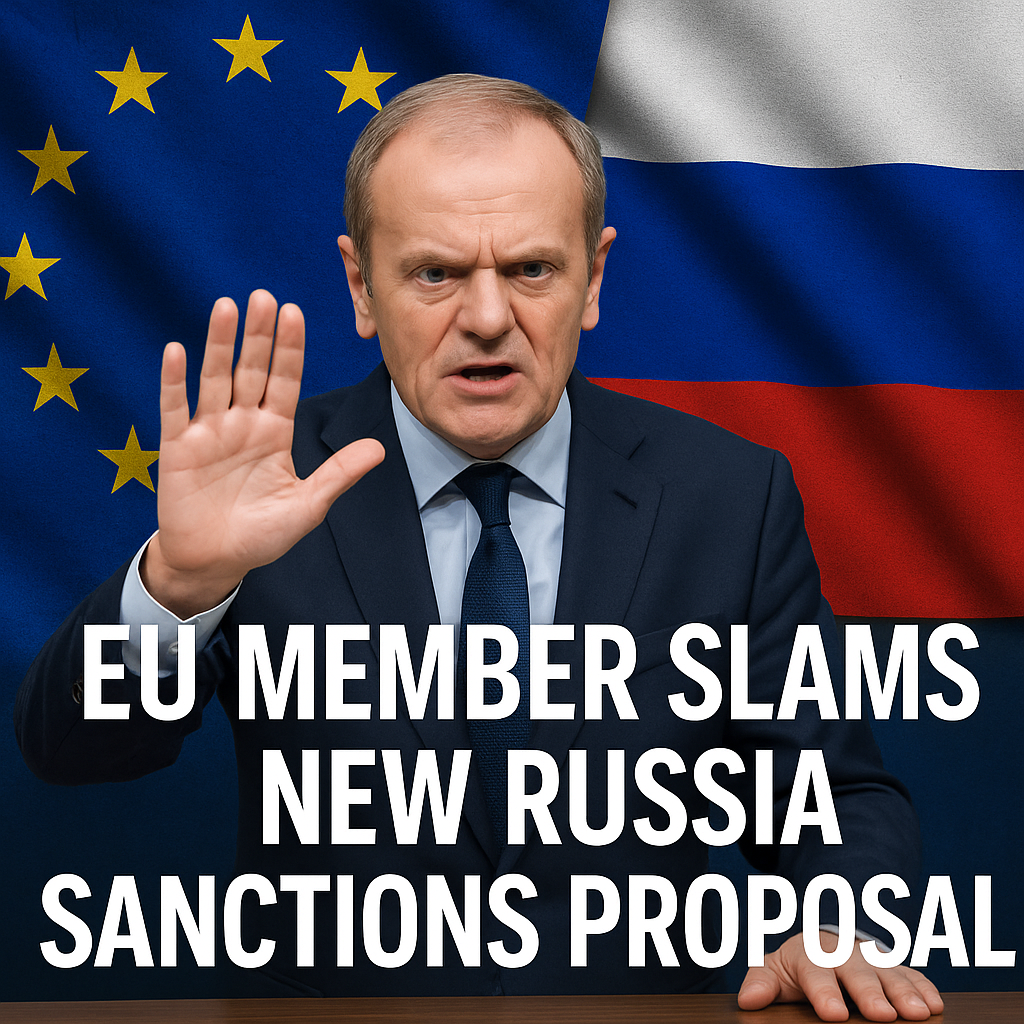
EU Member Slams New Russia Sanctions Proposal

Recent discussions surrounding new sanctions against Russia have gained traction within the European Union, stirring a complex debate among its member states. Amidst this backdrop, Bulgaria has notably raised objections to the proposed measures, reflecting a growing rift in the EU’s approach to relations with Russia.

Bulgaria’s Standpoint on Sanctions
Bulgaria’s stance against the new sanctions proposal reveals its commitment to a more cautious and balanced diplomatic approach. According to reports, Bulgaria’s Prime Minister Nikolai Denkov emphasized that unilateral sanctions could negatively impact the country’s economy and energy security. Bulgaria relies significantly on Russian energy and has expressed concerns that additional sanctions might lead to increased energy prices and economic instability in the nation.


This perspective is shared by other EU member states that are equally dependent on Russian energy supplies. Countries like Hungary have historically taken a more measured approach to sanctions, advocating for a balance between standing firm against aggression and maintaining energy security. Bulgarian officials have highlighted the need for the EU to consider the economic ramifications of its policies, suggesting that a one-size-fits-all approach may not be suitable for each member state.


The Broader Context of EU Sanctions
The EU has imposed a series of sanctions on Russia in response to its military actions in Ukraine, with the aim of signaling disapproval and pressuring Moscow to change its course. However, as the situation evolves, so too does the effectiveness and consequences of these sanctions. Multiple reports indicate that while sanctions have had significant impacts on the Russian economy, they have also reverberated back to the EU, with increased energy prices and inflation affecting member states differently based on their dependency on Russian resources.
Contrarily, some EU nations argue that maintaining a strong, unified front is crucial to signal solidarity against Russia’s actions. Countries like Poland and the Baltic states take a more hardline stance, advocating for stricter measures to send a clear message. They argue that easing sanctions or making exceptions undermines EU unity and emboldens Russia, potentially leading to further aggression.
Weighing Diverse Viewpoints
The divergence in views reflects broader geopolitical calculations and the economic realities faced by member states. The ongoing war in Ukraine has reshaped priorities across Europe, prompting countries to assess their positions based on immediate national interests versus collective EU objectives.
For example, while Poland and the Baltic states are keen on pursuing stringent sanctions, Bulgaria’s hesitation highlights the tensions between moral imperatives and economic pragmatism. The issue becomes more complex when considering that many Eastern European countries are wary of Russia’s military aspirations while also fearing economic repercussions from sanctions that could backfire.
Seeking Solutions Amidst Complexity
As discussions continue, the EU faces the challenge of crafting a cohesive strategy that accommodates the varied interests of its member states. It is clear that a nuanced approach is needed—one that aligns the collective security goals of the EU with individual member states’ economic realities.
Amidst these discussions, EU leaders must engage in an open dialogue with dissenting voices from countries like Bulgaria to understand the unique challenges they face. Open communication could lead to a more tailored sanctions framework that respects the economic concerns of certain member states while still addressing the geopolitical crisis at hand.
As Bulgaria and other nations voice their concerns regarding the new sanctions proposal, the EU is confronted with the reality that strengthening sanctions against Russia cannot come at the expense of the economic stability of its own members. The balancing act is precarious but essential, underscoring the intricate interplay between diplomacy, security, and economics in the global arena.
In navigating these complex waters, the EU may ultimately find it vital to reassess its stance on sanctions, ensuring that its policies remain both principled and practical. As the situation unfolds, the discourse around sanctions will likely continue to evolve, reflecting the diverse perspectives within the Union and the pressing need for cohesion in an increasingly polarized world.