
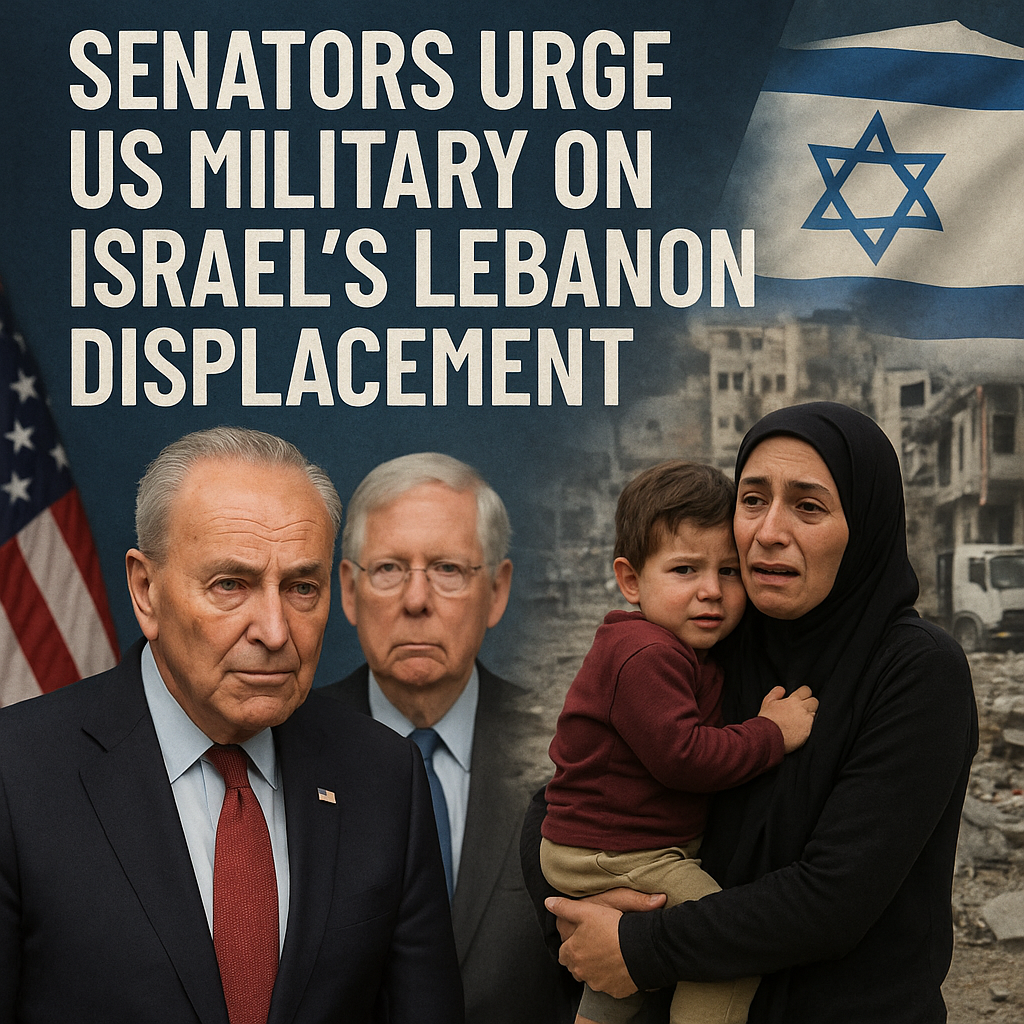
Senators Urge US Military on Israel’s Lebanon Displacement

Senators Urge US Military on Israel’s Lebanon Displacement
Amid ongoing tensions in the Middle East, US Senators are calling on the military to reassess its support for Israel’s actions in Lebanon, particularly regarding the displacement of civilians. The humanitarian implications of these decisions are at the forefront of discussions, reflecting a complex blend of geopolitics and moral responsibility.

The Context of Israel’s Actions
Recent military operations by Israel targeting specific regions in Lebanon have led to significant civilian displacement. According to reports from Al Jazeera, Israeli authorities justify these actions as necessary for national security, claiming they are combating forces perceived as threats. However, the repercussions for civilians have been severe, with thousands forced from their homes and critical infrastructure damaged.


The debate surrounding Israel’s actions is not solely about military strategy; it delves into ethical considerations regarding the treatment of non-combatants. Critics argue that the tactics employed can sometimes lead to disproportionate harm to innocent people, with severe consequences for regional stability. As Senator Chris Murphy stated during a recent congressional discussion, “We can’t turn a blind eye to the humanitarian cost.”


Diverse Perspectives on Military Support
The role of the US military in this scenario is under scrutiny. While some Senators advocate for continued support of Israel given its historical alliance with the US, others are pushing for a more cautious approach that weighs humanitarian factors more heavily. According to a Sky News report, several Senators are advocating for Congress to conduct a thorough review of military assistance to Israel, especially in light of the reported displacement and destruction in Lebanon.
Supporters of Israel argue that the nation’s right to defend itself is paramount. In contrast, humanitarian advocates emphasize the need for the US to lead with its values, prioritizing the protection of civilians over uncritical support of military offensives. The situation serves as a reminder that unwavering support might not always equate to endorsing the methods employed.
The Humanitarian Crisis Unfolding
As the crisis continues, humanitarian organizations are struggling to provide assistance to those displaced. Families are left without shelter, and basic services are under immense pressure. The situation, as reported by RT News, reflects a broader pattern often seen in conflict zones where military objectives lead to civilian suffering.
The urgency of the issue prompted a recent letter from Senators to the Pentagon, highlighting the need for strategic assessments that incorporate humanitarian impacts. They stressed the importance of balancing security interests with the responsibility to safeguard human rights. This call for reassessment indicates a growing recognition of the complexities involved in international military support and the unpredictable nature of conflict.
Ethical Imperatives in U.S. Foreign Policy
As discussions unfold, the ethical dimensions of US foreign policy come into play. The shifting standpoint of some Senators signals a potential reevaluation of how military aid is dispensed and monitored. The sentiment in Washington is not uniform, illustrating a spectrum of beliefs on what constitutes responsible support for an ally engaged in conflict.
The challenge lies in ensuring that military support does not inadvertently contribute to atrocities or exacerbate humanitarian crises. Thus, the Senators advocating for a review are also contending with the long-standing narrative that emphasizes military partnerships over humanitarian considerations.
Conclusions: The Road Ahead
The situation in Lebanon paints a vivid picture of the complex realities of modern warfare and the delicate balance between supporting allies and preserving human rights. As the US Senators press the military for a reassessment of its policies towards Israel’s actions, the outcome may significantly affect foreign relations and international humanitarian law.
In evaluating the developments, one fact remains clear: the human cost of military operations cannot be overlooked. Establishing a policy framework that seeks to protect civilians while addressing security concerns will require dialogue, negotiation, and a commitment to humanitarian principles. The actions taken in the coming weeks and months will be critical, shaping not only the fate of those currently displaced but also the future of US involvement in the region.















