
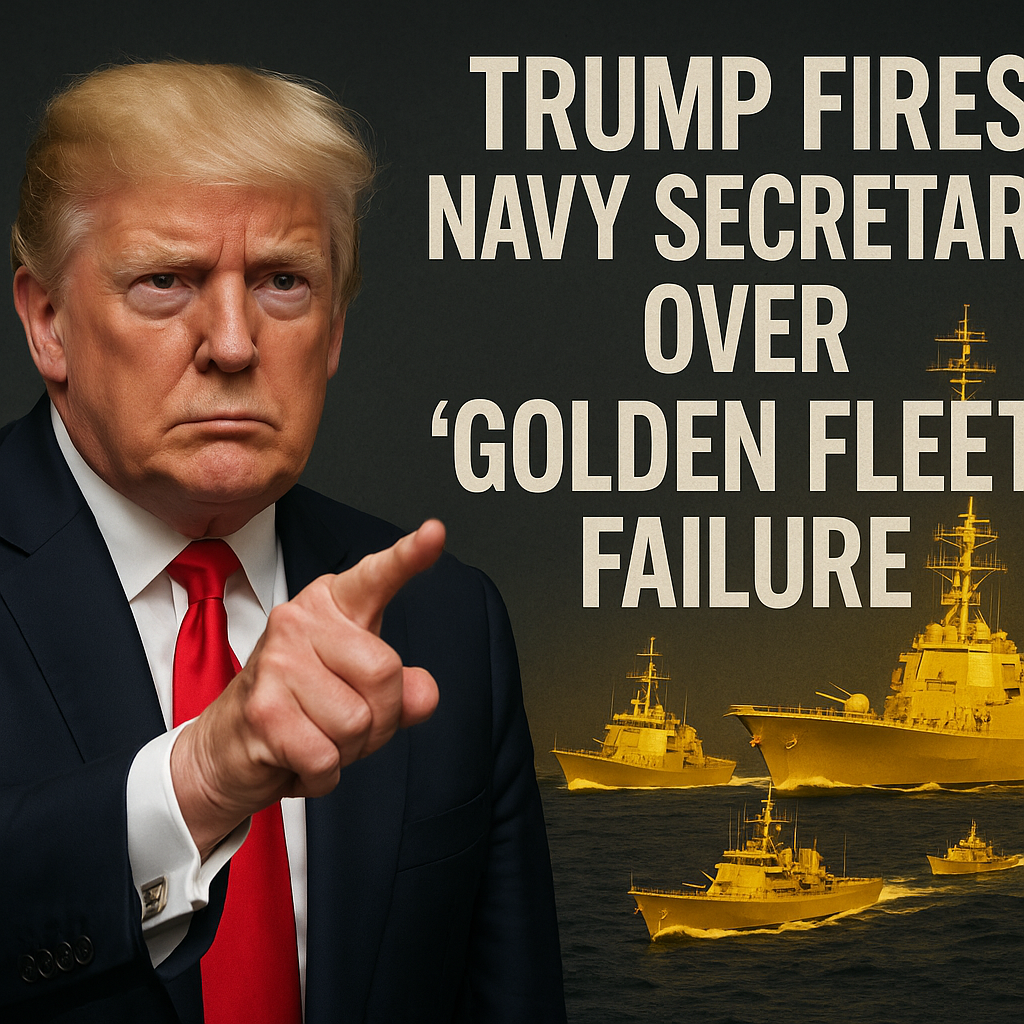
Trump Fires Navy Secretary Over ‘Golden Fleet’ Failure

Trump Fires Navy Secretary Over ‘Golden Fleet’ Failure
In a bold and controversial move, former President Donald Trump recently dismissed the Navy Secretary, an action that has stirred debates across various political and military circles. The termination was reportedly linked to what Trump has referred to as the “Golden Fleet” failure, a term that encapsulates perceived shortcomings in naval modernization and readiness. This situation is emblematic of broader themes in U.S. military strategy and governance, prompting both support and criticism from diverse perspectives.

Background on the ‘Golden Fleet’ Controversy
The so-called “Golden Fleet” initiative was aimed at rejuvenating the U.S. Navy, focusing on modernization, fleet expansion, and enhancing military readiness amidst rising global tensions. Trump’s dismissal of the Navy Secretary has been framed by some supporters as a necessary act of accountability in achieving these ambitious objectives. They argue that strong leadership is essential to rectify perceived deficiencies in the Navy’s operational capability and technological advancements.


However, critics have raised concerns about the implications of such personnel changes, arguing that politically motivated firings could destabilize military leadership and hinder long-term planning. For many, the Navy Secretary held a technocratic role focused on strategy rather than political posturing. A sudden change in leadership might disrupt ongoing projects and crucial modernization efforts, particularly at a time when global threats are evolving rapidly, including tensions with China and Russia.


Divided Opinions Across the Political Spectrum
Opinions surrounding Trump’s decision to fire the Navy Secretary are sharply divided. Supporters of the former president view the move as a necessary shake-up within the Navy’s hierarchy, reflecting a desire for dynamic leadership that prioritizes rapid modernization and strategic effectiveness. They argue that the defense sector needs leaders willing to challenge the status quo to address shortcomings in naval capabilities effectively.
On the other hand, critics—including some military experts and political commentators—have cautioned against the potential consequences of this decision. They express concern about the politicization of military leadership and the risk that such actions may undermine the morale and cohesion of the armed forces. Additionally, some have underscored the importance of maintaining stable leadership in the Defense Department to ensure continuity in military operations, especially in a tumultuous geopolitical landscape.
Analyzing the Broader Implications
The ramifications of Trump’s firing of the Navy Secretary extend beyond the immediate personnel change. It raises essential questions about the relationship between military leadership and political oversight. As the U.S. grapples with its global commitments and military readiness, the dialogue surrounding accountability and effectiveness within the defense realm has never been more pertinent.
Some military analysts argue that the effectiveness of military leadership should not solely be judged through the lens of political alignment. Instead, evaluations should focus on strategic accomplishments and operational outcomes. This perspective suggests that while political accountability is vital, it shouldn’t come at the expense of operational stability, particularly in an institution where long-term planning is crucial.
Moreover, the political ramifications of this event may reverberate beyond military circles. Trump’s action could fuel further debates on defense spending, military readiness, and the broader implications of leadership changes on national security. Should political appointments become frequent at the expense of military expertise, the bipartisan consensus on national defense could be jeopardized, leading to long-term implications for U.S. defense policy.
Conclusion: Navigating a Complex Landscape
Trump’s dismissal of the Navy Secretary over the “Golden Fleet” issue highlights a delicate balance between accountability and stability within military leadership. While supporters celebrate the upheaval as a means to drive change, detractors warn of the risks associated with politically motivated leadership decisions. As the U.S. continues to navigate an unpredictable global landscape, maintaining a capable and cohesive military structure remains a priority.
The ongoing discussions around this topic reflect the complexity inherent in forging a path forward for U.S. military policy. Though consensus may be elusive, the debate emphasizes the significance of responsible governance in ensuring national security while fostering a robust and effective defense strategy. In the end, striking a balance between political oversight and military professionalism will be key to the Navy’s and, by extension, the country’s future readiness.















