
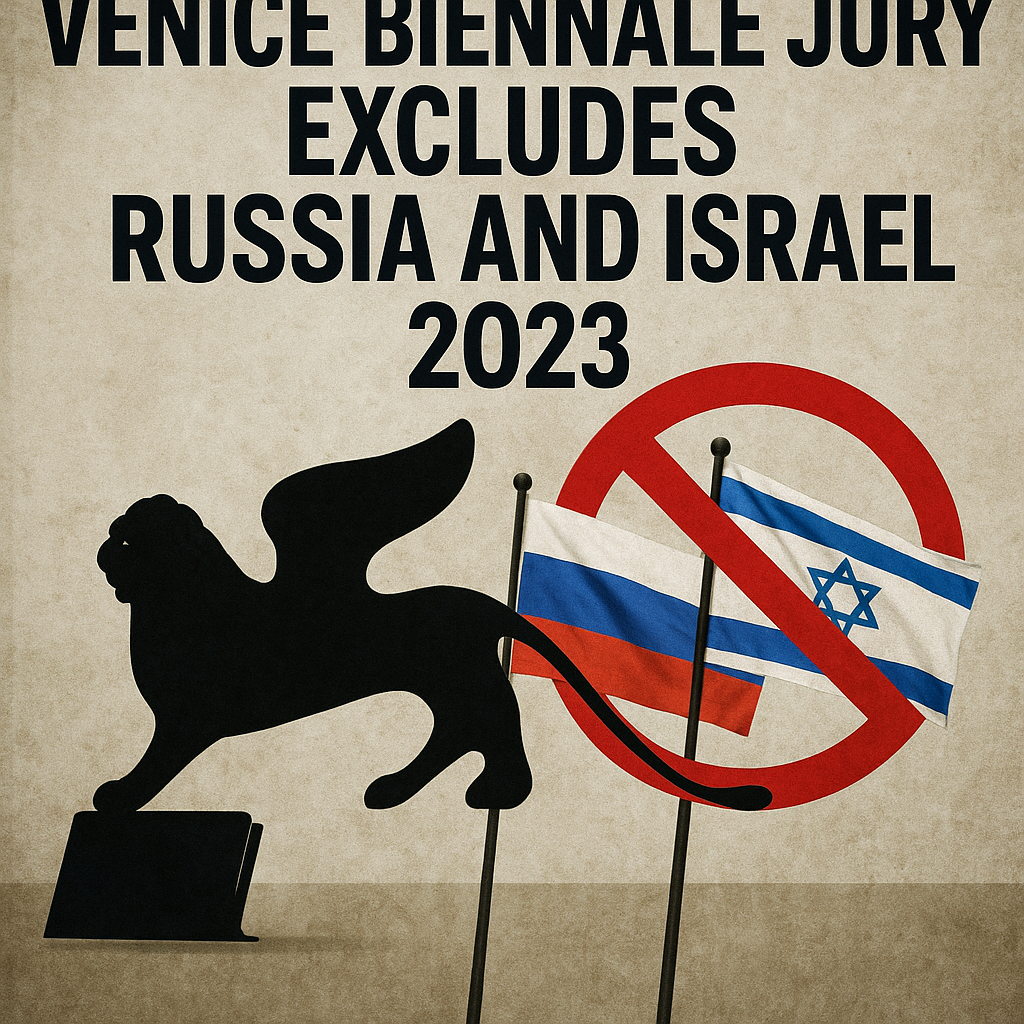
Venice Biennale Jury Excludes Russia and Israel 2023

Venice Biennale Jury Excludes Russia and Israel: An Analysis
The Venice Biennale, one of the most prestigious cultural events in the world, has sparked significant debate in its 2023 edition as the jury announced the exclusion of Russia and Israel from its awards. This controversial decision raises questions about the role of art in international relations and the implications for creative expression in a politically charged environment.

The Context of Exclusion
The Venice Biennale is renowned for showcasing contemporary art and fostering dialogue among nations. However, in 2023, the jury’s decision reflects the complex geopolitical landscape. According to RT, the exclusion stems from ongoing tensions related to military conflicts involving both countries—Russia’s invasion of Ukraine and ongoing tensions between Israel and Palestine. These political realities have influenced cultural spheres globally, with venues like the Biennale becoming platforms for ideological expressions.


Conversely, Al Jazeera highlights that while the intention may be to make a statement against aggression, such exclusions risk polarizing the artistic community itself. Critics argue that art should transcend politics, allowing for a space where diverse voices can be heard, regardless of national affiliations. By eliminating contributions from particular nations, the Biennale risks curbing the very creativity it aims to celebrate.


Divergent Perspectives on Artistic Expression
Art as a Political Tool
Supporters of the jury’s decision argue that art must reflect the moral stance of the community. The exclusion of artists from Russia and Israel can be seen as a form of protest against perceived injustices. Sky News reports that some artists claim this move mirrors broader social movements that demand accountability from nations involved in aggressive actions. By excluding these countries, the Biennale sends a clear message of solidarity with victims of war and oppression.
However, this view is not uncontested. Many in the art world assert that penalizing artists for their governments’ actions is unjust. Art has historically served as a platform for dissent, even against oppressive regimes. Al Jazeera cites several artists who believe that their participation could foster dialogue and exchange between conflicting perspectives. They argue that exclusion may inadvertently bolster propaganda narratives within these nations, hindering the potential for artistic influence over public sentiment.
Complications of Exclusion
The decision to ban certain countries from the Venice Biennale raises important questions about the nature of artistic expression in a global context. The RT article points out that cultural events traditionally seek to promote inclusivity and dialogue—principles that seem at odds with the exclusionary policies at play this year.
Some commentators posit that the Biennale’s choice may lead to broader implications for international cultural exchanges. If other events follow suit, it may create a dangerous precedent where art, a tool meant to bridge divides, becomes a battleground for geopolitical conflicts. Artists from excluded countries might find themselves marginalized not only in Venice but in other creative platforms.
A Call for Dialogue
The underlying conversation in the art community appears to shift toward the importance of dialogue over confrontation. While the need to take a stand against aggression is widely recognized, the manner in which that stand is taken can either foster or inhibit understanding. As noted by Sky News, inclusive dialogues could lead to deeper reflections and potentially more impactful art that critiques the very circumstances that led to such geopolitical conflicts.
In navigating these complex terrains, many advocates stress that cultural practitioners should aim to elevate voices of dissent from within the excluded nations, thereby turning the spotlight onto the human experiences behind the political narratives. By facilitating participation from all sides, art could serve as a powerful tool for empathy, urging audiences to think critically about conflict and resolution without shutting down avenues for expression.
Reflecting on the Future of Artistic Platforms
The deliberations surrounding the Venice Biennale’s jury decisions underscore the precarious dance between art and politics. As the art world continues to grapple with these issues, the 2023 Biennale may serve as an important case study for future cultural events. Will international artistic platforms find ways to remain neutral grounds, or will they become increasingly aligned with political positions, ultimately limiting the scope of artistic expression?
As the discussions unfold, it is clear that the intersection of art and geopolitics will remain a fervent topic. The exclusion of Russia and Israel from the Biennale’s awards highlights not just the consequences of exclusion but also the potential for art to foster understanding amid discord. It is up to artists, audiences, and cultural institutions to navigate these waters with sensitivity and awareness, ensuring that creativity continues to thrive, irrespective of the political climate.
In a world so divided, the Venice Biennale’s journey through this complexity may yet remind us of the profound role art plays in our collective consciousness, urging us toward empathy and understanding while advocating for peace and dialogue.















