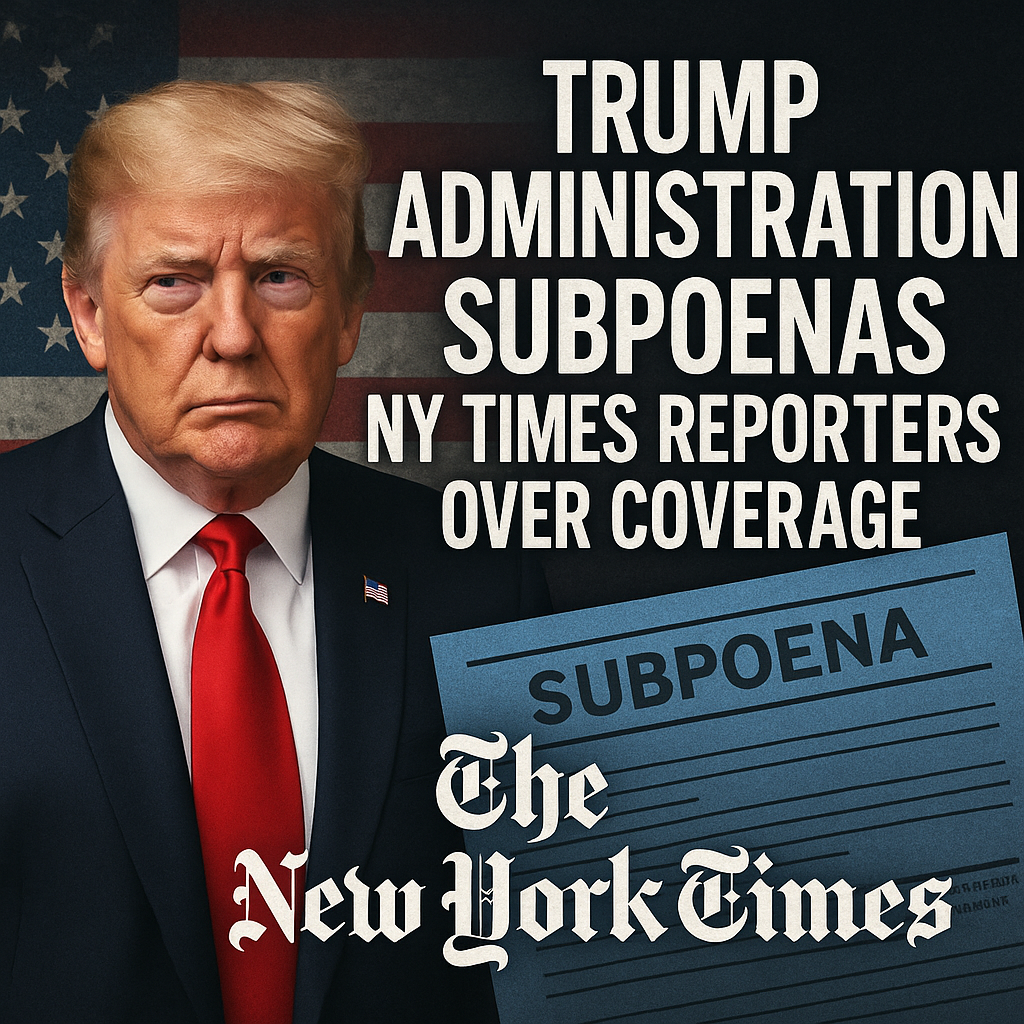
Trump Administration Subpoenas NY Times Reporters Over Coverage

Trump Administration Subpoenas NY Times Reporters Over Coverage
In a dramatic turn of events, the Trump administration has taken an unprecedented step by issuing subpoenas against reporters from The New York Times. This action comes amidst a growing scrutiny over the White House’s handling of information and press freedoms, invigorating a broader conversation about the relationship between government and the media.

The Context of the Subpoenas
The subpoenas target specific journalists involved in reporting that critiques or investigates the Trump administration’s policies, particularly surrounding national security and its dealings with foreign entities. Some media analysts interpret this as an attempt to stifle dissent and control narratives, while others argue that it may be a reflection of a government grappling with its own internal leaks and the accountability it seeks from the press.


While these subpoenas have been largely condemned by civil liberties organizations, government officials defend their actions by stating that the integrity of national security matters is paramount. The tension between protecting classified information and preserving the freedom of the press is at the heart of this debate.


According to sources from Al Jazeera, the government argues that the need for transparency about how news is gathered justifies these legal maneuvers. Critics, on the other hand, question the legality and ethics of targeting journalists, warning it sets a dangerous precedent that undermines the First Amendment rights enshrined in the Constitution.
Diverse Perspectives on Press Freedom
The reactions to these subpoenas are representative of two distinct viewpoints that are manifesting across political and social lines.
On one hand, supporters of the Trump administration often view the media as biased. They argue that journalists sometimes prioritize sensationalism over fact, justifying the government’s probing into their methodologies. The notion here revolves around accountability—if the press influences public perception and policy, shouldn’t it be under scrutiny itself?
Conversely, opponents of the subpoenas express concerns over the integrity of journalistic practice and the broader implications on democracy. They point to the historical significance of a free press as a pillar of a functioning society, echoing sentiments that any encroachment upon this freedom ultimately serves to empower governmental overreach.
Prominent media watchdogs have decried these actions as reminiscent of authoritarian regimes, warning that undermining press freedoms is a slippery slope that can result in systemic misinformation.
The Implications for Journalism and Society
The ramifications of these subpoenas extend beyond the immediate impact on The New York Times. They serve as a crucial touchpoint for discussing the evolving landscape of journalism in the digital era, where the lines between fact and opinion are often blurred.
With public trust in media already at a low, such government actions could exacerbate existing divides, pushing more consumers to seek out alternative news sources that align with their beliefs rather than those that challenge them. This phenomenon could contribute further to the polarization of society, leaving informed discourse at risk of deteriorating into echo chambers.
Moreover, legal experts argue that the implications of these subpoenas could set a worrying precedent, should they foster an environment where journalists feel intimidated or threatened. The relationship between the press and the presidency is fundamental to maintaining a transparent democratic process; eroding that trust could have long-term consequences that ripple through society.
Conclusion: Navigating Uncertainty
As this situation continues to unfold, uncertainty remains about the long-term repercussions for journalists, the Trump administration, and the media landscape at large. The balance between national security and press freedom is an ongoing debate that demands thoughtful consideration from all sectors of society.
While the subpoenas may aim to hold the media accountable, they also shine a light on the critical need for transparency and integrity from all parties involved. The evolving dialogue surrounding press freedoms and government authority will undoubtedly shape the future of journalism, with attention keenly focused on how both the press and government navigate this complex terrain.