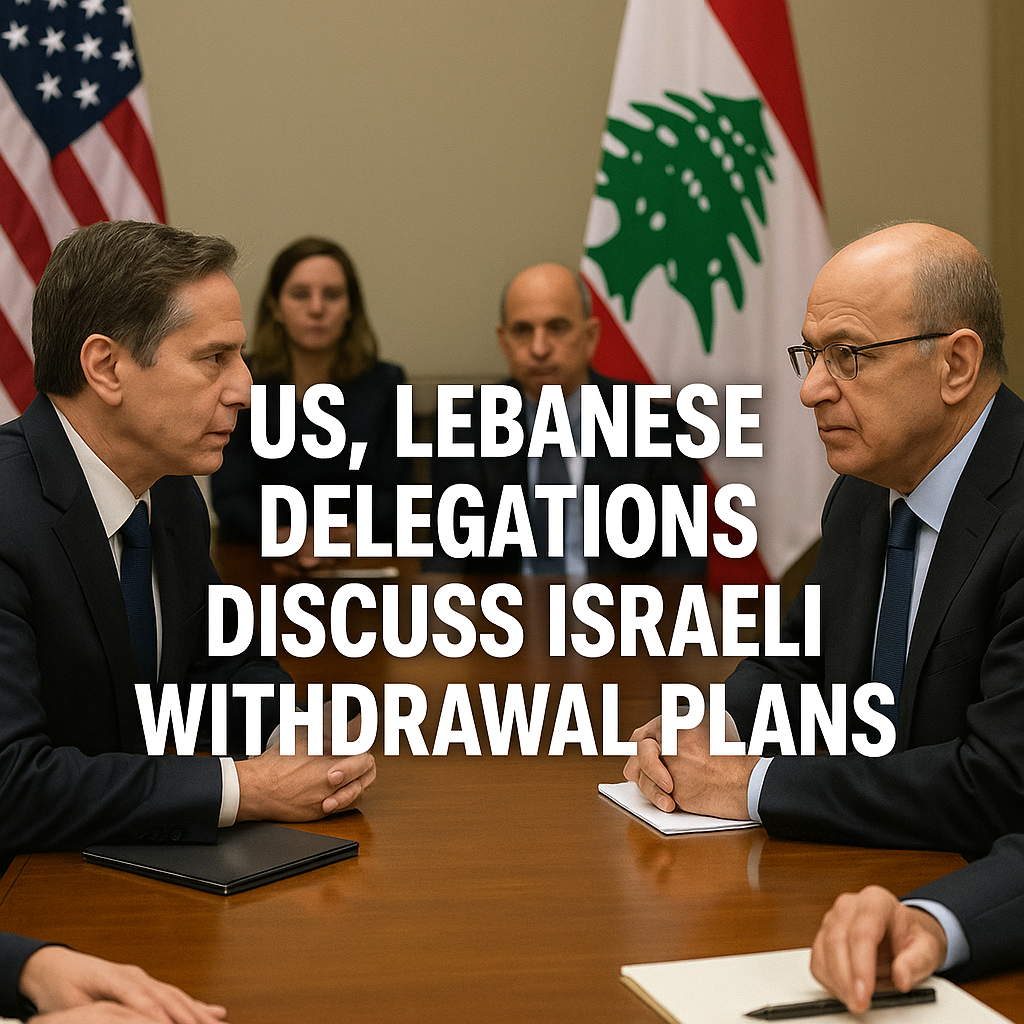
US, Lebanese Delegations Discuss Israeli Withdrawal Plans

US and Lebanese Delegations Discuss Israeli Withdrawal Plans
Tensions in the Middle East have long been complicated by territorial disputes and diplomatic negotiations, a reality that took center stage with recent discussions between US and Lebanese delegations concerning Israeli withdrawal plans from specific areas. The dialogue stems from ongoing conflicts that have affected both national and regional stability, garnering varied reactions from different stakeholders involved.

The Context of the Discussions
The backdrop to these discussions is the intricate history of Lebanese-Israeli relations, marked by several conflicts over the decades, including the Lebanese Civil War and the 2006 Lebanon War. Israel’s presence in certain areas has been a point of contention, leading to calls for their withdrawal. According to reports from Al Jazeera, the meeting involved discussions about Israeli “pilot zones,” areas where Israeli forces are expected to withdraw, indicating a potential shift in military strategy and diplomatic relations.


The US has traditionally played a role as a mediator in the region, leaning towards facilitating a peaceful resolution to longstanding issues. Factors such as the political landscape in Lebanon, the influence of Hezbollah, and broader geopolitical rivals, including Iran, further complicate these discussions. Participants highlighted the necessity of a collaborative approach to ensure a comprehensive strategy addressing the multifaceted elements at play.


Analyzing the Implications
As the US and Lebanese delegations conversed, various viewpoints emerged regarding the implications of an Israeli withdrawal. Advocates for withdrawal argue that it could lead to enhanced stability and pave the way for renewed peace talks. Lebanon’s government appears cautiously optimistic about a positive outcome, seeing it as an opportunity to solidify territorial integrity and sovereignty. On the flip side, sceptics question whether Israeli withdrawal would genuinely lead to improved conditions or merely shift tensions elsewhere.
Furthermore, RT highlighted that these discussions come amidst increasing Iranian influence in Lebanon, particularly through Hezbollah, which could complicate any potential agreements. Critics express concerns that a vacuum created by a withdrawal might be filled by non-state actors seeking to exploit regional instability. This apprehension underscores the delicate nature of the negotiations and the challenges that lie ahead.
The Road Ahead
While the discussions mark a promising step towards diplomacy, uncertainties remain. Both delegations must navigate a landscape rife with historical grievances and contemporary challenges. Some experts suggest that the outcome will depend significantly on regional players’ responses, particularly Iran’s role in Lebanon.
In examining the range of viewpoints, it’s apparent that while there is hope for progress, the path to lasting peace remains fraught with obstacles. As negotiations continue, both US and Lebanese officials will need to manage expectations, recognizing that any resolution will likely require careful incremental steps rather than rapid transformations.
In conclusion, the ongoing discussions between the US and Lebanese delegations regarding Israeli withdrawal plans highlight a complex interplay of historical grievances, regional tensions, and diplomatic efforts. While there is potential for progress, stakeholders must remain cautiously optimistic, aware of the multifaceted factors influencing the broader Middle Eastern landscape. The talks represent not just a dialogue about territory, but a chance to reshape future relationships across the region, though the outcome remains uncertain.