
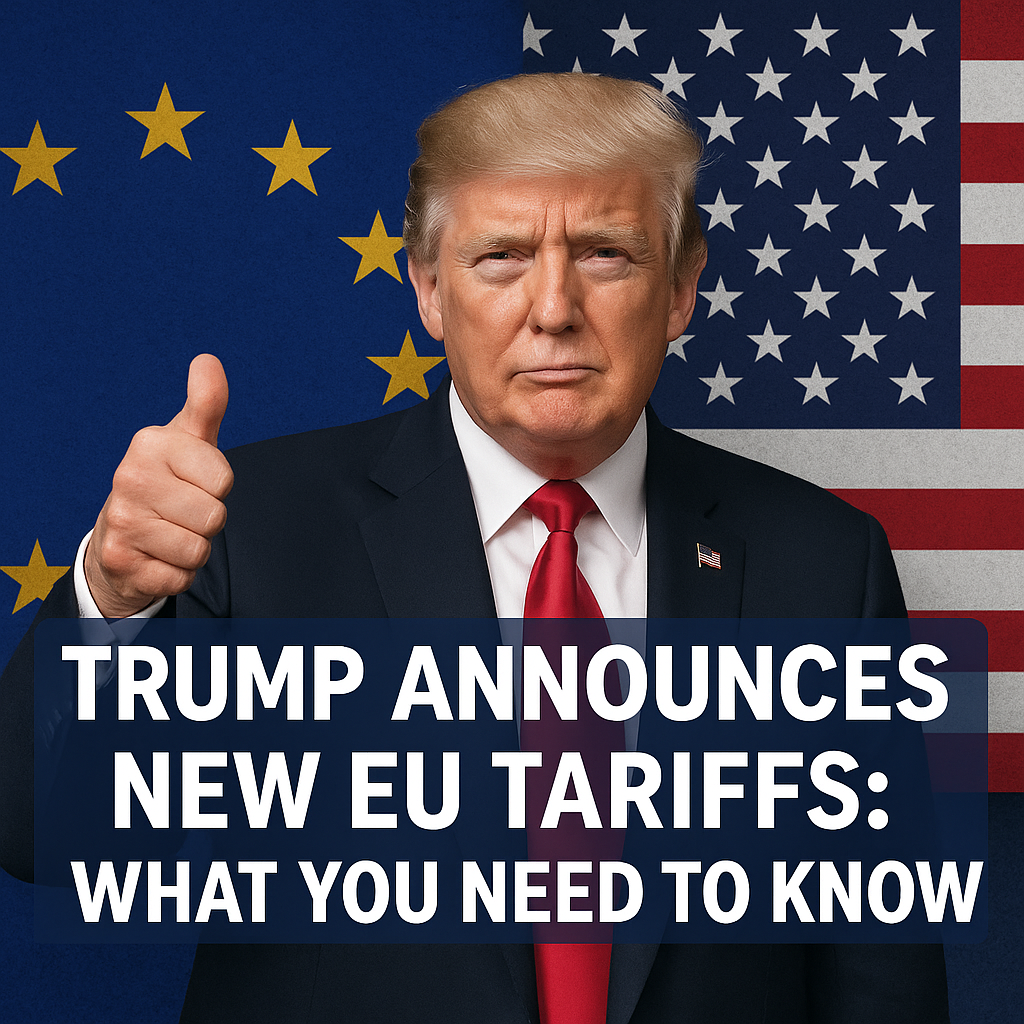
Trump Announces New EU Tariffs: What You Need to Know

Trump Announces New EU Tariffs: What You Need to Know
Former President Donald Trump recently reignited trade tensions between the U.S. and the European Union by announcing a new set of tariffs aimed at European imports. This move is part of a broader strategy that Trump claims will protect American jobs and promote domestic industries. However, reactions to this announcement are mixed, reflecting various perspectives on its implications for the economy, international relations, and American consumers.

A Renewed Focus on Trade Policy
Trump’s announcement comes as no surprise to observers who have watched his administration’s history of imposing tariffs on imports. He argues that these tariffs are necessary to level the playing field, asserting that European products have historically benefited from unfair trade practices. According to Trump, “By imposing these tariffs, we are securing American jobs and ensuring that foreign competition does not undermine our local businesses.”


However, experts warn that such tariffs can lead to unintended consequences. According to a report from Sky News, economists suggest that imposing tariffs may increase costs for American consumers, as imported goods become more expensive. This scenario could exacerbate inflationary pressures already affecting the economy.


Furthermore, Al Jazeera highlights that tariffs may also provoke retaliatory measures from the EU, further straining transatlantic relations. “We need to find a balance between protecting American jobs and maintaining our international relationships,” said international trade expert Dr. Sarah Thompson.
Support and Opposition: A Divided Perspective
The reaction among political leaders varies widely. Supporters of Trump, primarily within the Republican Party, laud the decision as a necessary step to protect American workers and industries from what they perceive as aggressive pricing strategies from European nations. They argue that past trade deals have often favored foreign interests at the expense of American labor.
Conversely, critics from both sides of the aisle caution against such an aggressive approach. Many Democrats and some moderate Republicans are concerned that the new tariffs could lead to a trade war, reminiscent of the tensions seen during Trump’s previous administration. According to a RT News report, Democratic Senator Maria Cantwell stated, “We need to be cautious. While we understand the importance of fair trade, initiating tariffs could end up hurting the very workers we aim to protect.”
The economic implications of the new tariffs extend beyond merely trade balances. Various industries, particularly those reliant on European imports such as automotive and technology, may face increased costs, leading to higher prices for consumers. This sentiment echoes the concerns raised by Sky News, which highlights how such trade measures could ripple through the economy, affecting everything from retail prices to job security.
The Broader Implications
The geopolitical landscape surrounding trade policies is complex and multifaceted. Traders and analysts are keenly observing how European nations will respond to these new tariffs. Some European leaders have already emphasized their commitment to fighting back against what they view as protectionist measures. For instance, a statement from the European Commission could signal a readiness to impose tariffs on American goods, in what would become a reciprocal cycle of escalating tensions.
Moreover, the timing of Trump’s announcement is critical. It aligns with a growing trend in global politics where countries are increasingly leaning towards nationalism and protectionism. This pivot raises questions about the future of international cooperation on crucial issues such as climate change, public health, and economic stability.
In addition, with the global economy still recovering from the effects of the COVID-19 pandemic, many leaders argue that fostering collaboration and reducing trade barriers would be a more beneficial approach to economic recovery. However, Trump’s supporters maintain that a hardline stance will ultimately fortify the U.S. economy in the long run.
While there is validity to the arguments put forth by both sides, the uncertainty regarding the long-term impact of these tariffs is palpable. Stakeholders, from small businesses to multinational corporations, are left grappling with potential shifts in their operational frameworks.
Conclusion: Moving Forward
As Trump’s new tariffs on EU imports unfold, the reaction from both political figures and economists will be crucial in determining the future of U.S.-EU relations and global trade policies. Observers will need to monitor not only the immediate financial implications but also the broader geopolitical responses that may arise.
The competing narratives surrounding this announcement underscore the contrasting views on trade: one centered on protectionism and national interests, the other advocating for a more collaborative global trade environment. The upcoming months are likely to reveal whether Trump’s gambit will be seen as a necessary protection measure or a counterproductive move that leads to greater economic and diplomatic strife. Ultimately, the path forward remains uncertain, but what is clear is that trade policies will continue to evolve amidst an ever-changing global landscape.















