
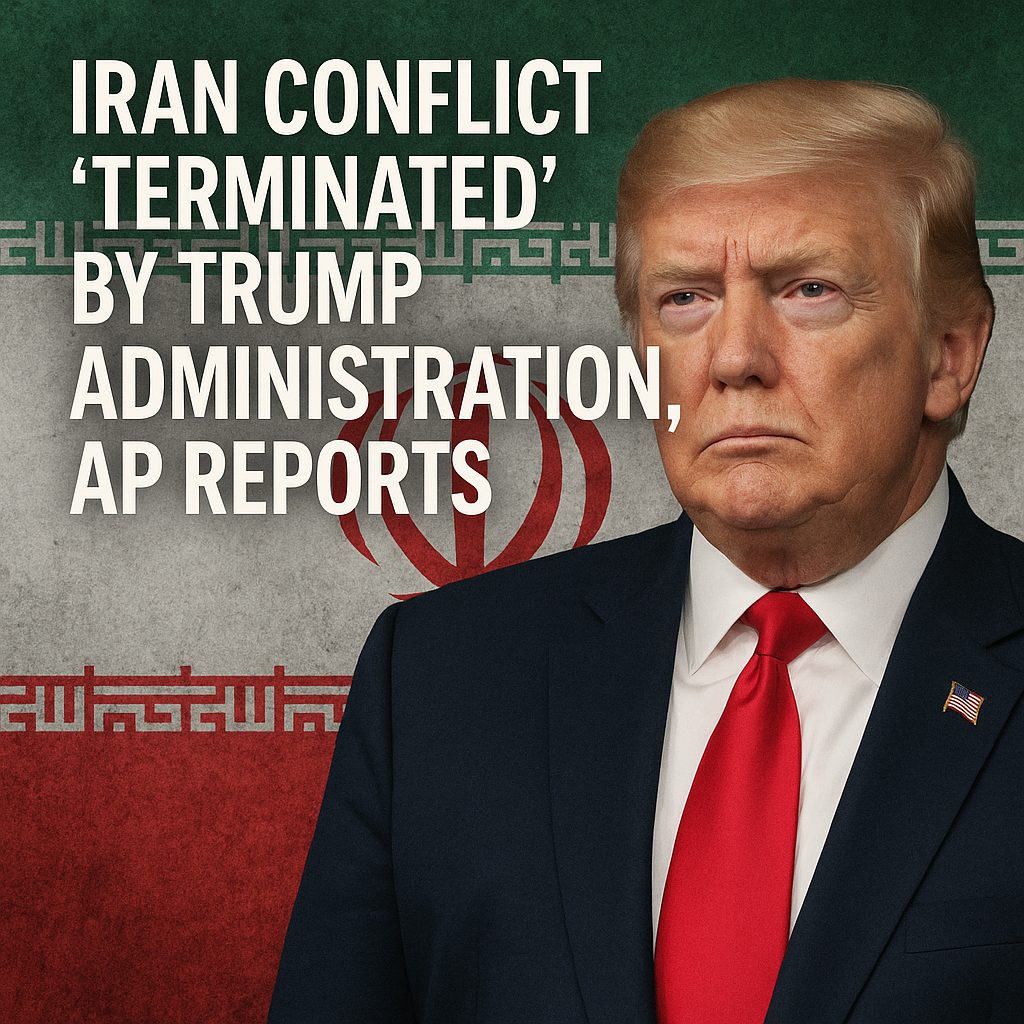
Iran Conflict ‘Terminated’ by Trump Administration, AP Reports

Iran Conflict ‘Terminated’ by Trump Administration: A Complex Legacy
Recent announcements regarding the Iran conflict have sparked renewed conversation around the legacy of the Trump administration’s foreign policy. Various reports, including those from AP, have indicated that the conflict with Iran has been “terminated.” This assertion invites a deeper examination of the implications and realities surrounding U.S.-Iran relations, as well as the political landscape leading up to and following this declaration.

Divergent Perspectives on U.S.-Iran Relations
Diverse viewpoints emerge when we analyze the ramifications of the Trump administration’s approach to Iran. Proponents of the “termination” narrative argue that decisive actions, such as the U.S. withdrawal from the Joint Comprehensive Plan of Action (JCPOA) in 2018, fundamentally shifted the dynamics of the conflict. Critics, however, contend that this strategy not only deepened hostilities but also destabilized the region, leading to more significant tensions and potential confrontations.


Support for the Termination Claim
Supporters see the Trump administration’s hardline stance as a necessary measure against a regime they depict as belligerent and unpredictable. Documents and statements emerging from official channels suggest that U.S. policies effectively curtailed Iranian influence, particularly in conflict regions like Syria and Yemen. Supporters claim that a reassertion of U.S. presence in the Middle East has dissuaded aggression, positing that the administration successfully showcased strength where previous strategies fell short.


Furthermore, commentators highlight that following sanctions imposed by the U.S., Iran’s economy has faced substantial challenges, effectively undermining its ability to project power. “The sanctions have hit hard, limiting Tehran’s resources for regional actors and proxies,” noted a recent analysis on RT. This perspective emphasizes that such economic constraints could justify the claim of a “terminated” conflict, at least regarding Iran’s aggressive posturing.
Opposition to the Termination Perspective
Conversely, critics of the administration’s approach point to the long-term implications of a policy described as confrontational. The Al Jazeera report argues that abandoning the JCPOA did not lead to stability but rather escalated tensions. “By pulling out of the nuclear deal, the U.S. has not only aggravated Iran but also alienated its European allies,” the article states, highlighting the fracturing relationships that have ensued.
Moreover, opponents voice concerns over the increased potential for conflict. The fear is that without diplomatic engagement, both nations may misinterpret military maneuvers as hostile threats, leading to dangerous escalations. The ongoing skirmishes, proxy wars, and rhetoric exchanged post-termination reflect a landscape that is anything but peaceful.
Implications for Future Engagement
As the dust settles on the Trump administration’s strategies, the question of how to proceed in U.S.-Iran relations remains complex and fraught with uncertainty. Voices from various sectors advocate for recalibrating these relations through dialogue rather than aggression.
Advocating for Diplomatic Solutions
Many analysts call for renewed engagement with Iran, emphasizing diplomacy as a vital avenue to avoid future conflicts. The value of the JCPOA is often cited, with experts suggesting that negotiations, rather than sanctions, are more effective in curbing Iran’s nuclear ambitions. The hope is that diplomatic efforts could mitigate hostilities and foster a more stable regional environment.
“Talking is cheaper than fighting,” remarked a strategic analyst interviewed by Sky News. This sentiment encapsulates the barycentric appeal for diplomacy over military measures. For instance, rebuilding collaborative channels could lead to cooperative explorations of mutual interests, like energy security and counter-terrorism.
The Road Ahead
Despite the calls for diplomacy, the challenges remain significant. Both the internal politics within Iran—where hardliners often overshadow reformist sentiments—and the domestic politics of the U.S., which sees polarized views regarding Iran, complicate the prospects for a sustainable resolution. Additionally, successive administrations must navigate preexisting agreements and concepts of credibility, further complicating the landscape.
Final Thoughts: Uncertainty in Conclusion
The assertion that the Iran conflict has been “terminated” is, at best, a partial truth. While certain political maneuvers have produced tangible effects, the long-term ramifications highlight a more intricate reality. Whether through dialogue or continued sanctions, the stakes remain high. As U.S.-Iran relations evolve, stakeholders on all sides must grapple with the past while shaping a future that holds promises of peace or continuing strife.
Ultimately, the discourse surrounding the termination of the Iran conflict serves as a reminder that resolving deeply entrenched geopolitical issues requires not just action but thoughtful deliberation and genuine engagement. The coming years may prove critical in determining whether the path taken is one of lasting resolution or recurring conflict—an outcome we must watch closely.















