
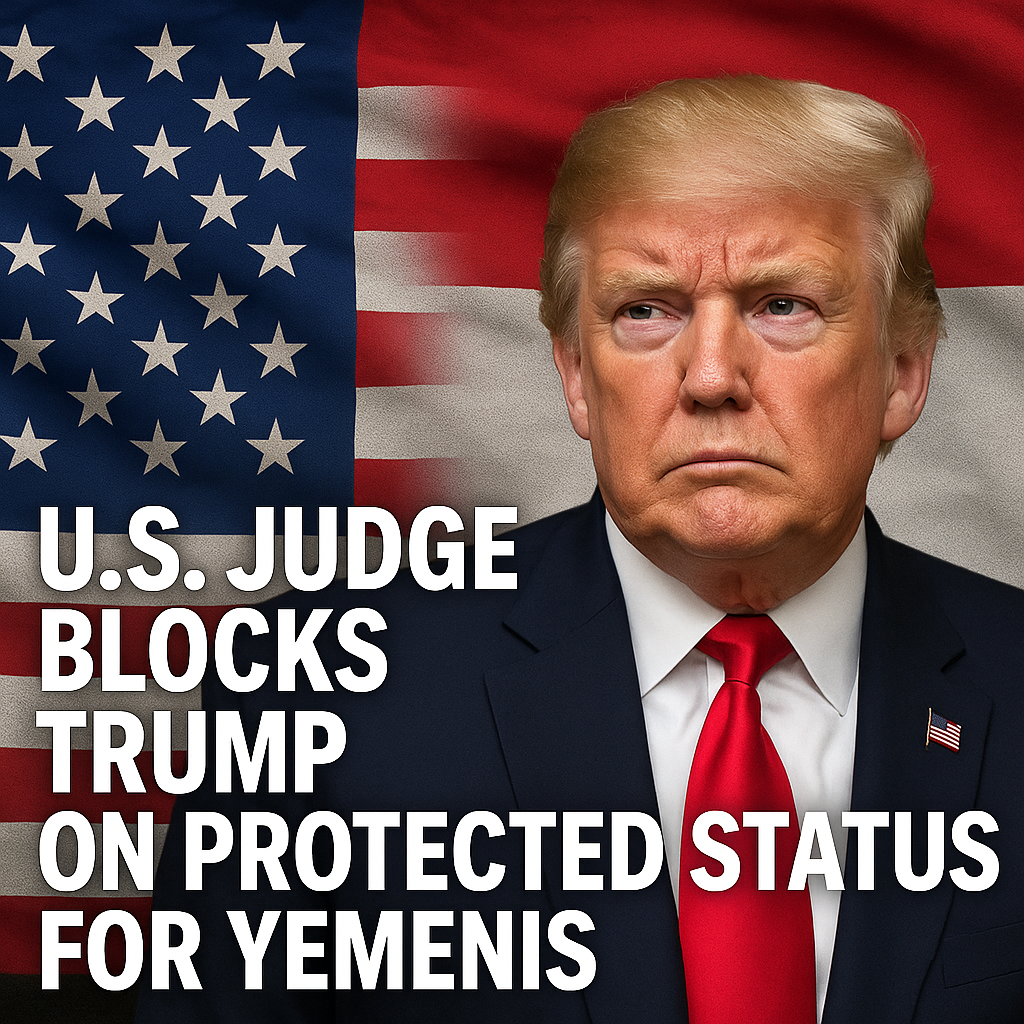
US Judge Blocks Trump on Protected Status for Yemenis

U.S. Judge Blocks Trump on Protected Status for Yemenis
In a recent ruling, a U.S. judge has blocked former President Donald Trump’s administration from ending Temporary Protected Status (TPS) for Yemeni nationals. This decision comes amid ongoing conflict and humanitarian crises in Yemen, raising questions about the complexities of immigration policy in light of international situations.

Understanding Temporary Protected Status
Temporary Protected Status is designed to provide refuge for individuals from countries experiencing severe hardship, whether due to conflict, natural disasters, or other extraordinary circumstances. Yemeni nationals have benefited from this protection since 2017, a response to a brutal civil war and humanitarian crises that have led to widespread starvation and displacement.


Recent court decisions emphasize the need for a careful balance between immigration policy and humanitarian obligations. The judge’s ruling, which appears to affirm the necessity of TPS, highlights concerns regarding the dire situation in Yemen.


A Complex Humanitarian Landscape
The humanitarian crisis in Yemen is often described as one of the worst in the world. With over 24 million people in need of aid, the conflict has resulted in countless civilian casualties and widespread suffering. According to UNICEF, nearly 400,000 children under the age of five are at risk of severe acute malnutrition. Given this context, the judge’s decision to block the termination of TPS can be seen not only as a legal ruling but also as a reflection of the humanitarian need to protect individuals fleeing such conditions.
While some argue that ending TPS could curtail immigration to the U.S. and facilitate a more stringent immigration policy, others believe that these humanitarian protections are essential. Critics of the Trump administration’s intent to end TPS for Yemeni nationals frequently cite the legal and moral obligations to uphold protections during times of turmoil.
Diverging Opinions on Immigration Policy
Reactions to the ruling have been polarized, reflecting broader societal divisions. Advocates for immigrant rights, including organizations like the American Civil Liberties Union, hailed the decision as a necessary affirmation of the country’s commitment to humanitarian principles. These advocates often emphasize that denying such statuses undermines the U.S.’s reputation as a refuge for the oppressed.
On the other hand, some political commentators argue that the proliferation of TPS can set a precedent that complicates immigration policies. They suggest that while humanitarian considerations are critical, countries like Yemen should work toward internal conflict resolution rather than rely on foreign asylum.
The Broader Implications
The ruling has broader implications not just for Yemeni nationals but for the future of TPS as a whole. It underscores the tension between U.S. immigration policy and international human rights as well as the role of judicial systems in overseeing executive authority. Furthermore, the decision might impact other TPS designation countries, creating a ripple effect in subsequent cases.
Conversations around TPS are not merely about immigration but about the U.S.’s role on the global stage. As the climate of geopolitical unrest continues to evolve, judges’ decisions on matters of protected statuses will likely be pivotal, guiding how the U.S. navigates its response to global humanitarian crises.
In conclusion, while the ruling against the Trump administration’s efforts to end TPS for Yemenis addresses immediate humanitarian needs, it also opens up a debate around the long-term implications for U.S. immigration policy. As the situation in Yemen remains fragile, the protection of its nationals will continue to be a critical topic in the realm of immigration law and humanitarian efforts. As these developments unfold, a balanced approach that respects legal frameworks and humanitarian needs will remain essential.















