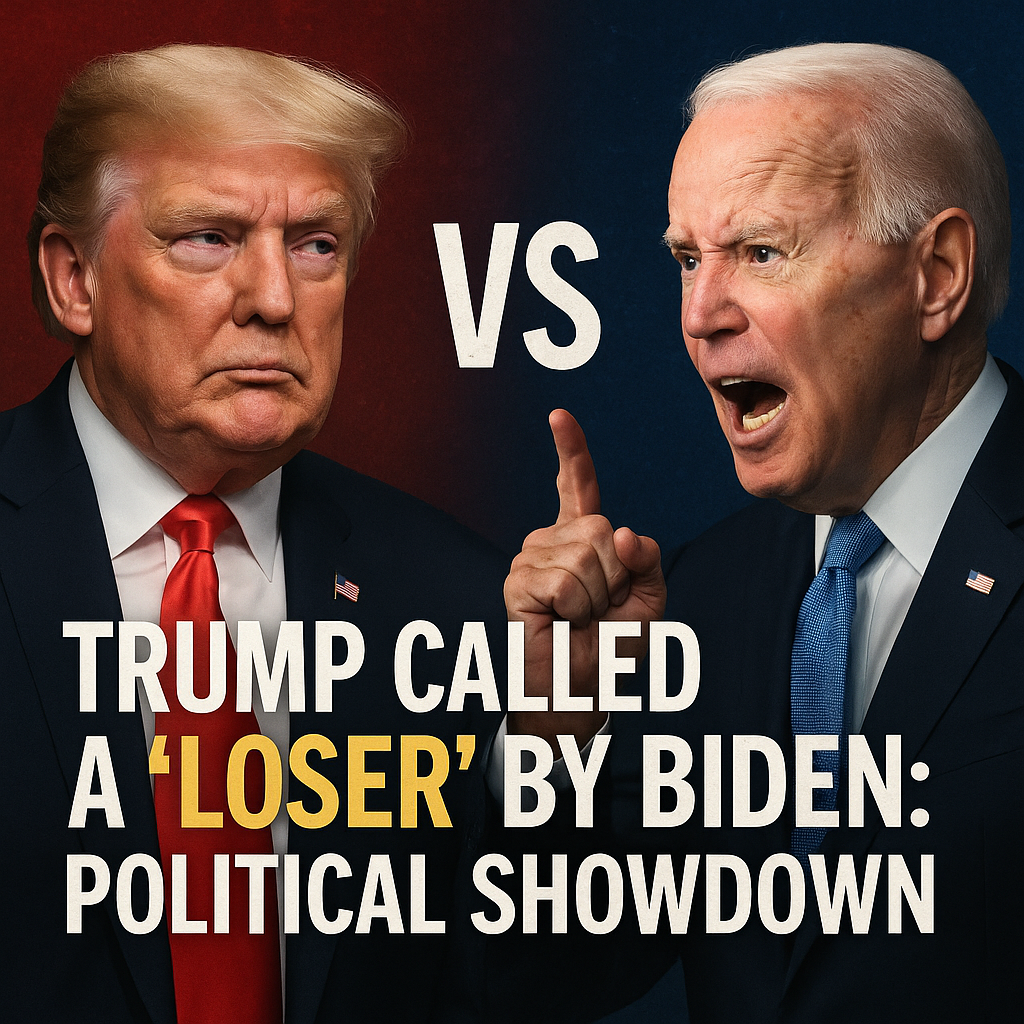
Trump Called a ‘Loser’ by Biden: Political Showdown

In a highly publicized political showdown, President Joe Biden has publicly labeled former President Donald Trump a “loser,” igniting a fresh wave of partisan dialogue and scrutiny in American politics. This exchange reflects not only their personal animosities but also the broader tensions underlying the current political landscape.

The Context of Biden’s Comment
Biden’s remark came during a recent address aimed at rallying support for upcoming elections, where he emphasized the need for unity and collaboration. While addressing a crowd of supporters, he criticized Trump’s leadership style and decisions during his tenure. According to reports from RT, Biden’s comments were meant to underscore his administration’s achievements compared to what he perceives as Trump’s failures. This framing of Trump as a “loser” serves not only as a personal attack but as a broader strategic move aimed at galvanizing Biden’s base ahead of crucial elections.


The political ramifications of such comments are significant. Analysts point to a growing trend among Democratic leaders to frame their opposition as ineffectual or out of touch. This tactic aims to energize their supporters and differentiate themselves from their rivals. Critics, however, argue that such inflammatory language may do more harm than good by heightening political divides rather than fostering dialogue.


Diverging Perspectives on the Exchange
From various sources, there appears to be a consensus that Biden’s comment is emblematic of a deeper rift in American politics. According to Al Jazeera, the “loser” label reflects more than just personal animus; it signifies a broader narrative about the fate of American democracy. Many Democrats view Trump’s continued influence as detrimental, believing that characterizing him in such a way might dissuade some undecided voters.
Conversely, Trump supporters and Republican strategists reacted vehemently to Biden’s remarks, framing them as a sign of desperation rather than strength. Political commentators, including those from Sky News, note that Trump has consistently maintained a loyal base that rallies against what they perceive as elitism and dismissal from the establishment. In this light, Biden’s words could invigorate Trump’s supporters, solidifying their commitment to his brand of politics.
The Risks and Rewards of Political Rhetoric
Biden’s choice of language serves as a double-edged sword. On one hand, it may help bolster the morale of Democrats who feel disheartened by internal challenges and external attacks. By portraying Trump as a loser, Biden communicates a message of progress and hope for those disillusioned by the prior administration.
On the other hand, such rhetoric risks alienating moderate voters who may not appreciate overt personal attacks. Political analysts warn that excessive divisiveness could backfire, particularly in swing states where independent voters hold sway. The challenge lies in balancing the need to energize the base without crossing the line into alienation.
Conclusion
In the charged atmosphere of American politics, Biden’s characterization of Trump as a “loser” is a reflection of the ongoing battles for narrative control. As both sides prepare for elections, the stakes grow ever higher. While Biden seeks to solidify his support, Trump remains a formidable opponent, resilient and determined to counter any portrayal that undermines his brand. As the political landscape continues to evolve, the implications of such remarks will shape the discourse and perhaps even the outcomes of future elections.
Ultimately, the crux of this political interaction lies in its representation of the broader ideological and emotional divides currently characterizing the American political scene. As both parties navigate this increasingly polarized environment, the language employed by leaders will be critical in shaping perceptions, rallying supporters, and influencing undecided voters.