Israel Kills Four Palestinians: Gaza Tents Under Attack

Israel Kills Four Palestinians: Gaza Tents Under Attack
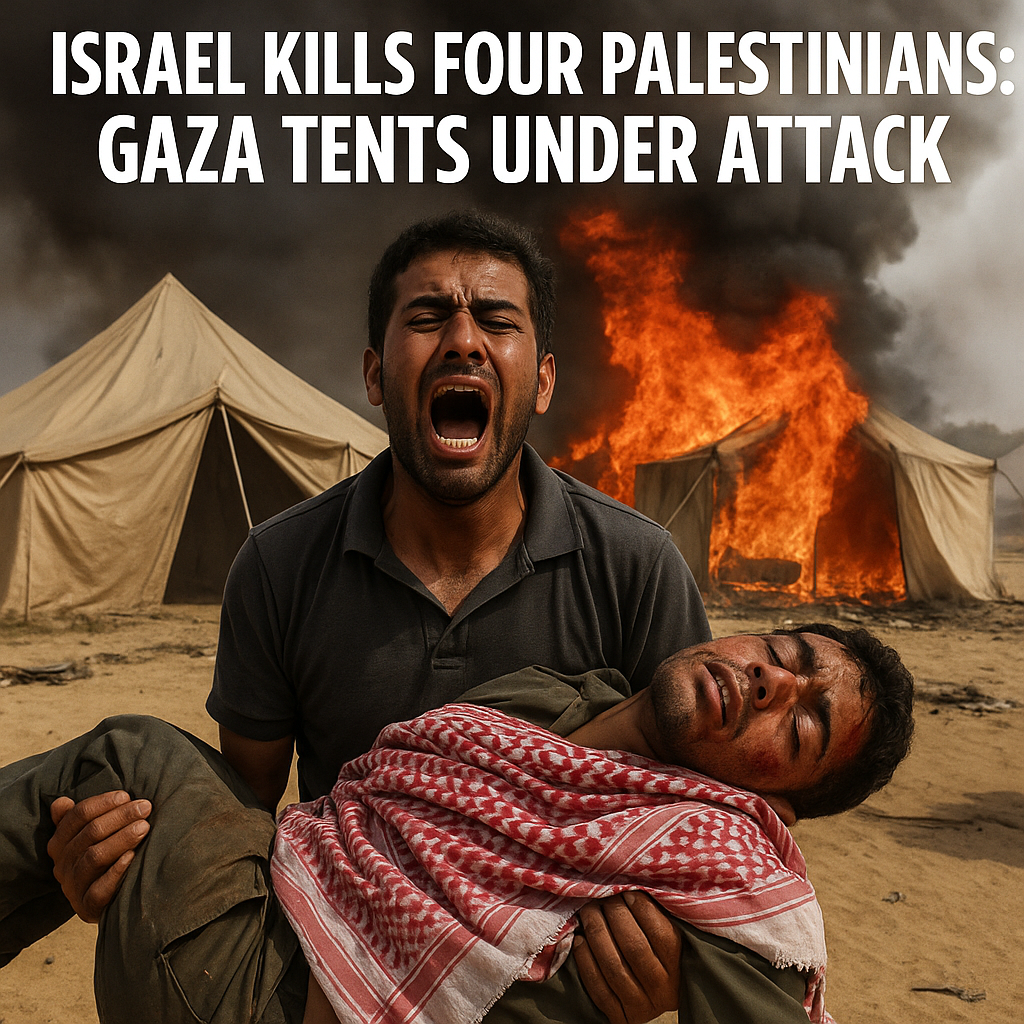
The ongoing conflict in Gaza saw a devastating escalation recently, as Israeli forces reportedly killed four Palestinians in a series of targeted airstrikes that left many in the region on edge. This tragic incident highlights the complexities of the Israeli-Palestinian conflict, where actions taken by one side frequently provoke significant retaliation from the other.

Contextualizing the Attack
According to Al Jazeera, the deadly airstrikes targeted not only individuals but also the tents set up by Palestinian families living in an increasingly precarious situation. These makeshift shelters have become a poignant symbol of the ongoing humanitarian crisis in Gaza, where many people are displaced and struggling for basic necessities. The strikes come amid a backdrop of heightened tensions, with both sides accusing each other of exacerbating the conflict.


In stark contrast, RT’s coverage provides insight into the Israeli perspective, asserting that the military operations aim to dismantle alleged militant operations embedded within civilian areas. Israeli officials have justified their actions as necessary for national security, stating that they are responding to rocket fire originating from the region. This raises critical questions about collateral damage and the ethics of targeting densely populated areas during military operations.


Diverging Perspectives
The conflicting narratives surrounding these attacks illustrate the complexities at play. On one hand, human rights organizations, including Human Rights Watch, have condemned Israel’s military actions as violations of international law, arguing that targeting civilian structures is unjustifiable regardless of the premise of self-defense. Reports indicate that many of the victims were merely bystanders caught in the crossfire, prompting outrage from various humanitarian advocates.
However, Israeli sources defend their strategy, suggesting that military precision is paramount. They allege that their operations are aimed at minimizing civilian casualties and argue that militant groups use civilians as human shields, complicating the military response. This alignment of beliefs leads to ongoing hostilities, where each side feels its actions are justified, regardless of the human cost.
Humanitarian Impact and International Reactions
The aftermath of these airstrikes raises significant humanitarian concerns. Eyewitness accounts reveal the enormous psychological and physical toll on local residents. Families are being torn apart, and the fear of further violence lingers in the air. International reactions to the situation continue to pour in. The United Nations has called for immediate investigations into the killings, expressing deep concern over the loss of life and potential breaches of international humanitarian rights. On platforms like Sky News, there is a persistent call for de-escalation and dialogue, emphasizing the urgent need for a comprehensive peace process.
The stark human cost of such military operations underscores the desperate situation in Gaza. With each airstrike, the hopes for a resolution grow dimmer, and the cycle of violence seems poised to continue. Moreover, the disregard for civilian life in warfare contradicts global humanitarian principles, raising the question of accountability on both sides.
Future Implications
As the situation remains volatile, the wider implications for the region are profound. Continued hostilities not only threaten the fragile peace but also complicate diplomatic relations with neighboring countries and international stakeholders. Both Israel and Palestine find themselves in a challenging landscape where actions are viewed through the lens of past grievances, making reconciliation increasingly difficult.
Ultimately, the deaths of four Palestinians in this recent attack serve as a grim reminder of the conflict’s brutal nature. The voices calling for peace are overshadowed by those justifying violence in the name of self-defense or retaliation. Until a genuine commitment to dialogue and mutual recognition emerges from both sides, the cycle of violence and suffering is likely to persist, perpetuating a state of chaos in one of the world’s most contentious regions.