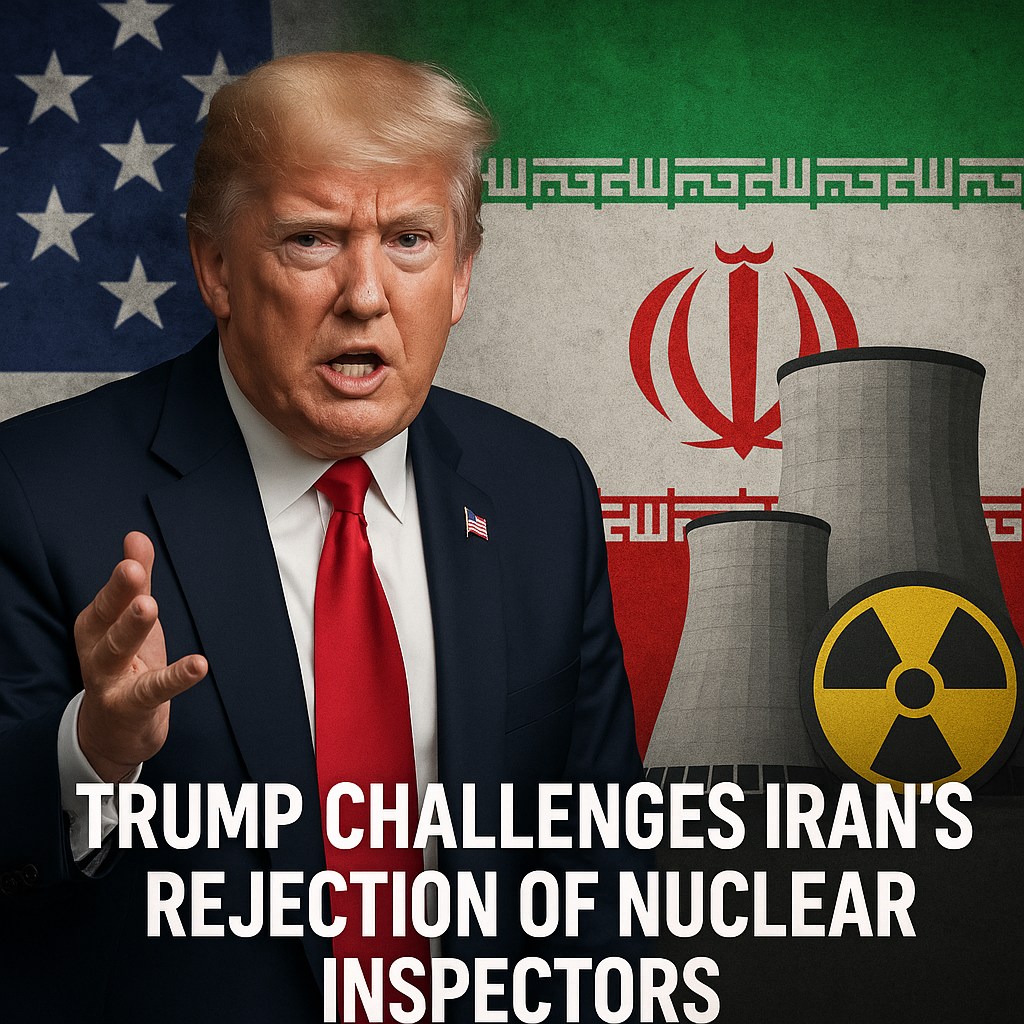
Trump Challenges Iran’s Rejection of Nuclear Inspectors

The Complex Dynamics of Nuclear Oversight: Trump Challenges Iran’s Rejection of Inspectors
Recently, the international community has been drawn into a renewed debate surrounding nuclear oversight in Iran, primarily due to former President Donald Trump’s vocal challenges regarding Iran’s rejection of nuclear inspectors. This confrontation underscores not only the complexities of international diplomacy but also the broader implications for global security.

The Context of Trump’s Claims
Trump’s assertion revolves around Iran’s recent stance of denying access to International Atomic Energy Agency (IAEA) inspectors. The IAEA plays a crucial role in monitoring nuclear programs to ensure they are not diverted for weaponization. Trump’s comments express concerns that Iran’s refusal compromises international security and sets a dangerous precedent for nations that may pursue nuclear capabilities outside regulatory frameworks.


In a recent appearance, Trump articulated his disappointment, stating, “Iran must be held accountable and the world should not turn a blind eye. This denial of access signifies a blatant disregard for international agreements.” Such rhetoric highlights his administration’s previous hardline approach to Iran, culminating in the withdrawal from the Joint Comprehensive Plan of Action (JCPOA) in 2018.


Contrasting Viewpoints on Nuclear Oversight
Though Trump’s position resonates with many hawkish elements in U.S. foreign policy circles, it faces scrutiny from various commentators and analysts who argue that a more nuanced approach toward Iran could lead to better outcomes. Some experts emphasize that constant pressure and inflammatory rhetoric might hamper diplomatic negotiations rather than provide solutions.
For example, analysts from Al Jazeera argue that establishing a dialogue with Iran would foster greater transparency and, paradoxically, might lead to compliance. They assert that isolating Iran through aggressive sanctions and accusations can push the nation further into secrecy regarding its nuclear program. This sentiment reflects concerns that coercive strategies could be counterproductive, undermining potential paths to de-escalation and cooperation.
On the other hand, sources such as RT emphasize the need for a firm stance against Iran’s nuclear ambitions, aligning with Trump’s views that strict oversight is essential. RT highlights that allowing Iran to refuse inspector access could enable it to advance its nuclear capabilities unchecked, endangering regional and global stability.
The Implications of This Standoff
The ongoing clash over nuclear inspections in Iran has several significant implications:
– Regional Stability: Iran is situated in a volatile region, and its nuclear capabilities pose a dual challenge—potential aggression and proliferation. Observers argue that allowing Iran to operate without rigorous oversight could embolden other regional powers to pursue similar paths.
– Diplomatic Relationships: The relationship between the U.S. and other global powers, especially those who are signatories to the JCPOA, is also at stake. Countries like France, Germany, and the U.K. have advocated for diplomacy. Trump’s uncompromising stance may complicate multilateral negotiations and alienate allies.
– Domestic Politics: Within the U.S., both parties are deeply divided over how to approach Iran. Trump’s original policy was designed to exert maximum pressure, while current trends indicate a desire among some lawmakers for a return to dialogues similar to those that created the original nuclear agreement.
Conclusion: Navigating the Future of Nuclear Oversight
The trajectory of Iran’s nuclear program continues to evolve amid a backdrop of contrasting perspectives on inspection protocols. Trump’s insistence on challenging Iran’s rejection of nuclear inspectors aligns with his broader strategy for confronting perceived threats. However, the varied responses from analysts and political commentators highlight a complex interplay of fear, caution, and hope for diplomatic engagement.
As the world watches how these dynamics unfold, it remains crucial to balance accountability with dialogue, ensuring that the pathway forward embraces both security and exploration of mutual agreements. The stakes are high—navigating this landscape requires a delicate balance between assertive oversight and constructive diplomacy to foster a safer future.