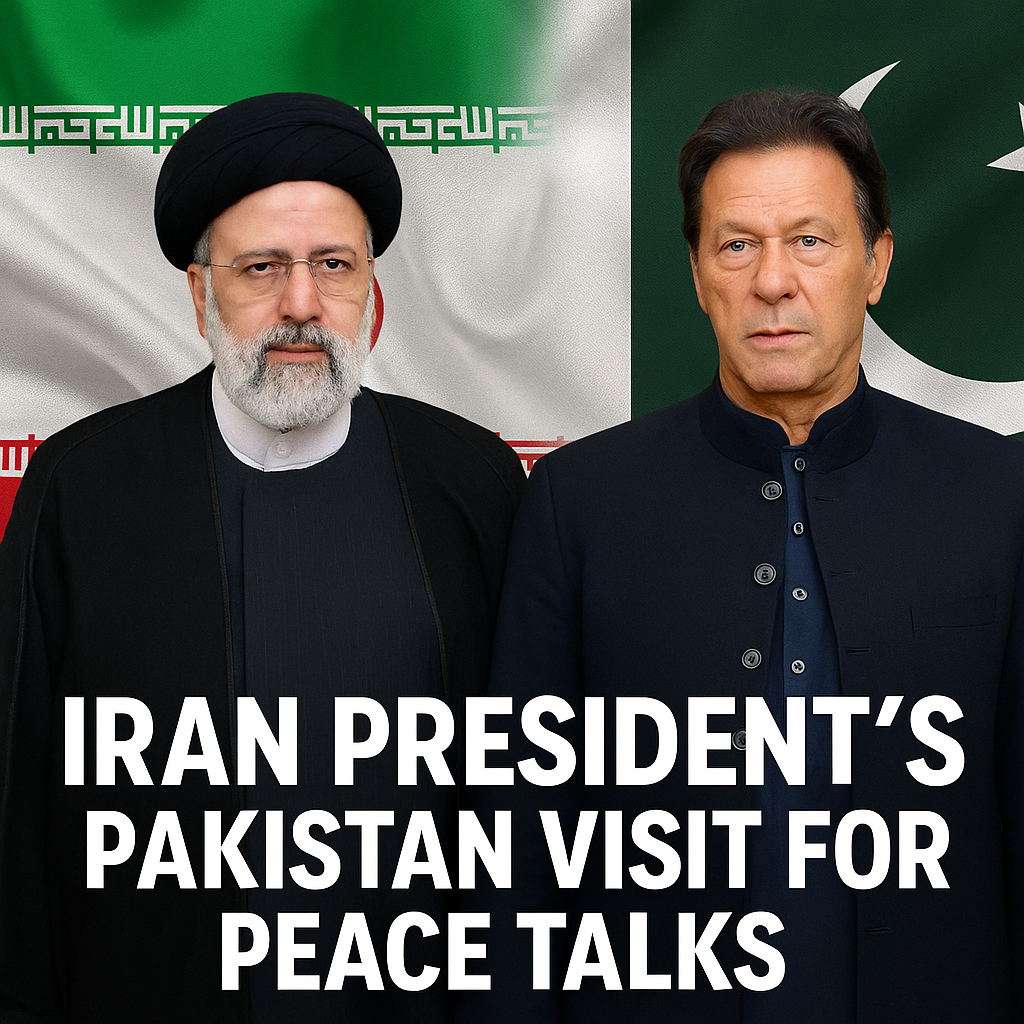
Iran President’s Pakistan Visit for Peace Talks

Iran’s President’s Historic Visit to Pakistan: A Step Towards Regional Peace
The recent visit by Iran’s President Ebrahim Raisi to Pakistan is a crucial moment in the complex relationship between the two nations, as both seek to cement ties amid regional tensions and security concerns. This diplomatic engagement aims to address various pressing issues, including economic cooperation, regional stability, and counter-terrorism efforts.

Strengthening Diplomatic Ties
During his visit, President Raisi emphasized the importance of fostering closer relations between Iran and Pakistan. “Iran and Pakistan are two countries with deep-rooted historical, cultural, and religious ties. Our collaboration is essential for the security and development of the region,” Raisi stated during a joint press conference with Pakistani Prime Minister Shahbaz Sharif. This sentiment underscores the need for strong bilateral ties, particularly in light of shared challenges, including terrorism and border security.


Historically, Iran and Pakistan have had a complicated relationship, sometimes strained by issues such as border disputes and differing foreign policy alignments. However, the current geopolitical landscape, marked by tensions with neighboring countries and concerns over stability in Afghanistan, has created a renewed impetus for cooperation.


In recent years, both nations have experienced internal challenges that lend urgency to their diplomatic overtures. Pakistan faces economic difficulties that limit its ability to project power and influence, while Iran grapples with international sanctions and domestic unrest. By aligning their strategies and interests, both countries might find a path towards mutual benefit and greater regional stability.
Shared Concerns: Security and Counter-Terrorism
One of the most significant areas of discussion during Raisi’s visit was security cooperation. Both Iran and Pakistan share a long border which has seen the activity of various militant groups. Reports indicate that Pakistani officials are keen to address cross-border terrorism that has impacted security in recent years. The two leaders discussed mechanisms for better intelligence sharing and joint patrols along the porous border.
Pakistan’s concerns regarding the Tehrik-i-Taliban Pakistan (TTP) and other extremist groups operate close to their borders align with Iran’s apprehensions about similar dynamics in its own border provinces. The discussions on counter-terrorism represent a significant opportunity for both nations to collaborate and enhance regional security.
Furthermore, the potential for economic collaboration cannot be overlooked. Previous initiatives, such as the Iran-Pakistan gas pipeline project, have faced delays primarily due to international sanctions on Iran. However, with the geopolitical scenario evolving, there may be renewed interest in joint projects that could elevate both economies.
Diverse Perspectives on the Visit’s Implications
While many view Raisi’s outreach as a positive step towards fostering regional peace, skepticism remains. Critics argue that the historical complexities between the two nations might hinder their progress. For instance, conflicting ideologies and interventions in regional conflicts — notably Iran’s support for various non-state actors — could be points of contention that arise in future negotiations.
Some analysts also express concern about the implications of increasing Iranian influence in Pakistan, especially given the potential ramifications for Pakistan’s relationships with other regional powers, such as Saudi Arabia and the United States. As Pakistan positions itself as a mediator, it must navigate a careful balance to ensure it does not exacerbate existing rivalries.
However, it is equally important to recognize the positive perspectives. Advocates for closer Iran-Pakistan relations argue that cooperation between the two could serve as a counterbalance to external influences and interventions in South Asia, emphasizing sovereignty and regional autonomy.
Conclusion: A Complex Path to Lasting Peace
In summary, President Raisi’s visit to Pakistan marks a potential turning point in the relationship between the two neighboring countries. While both nations face challenges that could complicate cooperation, their mutual interests in addressing security concerns and fostering economic collaboration could pave the way for a more stable regional environment.
As these discussions progress, it will be essential for both nations to maintain a focus on establishing trust and long-term strategies that prioritize peace and development for their peoples. Whether this visit translates into substantial policy changes remains to be seen, but the dialogue initiated holds promise for a future that could benefit both nations and the greater region.