Trump Claims ‘No Limits’ on His Power: What It Means

Trump Claims ‘No Limits’ on His Power: What It Means
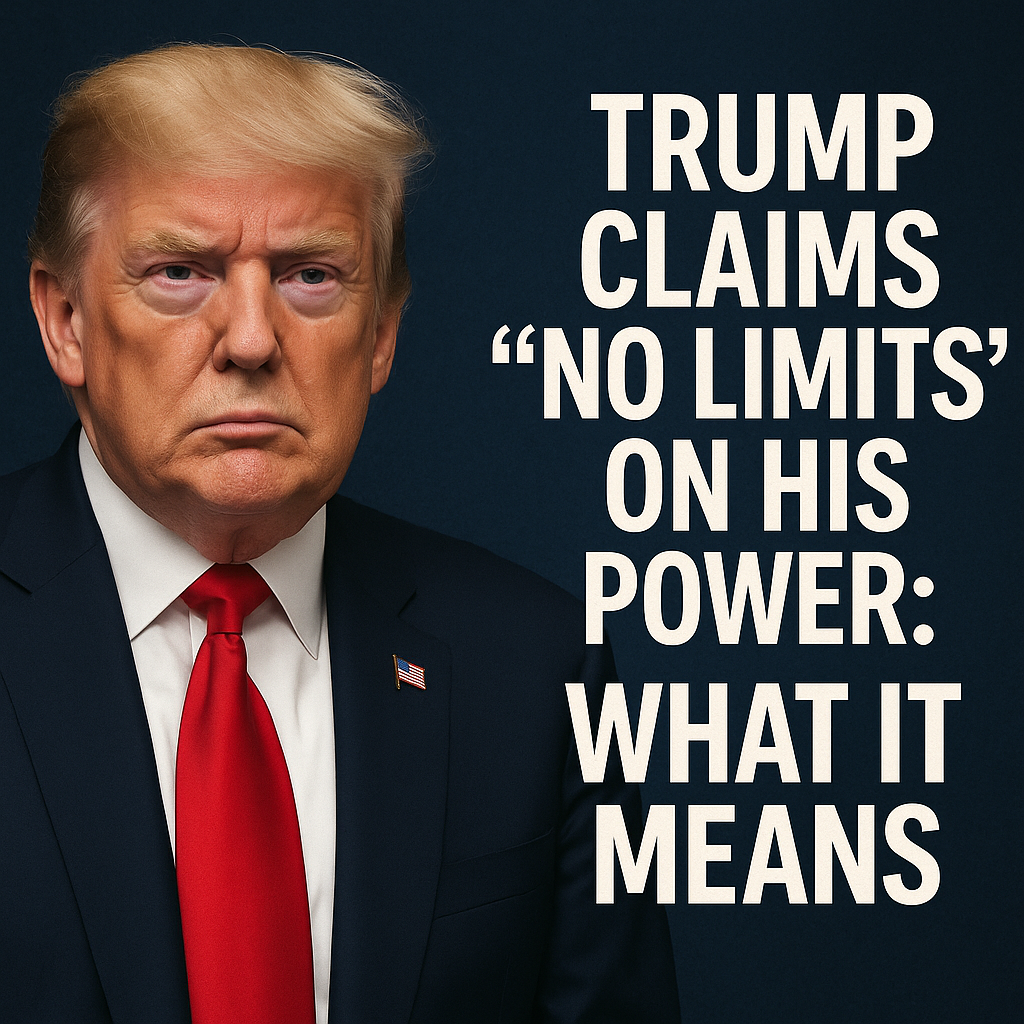
In recent statements, former President Donald Trump has boldly claimed that there are “no limits” on his power, a declaration that has reignited debates over the balance of power in the United States. This provocative assertion raises significant questions regarding executive authority, governance, and the interpretation of constitutional provisions about presidential power.

Understanding the Context of Trump’s Statement
Trump’s assertion emerged amidst a landscape where many of his supporters believe in a strong, decisive leadership style that challenges established norms. This perspective rests on the idea that an empowered executive can address issues swiftly and without the hindrance of legislative standoffs, often citing crises for justification. In his discourse, Trump appears to invoke the essence of a more authoritarian approach, suggesting a willingness to push constitutional boundaries if it aligns with his agenda.


Critics of Trump’s statement, including prominent legal scholars and political analysts, argue that this reflects a dangerous misunderstanding of the checks and balances that are foundational to the American political system. They point out that the framers of the Constitution intentionally designed a system where no single branch could accumulate excessive power. Critics fear that his remarks could be interpreted as an invitation to usurp the powers typically reserved for Congress and the judiciary.


The Divided Perspectives: Supporters vs. Detractors
Supporters of Trump’s view tend to align with a broader populist sentiment that champions strong executive action. They argue that, particularly in turbulent times, a president should have the executive capacity to act decisively without being impeded by legislative gridlock. Some feel that Trump’s past decisions—like his approach to immigration and foreign policy—justify a more expansive interpretation of presidential powers.
On the other hand, detractors warn of the dangers implicit in Trump’s claims. Legal experts highlight the potential for abuse, suggesting that an unchecked executive could lead to authoritarian governance. Democratic Rep. Eric Swalwell was quoted saying, “A president who believes there are no limits isn’t just a threat to democracy—he is its antithesis.” This sentiment echoes fears that Trump’s rhetoric could embolden other leaders who seek to consolidate power at the expense of democratic norms.
The Implications of ‘No Limits’ on Executive Power
The implications of Trump’s assertion can be far-reaching. The idea of “no limits” blurs the lines drawn by historical precedent and legal constraints, and it opens the door to a broader interpretation of executive powers. Such a stance could threaten vital aspects of governance, including the independence of the judiciary and the legislature. If Trump’s claims resonate with enough people, particularly within the Republican base, it may transform the expectations around executive authority in future administrations, regardless of party allegiance.
Moreover, this could lead to a political environment that normalizes extreme partisan divides, with each side interpreting the limits and powers of the president according to its own ideological lens. This scenario raises fundamental questions: How do we define the limits of presidential power? What safeguards must be in place to prevent overreach?
Conclusion: A Call for Reflection and Dialogue
While Trump’s declarations undoubtedly resonate with significant segments of the population, the potential ramifications deserve a measured response. A healthy democracy relies on robust discourse around the limits of power, alongside active participation in political processes. As this conversation unfolds, it remains essential for citizens, lawmakers, and scholars alike to engage with the complexities surrounding executive authority critically.
The assertion of “no limits” on power is not merely an ideological stance; it is a challenge to the very fabric of democratic governance. Engaging with this claim thoughtfully can help underpin a more nuanced understanding of American political life and remind all stakeholders of their responsibilities in maintaining a balanced system.