
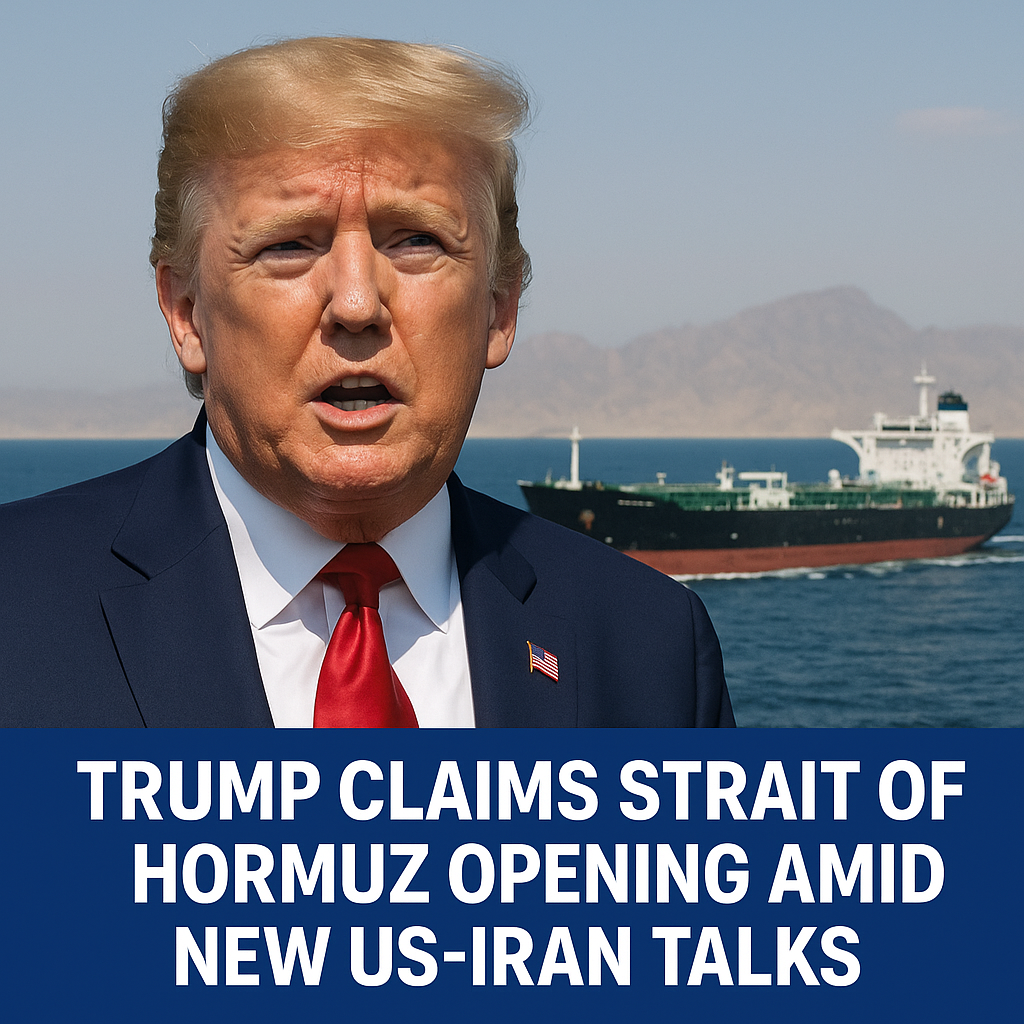
Trump Claims Strait of Hormuz Opening Amid New US-Iran Talks

Trump Claims Strait of Hormuz Opening Amid New US-Iran Talks
The recent claims by former President Donald Trump regarding the opening of the Strait of Hormuz coincide with renewed diplomatic engagements between the United States and Iran. This strategic maritime passageway is vital for global oil transport, and its stability is crucial for international trade and security. The dialogue surrounding this issue is multifaceted, reflecting both a historical context and current geopolitical dynamics.

Background on the Strait of Hormuz
The Strait of Hormuz, a narrow waterway connecting the Persian Gulf to the Arabian Sea, is one of the most strategically significant maritime routes globally. Approximately 20% of the world’s oil passes through this narrow channel, making any conflict or tension in the region matter for global energy markets. Tensions have fluctuated over the years, often tied to Iran’s nuclear ambitions, U.S. sanctions, and the political landscape in the Middle East.


Trump’s assertion of an “opening” in the Strait of Hormuz comes amid reports of U.S.-Iran talks focused on de-escalation and potential normalization efforts. As these diplomatic channels reopen, stakeholders are keenly interested in how this will affect regional stability and global oil prices.


Divergent Perspectives on U.S.-Iran Relations
The discourse surrounding U.S.-Iran relations is dense with contrasting viewpoints, particularly in the wake of Trump’s claims. On one hand, some analysts view the talks as a prudent step toward reducing tensions. For instance, reports from Al Jazeera highlight that recent engagements could pave the way for a thaw in hostilities, benefiting both nations in the long term. Some Iranian officials have expressed cautious optimism regarding negotiation outcomes, which could lead to a collaborative approach on various issues, including oil exports and security arrangements in the Gulf region.
Conversely, other voices suggest skepticism towards the potential for substantive progress. Critics argue that historical patterns of U.S.-Iranian negotiations often falter due to mistrust and differing objectives. According to RT, while Trump emphasizes openings for dialogue, many believe that Iran’s steadfast position on its nuclear program complicates any genuine rapprochement. In this view, both nations have underlying agendas that may undermine a successful agreement.
The Economic Implications of Strait Stability
The economic ramifications of any potential opening in the Strait of Hormuz extend beyond the immediate regional players. Fluctuations in oil supply through this critical passage significantly affect global markets. If both Iran and the U.S. can reach some level of understanding, analysts predict a decrease in oil prices due to increased supply fears being alleviated.
– Potential benefits:
– Stabilization of oil prices globally
– Improved trade relations
– Lowered tensions in surrounding regions
However, should the talks fail or revert to hostility, the implications could be severe, possibly leading to military confrontations and subsequent spikes in oil prices, as market anxiety takes hold.
Conclusion: A Double-Edged Sword
As discussions progress, the optimist’s outlook on the U.S.-Iran negotiations remains counterbalanced by a healthy dose of caution. Trump’s claims regarding the Strait of Hormuz reflect an intersection of personal conviction and political positioning, but the reality remains complex and multifactorial.
Observers must navigate a landscape where geopolitical interests, historical grievances, and economic imperatives converge. While there is hope for a breakthrough in peace talks, the risks of miscalculation or misunderstanding loom large. The situation underscores the intricate dance of diplomacy, where a single misstep can unravel years of dialogue. As events unfold, the international community will be watching closely, aware that the stakes are high for all involved.
Ultimately, the Strait of Hormuz remains not just a physical barrier but a powerful symbol of the larger geopolitical currents shaping our world today.















