
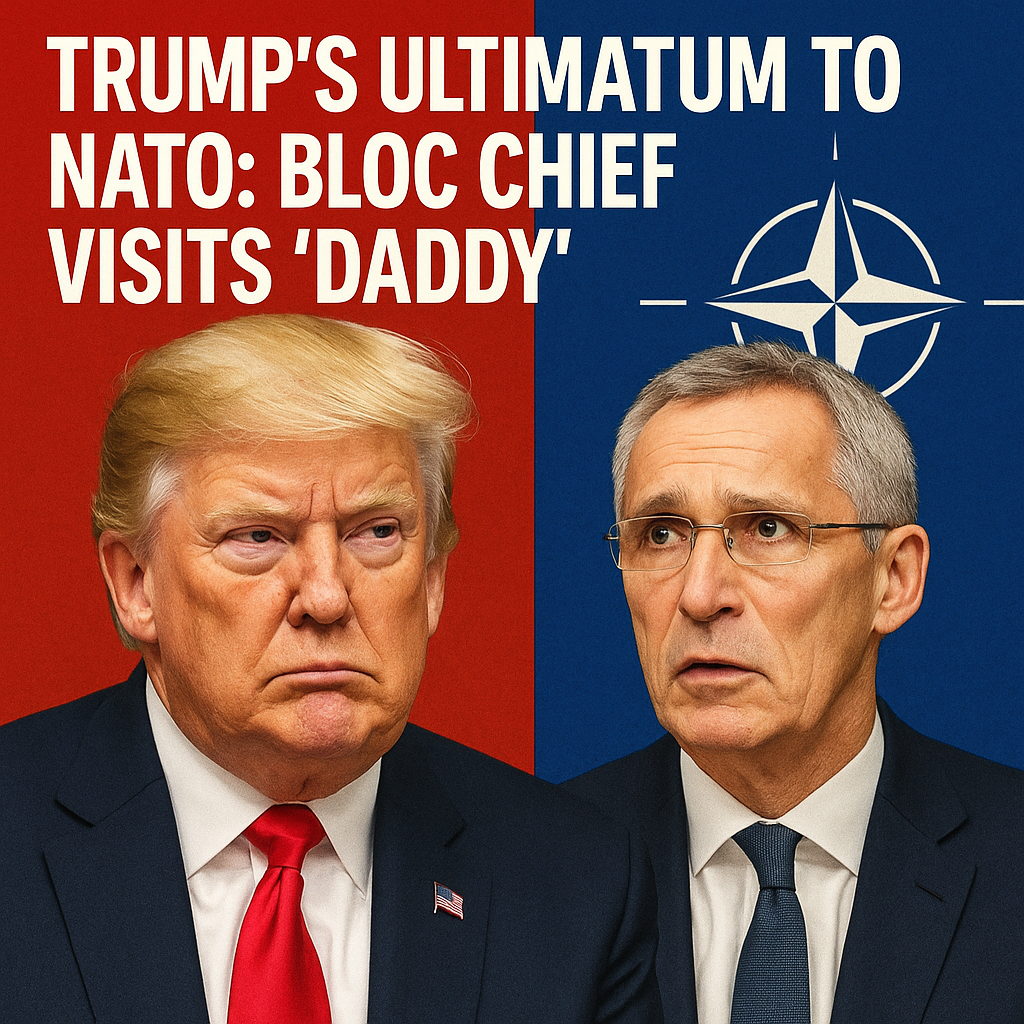
Trump’s Ultimatum to NATO: Bloc Chief Visits ‘Daddy’

Trump’s Ultimatum to NATO: Bloc Chief Visits ‘Daddy’
In a striking turn of events, former President Donald Trump has once again taken center stage in international relations, this time with a pointed ultimatum directed at NATO. As NATO Secretary-General Jens Stoltenberg visits the United States, the former president’s comments raise questions about the future dynamics of the alliance and the broader geopolitical landscape.

Understanding Trump’s Position on NATO
Trump’s history with NATO has been characterized by his criticism of member nations for not meeting their defense spending obligations. His recent remarks, where he referred to Stoltenberg as needing to visit “Daddy,” underscore his frustration with the alliance’s commitment levels. The former president stated, “If you don’t meet your obligations, we’re going to be forced to reconsider our commitment.” This declaration resonates with his longstanding view that NATO countries must contribute more to their defense budgets—a sentiment that he believes has been inadequately addressed by many member states.


Critics of Trump’s approach argue that his rhetoric risks undermining NATO’s cohesion. They point to the stabilizing role the alliance has played in Europe since World War II, positing that a fractured NATO could embolden adversaries, particularly Russia. Comments from experts suggest that while pressure to increase defense spending is valid, parsing it through a lens of ultimatums risks alienating allies and compromising joint security strategies.


Conversely, supporters of Trump assert that his tough stance could ultimately lead to a stronger NATO by pushing member states to take their defense commitments seriously. They argue that if allies start meeting their obligations, it could enhance collective security. However, the question remains: Are ultimatums the best way to achieve this goal?
Divergent Viewpoints on NATO’s Future
The responses to Trump’s ultimatum reflect deep divides not only within the U.S. political landscape but also among NATO member countries. On one side, there are those who embrace Trump’s call for increased defense spending. For example, several Eastern European countries have echoed that sentiment, having long been concerned about Russian aggression. They argue that strengthening NATO capabilities is essential for regional security and that Trump’s emphasis on financial contributions aligns with their defense priorities.
On the other hand, many Western European leaders have pushed back against the notion that financial contributions are the sole measure of commitment or effectiveness. A German diplomat noted, “Security is not just about spending; it’s about strategic partnerships and shared values.” This sentiment emphasizes the importance of unity and cooperation, suggesting that a purely transactional view of NATO could dilute its foundational principles.
Furthermore, Stoltenberg’s visit itself symbolizes an effort to reaffirm the importance of NATO as a collective security pact. In light of rising global challenges, including cyber threats and terrorism, there is a pressing need for NATO allies to adopt a more comprehensive approach that encompasses diplomatic and strategic dimensions, rather than merely focusing on financial metrics.
The Implications of Trump’s Ultimatum
As the discussions surrounding NATO evolve, it’s crucial to consider the potential implications of Trump’s comments and the responses from member states. While the call for increased spending is undoubtedly a significant issue, it must be balanced against the context of multinational collaboration and shared strategic objectives.
Some analysts suggest that the pressures mounting from Trump could catalyze productive dialogues within NATO, fostering an environment where allies feel compelled to work together to address collective security dilemmas, thus reinforcing the alliance in the process. Conversely, if the focus remains on financial contributions alone, it could risk prioritizing national interests over collective defense strategies—an outcome that may weaken the alliance at a time when unity is critical.
The geopolitical landscape remains as complex as ever, with the interplay of various interests at stake. As Stoltenberg navigates this challenging terrain, he may face the daunting task of reconciling the rhetoric from Trump with the diverse objectives of member states. The future of NATO may depend on its ability to adapt and respond to such pressures, while maintaining the foundational cooperation that has underpinned its longevity.
In closing, Trump’s ultimatum represents a notable chapter in the ongoing narrative of NATO’s evolution. The responses from within the alliance will shape its future and determine whether it can remain a formidable force in addressing global challenges. Ultimately, the pathway forward will require a nuanced understanding of both funding needs and the indispensable value of unity among diverse member states.















