
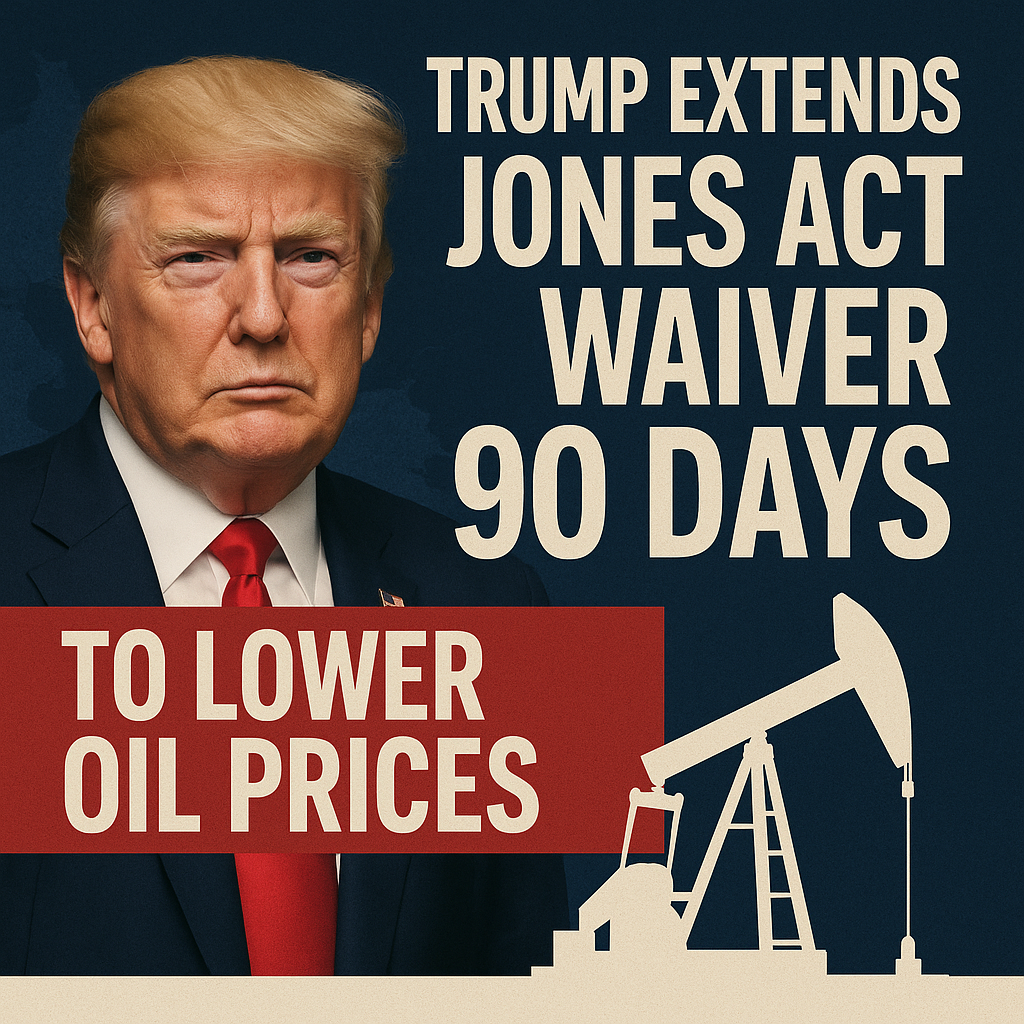
Trump Extends Jones Act Waiver 90 Days to Lower Oil Prices

Trump Extends Jones Act Waiver 90 Days to Lower Oil Prices
In an unexpected move aimed at addressing soaring oil prices, the Trump administration has decided to extend the Jones Act waiver for an additional 90 days. This decision has sparked discussion across various sectors, highlighting both economic implications and national security concerns.

Understanding the Jones Act
The Jones Act, officially known as the Merchant Marine Act of 1920, mandates that all goods transported between U.S. ports must be carried by vessels that are built, owned, and operated by American citizens. This legislation has been a cornerstone of U.S. maritime policy, designed to bolster the domestic shipping industry and enhance national security.


However, the act has also faced criticism. Proponents of a waiver argue that the Jones Act contributes to higher shipping costs, especially in times of crisis like natural disasters or sudden price surges. Supporters of the current extension highlight that the oil crisis has led to unprecedented price fluctuations, and the waiver is a temporary relief measure to prevent economic strain on American consumers.


The Case for the Waiver
Al Jazeera reports that the extension aims to provide immediate financial relief to American families grappling with rising fuel costs. The rationale is that by allowing foreign vessels to transport oil more freely, the market can increase supply, thereby lowering prices at the pump. Economists have noted that while the Jones Act was designed for protection, real-time economic pressures may necessitate a more flexible approach.
Advocates for the waiver also emphasize that it could create a more competitive environment among suppliers, which would or could lead to lower prices. “Opening up the market to foreign vessels can serve as a boon for consumers during these tough times,” said one industry expert mentioned in the Al Jazeera article.
On the other hand, the extension has not come without its critics.
Concerns About National Security and Economic Impacts
Critics argue that waiving the Jones Act can undermine American maritime jobs and diminish national security. U.S. vessels are integral not just for commerce, but also for defense logistics. As reported by Sky News, labor unions and domestic shipping companies have expressed concern that foreign competition could harm the domestic maritime industry, which employs tens of thousands of Americans.
Furthermore, the administration’s decision has stirred debate about the long-term implications for U.S. oil independence. The argument here is that a temporary fix does not address deeper structural issues affecting domestic oil production and might instead promote reliance on foreign shipping.
“While immediate relief is necessary, we must not lose sight of the long-term impact on our shipping industry and national security,” a labor spokesperson commented.
Balancing Different Perspectives
Navigating the complexities of this situation requires synthesizing the competing viewpoints. The necessity for immediate economic relief is undeniable, especially in a pre-election year where rising oil prices can significantly influence voter sentiment. However, the longer-term implications for national security and domestic jobs must not be overlooked.
Some analysts suggest that a multifaceted approach is needed—one that balances immediate consumer relief with measures to support and modernize the U.S. maritime industry long-term. This could include investments in domestic capabilities, ensuring that American vessels remain competitive, and exploring energy options that lessen overall dependence on oil.
Conclusion: A Temporary Measure with Lasting Implications
The extension of the Jones Act waiver for 90 days represents a calculated response to rising oil prices amid uncertain economic times. While it may offer short-term respite for consumers, the potential implications for national security and the maritime industry warrant scrutiny.
As policymakers navigate these complex waters, ongoing discussions will be essential in balancing immediate needs with the broader economic and security landscape. Ultimately, the question remains whether this decision will serve as a bandaid for deeper structural challenges in the U.S. energy landscape or pave the way for more comprehensive reforms.
In the face of contrasting opinions, it remains clear that both sides share an interest in ensuring the well-being of American citizens—though their pathways to that goal may differ significantly.















