
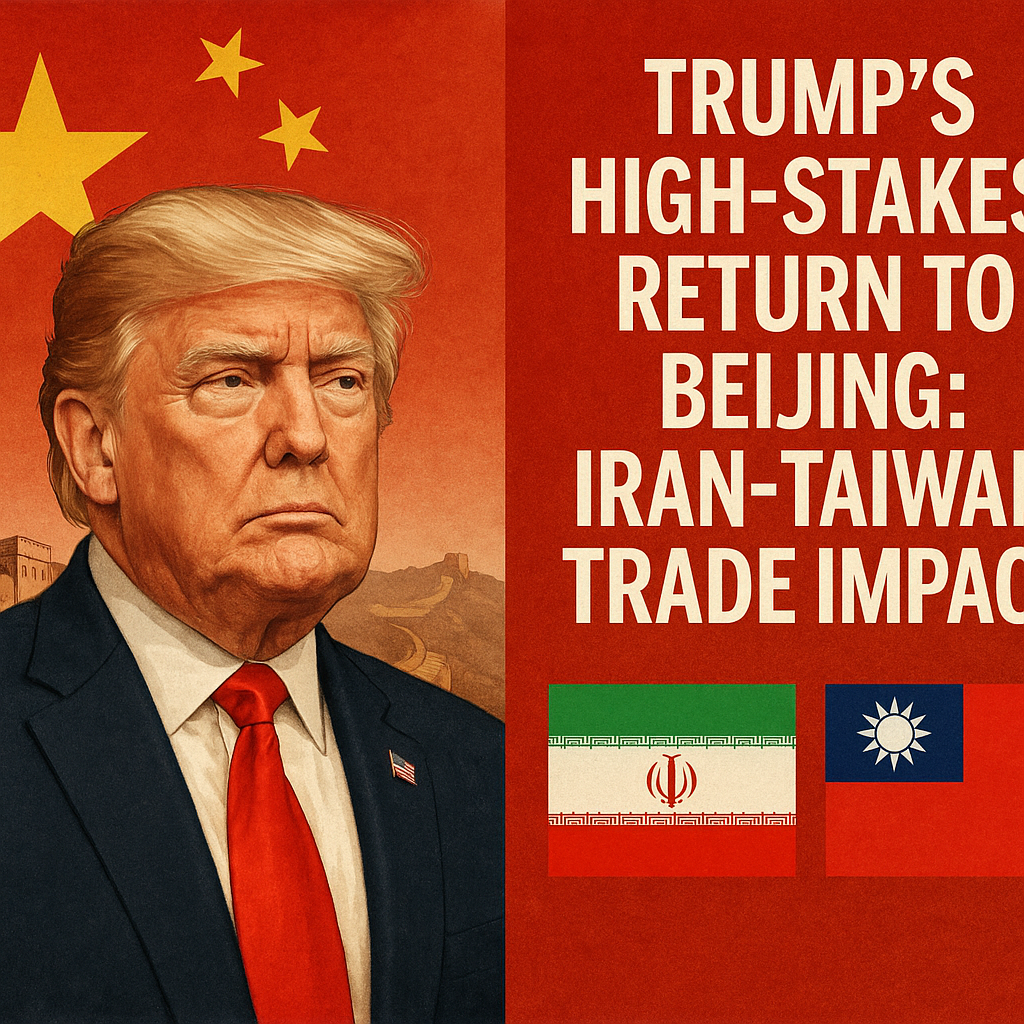
Trump’s High-Stakes Return to Beijing: Iran-Taiwan Trade Impact

Trump’s High-Stakes Return to Beijing: Iran-Taiwan Trade Impact
Donald Trump’s anticipated return to Beijing signals a strategic pivot with significant implications, particularly for trade relations with Iran and Taiwan. As geopolitical tensions rise and the global economy feels the strain of shifting alliances, this visit comes at a pivotal time for international diplomacy and trade dynamics.

The Stakes of Trump’s Visit
Trump has long been a controversial figure on the global stage, and his return to Beijing is seen as emblematic of his unpredictable foreign policy. Since stepping out of office, Trump’s rhetoric surrounding China has often oscillated between aggressive condemnation and overtures for cooperation. His arrival in the Chinese capital is expected to be laden with urgency as both nations grapple with economic stagnation and trade deficits exacerbated by previous administrations’ policies.


China, facing its own economic challenges, may view this visit as an opportunity to recalibrate its relationship with the United States. Analysts suggest that while Trump’s approach might be rooted in self-interest and domestic politics, it’s also an instrumental time for China to reshape the narrative around its global role. According to Al Jazeera, there is potential for dialogue on trade practices, but underlying suspicion remains, particularly concerning the ongoing U.S.-China trade war, which has strained both economies.


Trade Ties Between Iran and Taiwan
Meanwhile, the specter of Trump’s visit casts shadows on trade relations involving Iran and Taiwan. With the backdrop of U.S. sanctions against Iran, relations with Taiwan have simultaneously developed under heightened scrutiny. Taiwan’s continued economic growth rests significantly on its technology exports, but its dependency on Chinese production poses a complex dilemma given the ongoing hostilities in the Taiwan Strait.
Iranians may perceive Trump’s visit as a double-edged sword; it could either facilitate openings for dialogue or heighten existing sanctions. The balancing act here is intricate, as both sides assess the momentum of trade—Taiwan seeks to fortify its ties with the U.S. amidst fears of looming Chinese takeover, while Iran is in a position of vulnerability looking to strengthen partnerships wherever possible.
Experts from RT caution that an unsettled environment might arise from mixed signals during Trump’s visit, potentially affecting trading partners like Iran and Taiwan. This could press Taiwan to adopt even closer ties with the U.S., reinforcing its defense posture against China’s advances. However, if Trump’s visit is perceived as prioritizing domestic political needs over genuine diplomatic dialogue, the fallout could alienate potential allies in a changing geopolitical landscape.
The Complex Web of Alliances
Determining the outcomes of Trump’s high-stakes return involves understanding the broader implications of global alliances. While Trump’s visit can be seen as an effort to re-establish American presence in Asia, it has the potential to reshape Iran’s strategic calculations as well. The intertwining interests of trade, security, and regional dominance create a landscape where every action has far-reaching consequences.
Taiwan must navigate this landscape delicately. Supported by the U.S., Taiwan stands as a bulwark against perceived Chinese expansionism, yet it must also consider the fallout from any provocations resulting from Trump’s agenda. Sky News reports that any escalations in this region could have significant repercussions for trade routes, particularly in technology and manufacturing, which are vital for both Taiwan and global markets.
Moreover, as Iran eyes new partnerships to circumvent sanctions, it may well see advantages in Taiwan’s technological advancements. This intersection could lead to unexpected collaborations that might realign economic alliances across the Pacific. However, as any such engagements must navigate the fraught waters of U.S. sanctions, it becomes a careful dance of diplomacy subject to the whims of both Trump’s policies and broader geopolitical currents.
Conclusion: Navigating Uncertainty in Global Trade
As Trump’s return to Beijing unfolds, the impacts on Iran-Taiwan trade and the broader geopolitical stage remain complex and multifaceted. There is anticipation surrounding cooperative dialogue, yet caution abounds given history and ongoing tensions. Each player has a unique stake in the outcomes, and the balance of trade in these regions could shift dramatically based on the narratives spun during this pivotal visit.
While the potential for constructive engagements exists, uncertainties loom large. The nuances of alliances, trade impacts, and the unpredictability of diplomatic outcomes render a clear conclusion elusive. As these dynamics evolve, observers will watch closely, knowing that in this intricate web of global politics, every development carries weighty repercussions.















