
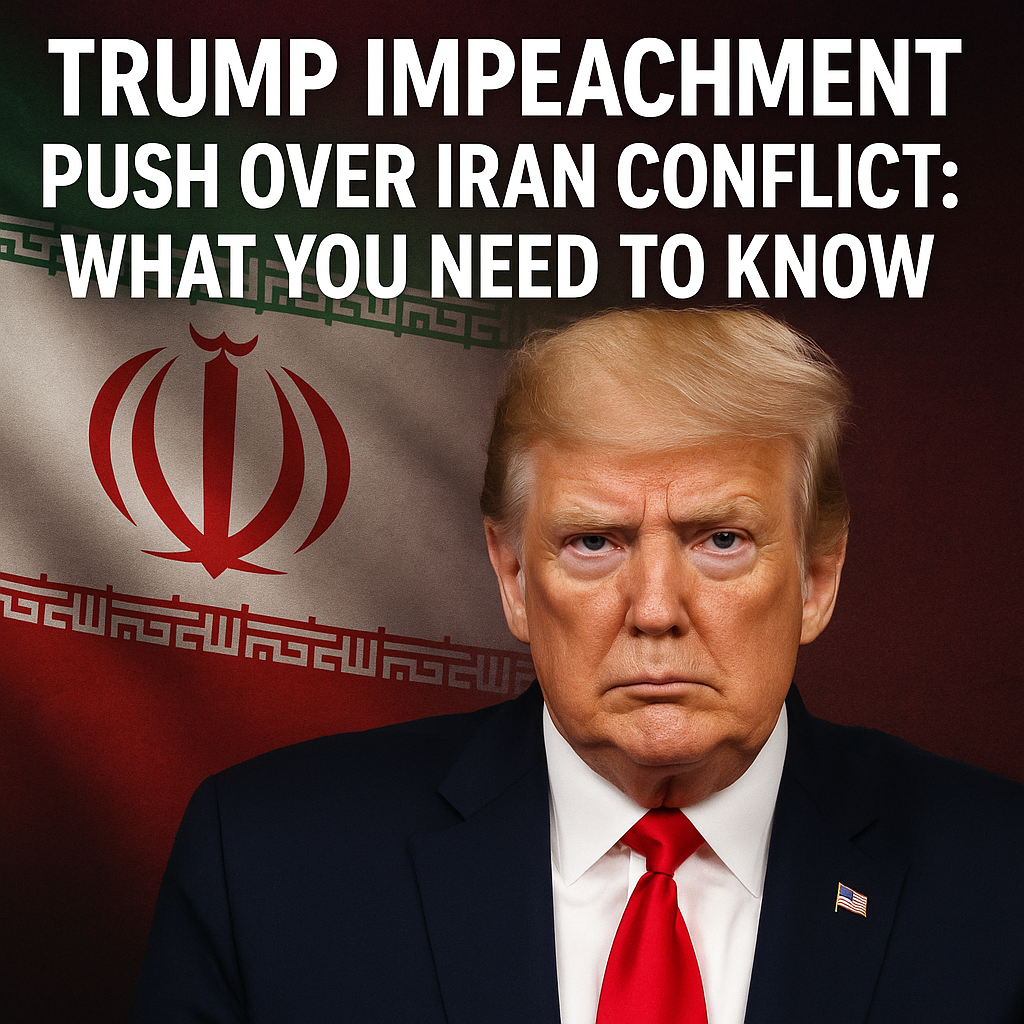
Trump Impeachment Push Over Iran Conflict: What You Need to Know

Trump Impeachment Push Over Iran Conflict: What You Need to Know
The recent developments surrounding Donald Trump’s administration have reignited discussions about impeachment, particularly in the context of U.S.-Iran relations. The simmering tension between these two nations has led to various reactions from political leaders, fueling debates on accountability and national security.

Context of the Iran Conflict
The backdrop of this political dialogue is defined by escalating military engagements and diplomatic standoffs between the U.S. and Iran. With the Biden administration grappling with decisions on how to handle a nuclear agreement that Trump previously dismantled, the complexity of the situation deepens. As Al Jazeera reports, the current U.S. foreign policy vis-à-vis Iran reflects a broader concern about regional stability and the potential for further conflict. Observers note that Trump’s past actions, including the targeted killing of Iranian General Qassem Soleimani, have contributed significantly to the ongoing hostilities.


Diverging Perspectives on Accountability
The calls for impeachment are primarily rooted in accusations that Trump’s foreign policy decisions compromise national security. According to RT, a shift in focus from Trump’s previous dealings with Iran suggests that critics see a pattern of behavior that warrants scrutiny. Some Democrats in Congress argue that Trump’s isolationist strategies inherently place the U.S. at risk and reflect a disregard for democratic norms. They have framed the impeachment push as a necessary step to ensure accountability for executive actions that may have dire consequences.


However, contrasting views exist. Many Trump supporters claim that such impeachment efforts are politically motivated and not based on substantial evidence. They argue that the former president’s approach towards Iran was a protective measure aimed at deterring nuclear aggression rather than instigating conflict. This sentiment resonates with a segment of the population that prioritizes strong national defense strategies and perceives impeachment as an infringement on the will of voters who supported Trump in the last election.
The Political Climate and Moving Forward
As the political climate oscillates between outrage and defensiveness, public opinion emerges as a salient factor. A significant portion of the American populace is deeply polarized regarding both Trump and U.S.-Iran relations. Analytics reveal that while some Americans are open to a more confrontational stance with Iran, others advocate for diplomatic resolutions. This division further complicates the discussions surrounding impeachment, as it can be dependent on how constituents perceive their leader’s actions versus the perceived threats from foreign adversaries.
Importantly, the role of media in articulating these narratives cannot be understated. Outlets like Sky News have highlighted the media’s dual role as both informers and influencers on public sentiment. Correct framing of events—whether portraying Trump as a protector against foreign threats or as a reckless leader—is pivotal in shaping narratives around the impeachment discussions.
The Road Ahead: Uncertainties and Implications
As the push for impeachment continues to gather steam, uncertainties linger. It remains unclear whether sufficient bipartisan support exists to move forward with formal proceedings. Political analysts suggest that such efforts might ultimately hinge on upcoming midterm elections, where shifts in congressional power could either bolster or thwart impeachment initiatives.
Moreover, the implications of pursuing impeachment in the context of the Iran conflict are significant. Critics argue that focusing on impeachment could detract from essential discussions about national policy and strategies in the Middle East. Conversely, proponents worry that failing to address Trump’s conduct may set a dangerous precedent for how future presidents engage with international adversaries.
In summation, the debate surrounding the impeachment of Donald Trump is not merely a political spectacle; it reflects deeper questions about governance, accountability, and the United States’ role on the global stage. As the situation evolves, both leaders and citizens alike must navigate this intricate web of political, ethical, and diplomatic considerations, recognizing that the stakes are high not just for one individual but for the nation’s standing and security as a whole.















