
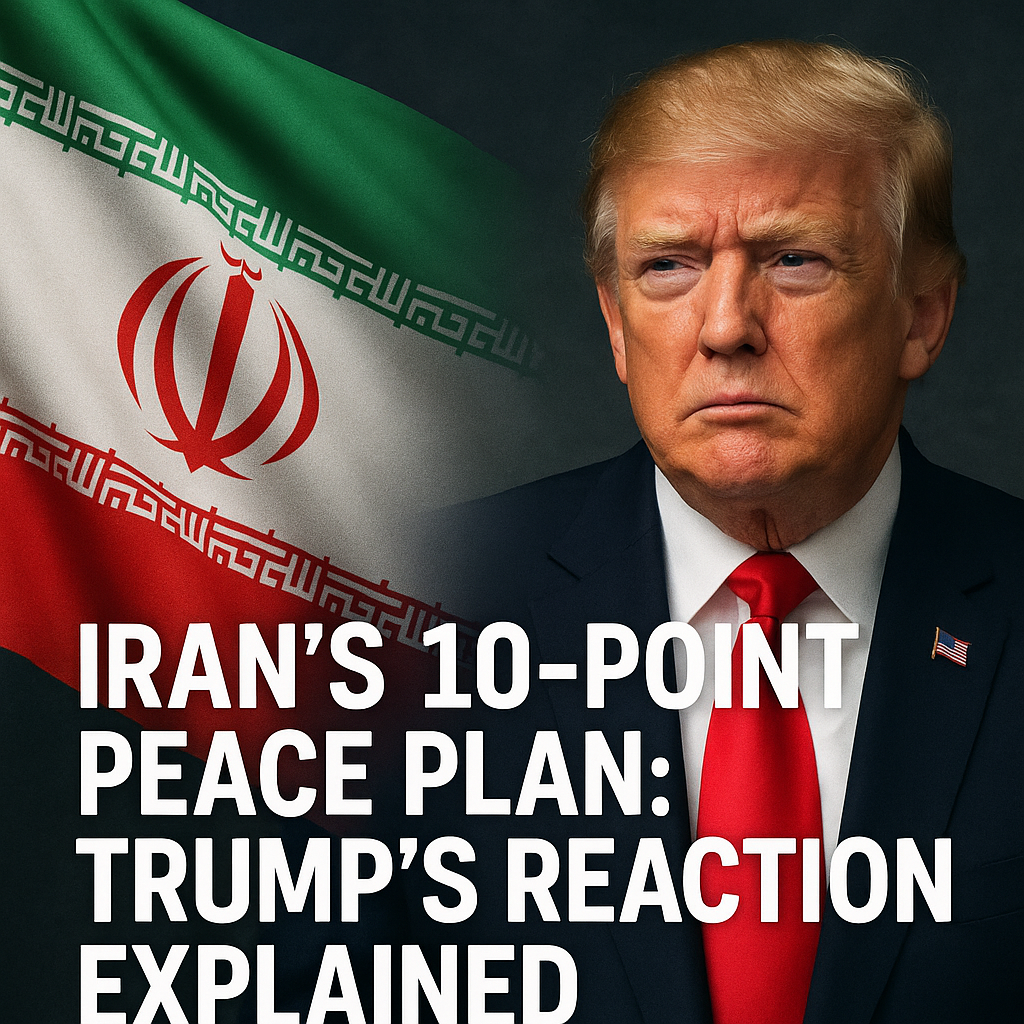
Iran’s 10-Point Peace Plan: Trump’s Reaction Explained

Iran’s 10-Point Peace Plan: Trump’s Reaction Explained
Iran’s recent unveiling of a 10-point peace plan has evoked strong reactions across the political spectrum, particularly from former President Donald Trump. As tensions in the Middle East fluctuate, understanding the complexity of Iran’s proposal and Trump’s response sheds light on both regional diplomacy and U.S.-Iran relations.

Understanding Iran’s 10-Point Peace Plan
Iran’s 10-point peace plan, presented amidst ongoing geopolitical unrest, aims to establish a framework for regional stability and dialogue. The plan focuses on key areas such as:


– Ceasefire and Dialogue: Advocating for a halt to military engagements among regional powers, urging a dialogue that encompasses multiple stakeholders.
– Energy Cooperation: Emphasizing cooperation in energy sectors, which is particularly relevant given the region’s reliance on oil and gas exports.
– Counter-Terrorism: Addressing the importance of unified efforts against terrorism, particularly in light of groups that threaten stability.
– Humanitarian Aid: Proposing increased humanitarian support to war-torn areas, acknowledging the humanitarian crises that have resulted from conflicts.


Sources like Al Jazeera state that Iran seeks to position itself as a peace broker in the Middle East, highlighting its commitment to diplomacy over military action. This aligns with Iran’s broader strategy of rebuffing U.S. pressures and sanctions.
Trump’s Reaction: A Study in Contradictions
Donald Trump’s response to the peace plan has been predictably critical. Echoing sentiments from his presidency, he emphasized a hardline approach to Iran, dismissing the proposal as a mere public relations stunt. In particular, Trump referred to Iran’s past actions in the region as inconsistent with the ideals outlined in their peace proposal.
Criticism and Skepticism
Trump’s camp argues that Iran’s past behavior undermines its credibility. Reports from Sky News indicate that Trump believes any peace initiative from Iran comes wrapped in ulterior motives, viewing the proposal as a potential tactic to ease sanctions without yielding substantive changes in their regional behavior.
However, some analysts suggest that Trump’s skepticism may overlook potential pathways for diplomacy. A number of commentators contrast his responses with more nuanced positions from other political figures who advocate for at least exploring Iran’s proposal as a starting point for diplomatic engagement.
A Divided Perspective
While Trump’s critique represents a hardened stance, other viewpoints reflect a more diverse understanding of the scenario. For instance, advocates for diplomacy stress the importance of dialogue, asserting that dismissing the plan outright could preclude opportunities for conflict resolution.
Key points of contention include:
– Trust Issues: Critics of both Iran and Trump highlight the difficulty of establishing trust. Past failures in negotiations weigh heavily on current discussions, leading many to question the viability of Iran’s peace initiatives.
– Regional Dynamics: The geopolitical landscape of the Middle East is complex, and reactions to Iran’s proposal vary greatly among different countries. Some regional actors might support a dialogue with Iran, while others are far more hesitant, fearing it could embolden Iranian influence.
The Implications Ahead
The broader implications of this peace plan and Trump’s response cannot be understated. As President Biden’s administration continues to navigate the fraught landscape of U.S.-Iran relations, the dialogue surrounding Iran’s peace plan might herald different foreign policy strategies. While Trump’s approach has leaned heavily towards isolation and pressure, some analysts argue that a shift towards engagement (even with skepticism in mind) could help de-escalate tensions in the long run.
In conclusion, the landscape of Iran’s 10-point peace plan and Trump’s reaction highlights a significant divide in how to approach one of the world’s most complex geopolitical issues. As discussions continue, it remains uncertain whether diplomatic overtures will yield constructive outcomes or become another layer in the existing web of conflict. Engaging with multiple dimensions of this story will be essential as nations worldwide consider their next steps in a region that has long been defined by its challenges.
—
This synthesis of perspectives creates a clearer picture of the challenges and opportunities that lie ahead. As observers of international affairs, staying informed and balanced is crucial for understanding the dynamics at play in the Middle East.















