
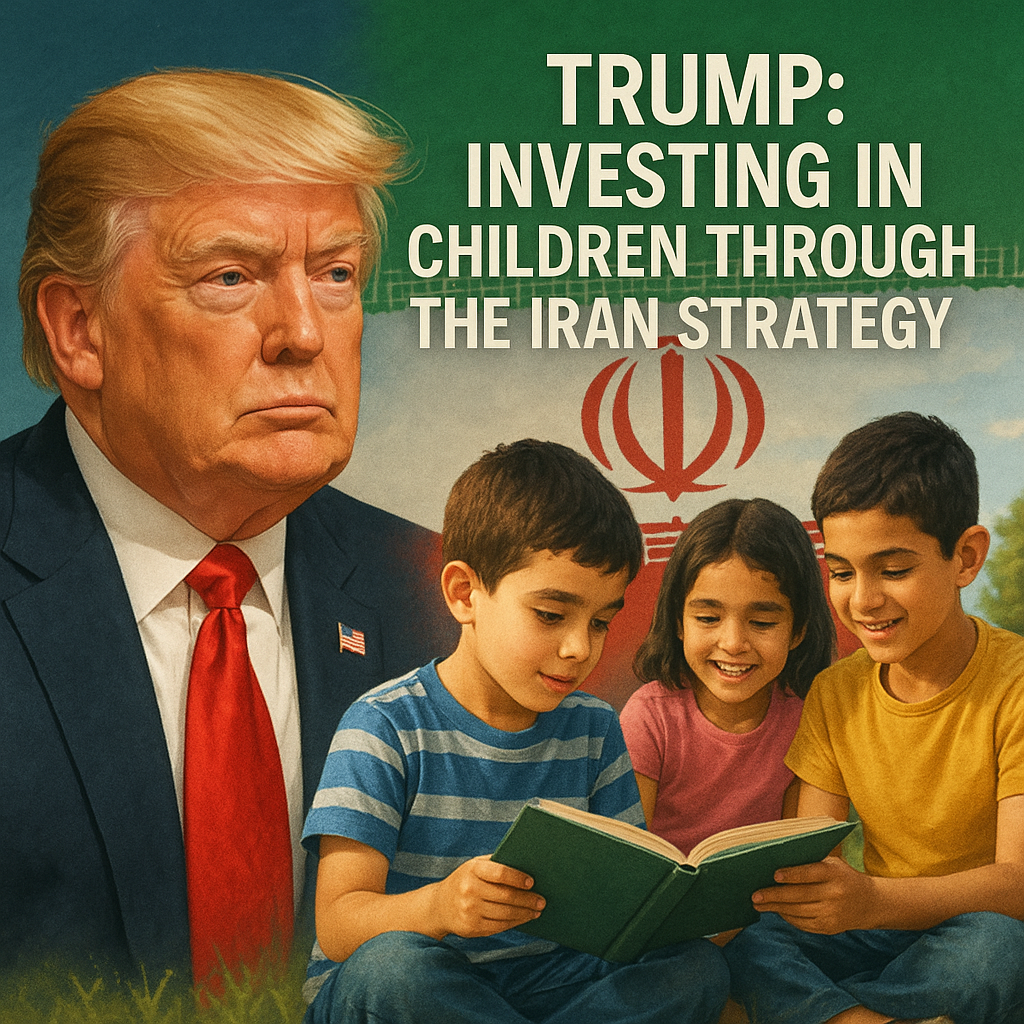
Trump: Investing in Children Through the Iran Strategy

Trump: Investing in Children Through the Iran Strategy
Donald Trump’s approach to foreign policy has always been a topic of polarized discussion, especially concerning his strategies related to Iran. Recently, he has woven a narrative that positions the outcome of U.S.-Iran relations as pivotal not just for international stability, but also for the future of American children. This notion advocates that effective foreign policies echo through generations, influencing everything from education to social welfare.

The Argument for a Tough Stance
In a recent statement, Trump articulated that a resolute approach to Iran is essential for securing a brighter future for children not just in the United States, but globally. Trump emphasized that a strong foreign policy can foster stability, thereby shielding children from the repercussions of geopolitical chaos. His perspective resonates with various commentators who argue that robust national security measures, including sanctions and diplomatic pressures on Iran, can lead to a more peaceful world, wherein children can thrive without the specter of war hanging over them.


Prominent voices from conservative platforms posit that a hard stance on Iran could deter aggression, allowing resources and focus to shift away from military expenditures toward education and child welfare programs. “When we show strength, adversaries are less likely to provoke conflict,” argued a defense analyst on RT, which supports Trump’s assertion. This line of reasoning holds that by minimizing threats overseas, investment can flow into community initiatives that bolster childhood development.


Counterarguments and Economic Considerations
Nevertheless, critics of this strategy argue that a confrontational stance can have dire long-term ramifications. Perspectives from outlets like Al Jazeera suggest that sanctions and military maneuvers often exacerbate regional instability, indirectly perpetuating cycles of poverty and violence that detrimentally impact children. A less aggressive approach, they argue, could facilitate avenues for diplomacy and economic cooperation, ultimately creating a more favorable environment for child welfare.
Charity organizations and educational advocates have pointed to the effects of such policies on educational funding. With budgets often strained by military engagements, resources for American children are compromised. A budget that prioritizes military spending over educational initiatives risks undermining the very future Trump claims to protect.
Additionally, some analysts assert that the economic consequences of a tough Iran strategy could ripple back to American families. Sky News reported that sanctions on Iran can lead to increased gas prices and economic uncertainty in the U.S., disproportionately affecting low-income households. This raises critical concerns about whether aggressive foreign policy truly aligns with the objective of investing in American children.
A Complex Intersection of Foreign Policy and Child Welfare
The intersection of foreign policy and child welfare presents a complex web of considerations. While many support the idea that a strong stance on Iran can protect future generations, evidence suggests the impact of such strategies can be multifaceted. The premise that military funds could redirect to domestic programs remains contentious; critics argue that prioritizing military might can blink over the pressing needs at home.
Ultimately, the question emerges: can a truly protective foreign policy be established without sacrificing domestic welfare? Observers from various sectors will continue to debate this.
A Balanced Perspective Moving Forward
Navigating the intricacies of U.S.-Iran relations shows that there is no uniform path to achieving stability and welfare for children. It’s essential to find a middle ground where both national security and domestic investments can coalesce.
The diverse views surrounding Trump’s Iran strategy illustrate that while security policies may aim to protect the next generation, they must also nurture educational and economic growth at home. In a world where the stakes are high, policies that integrate both dimensions could lead to sustainable outcomes—investing in children today while laying the groundwork for a secure tomorrow.
As public dialogue continues, it remains vital to explore both the risks and advantages of different strategies. Only through balanced, informed discussions can society work toward a future that genuinely prioritizes the welfare of its children amidst the challenges posed by global politics.















