Trump: Iran Deal ‘All Signed’ as Tehran Demands Lebanon Action

Trump: Iran Deal ‘All Signed’ as Tehran Demands Lebanon Action
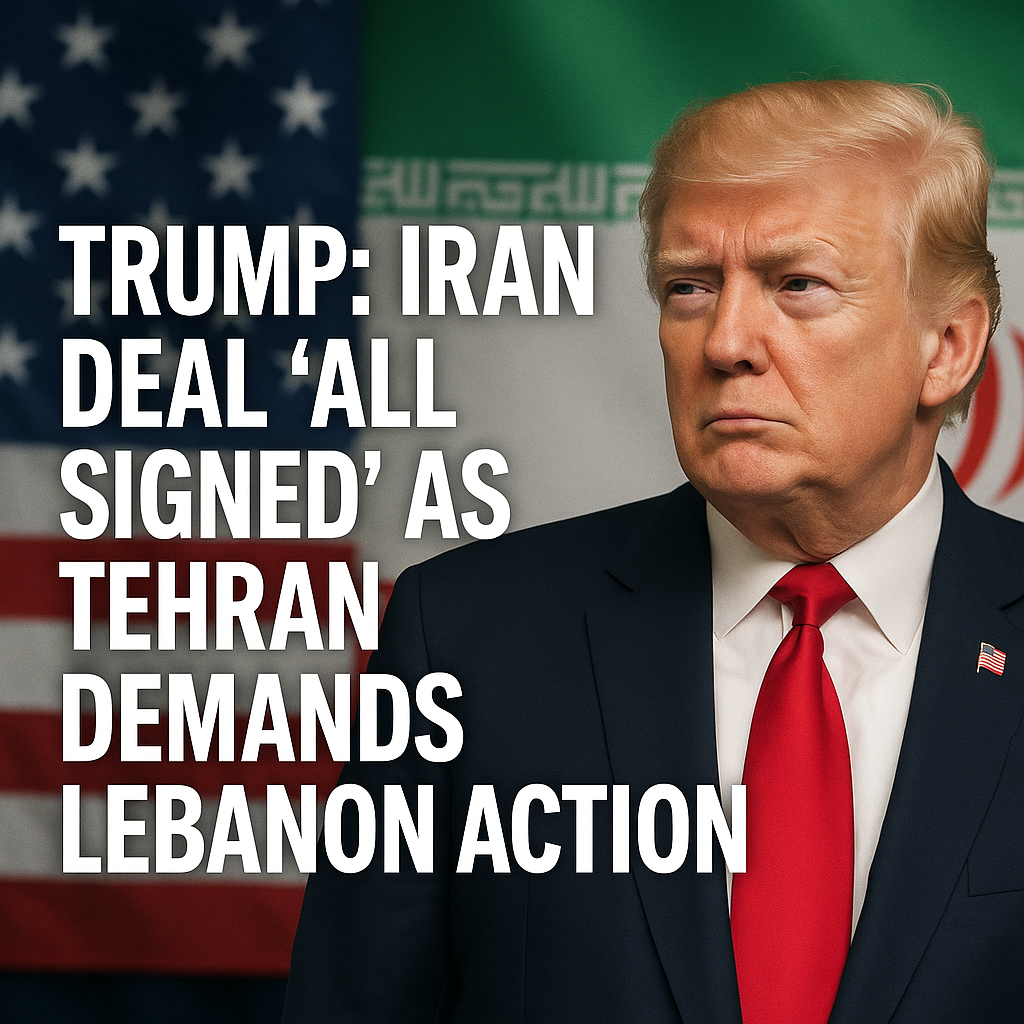
Former President Donald Trump recently claimed that an agreement regarding Iran has been finalized, stating, “All signed,” amidst escalating tensions in the Middle East. This statement comes in the context of Iran increasing demands, particularly concerning Lebanon, a nation where Iranian influence has long been a contentious issue. The remarks have sparked various reactions across the global political landscape, revealing a complex interplay of diplomacy, regional power dynamics, and differing national interests.

Understanding the Context of the Claim
Trump’s declaration aligns with recent reports indicating that Iran is seeking to leverage its negotiations not only for a favorable nuclear agreement but also to influence its regional ambitions. As highlighted in various news reports, Tehran seems to be demanding greater action regarding Lebanon, specifically in relation to Hezbollah, the powerful militant group and political party that has been closely allied with the Iranian government.


Analysts argue that Trump’s claim complicates an already intricate diplomatic environment. While some interpret it as a potential path to peace, others see it as a misunderstanding or oversimplification of the complexities involved. Connecting Iran’s nuclear intentions with Lebanon’s proxy politics may distort the primary aim of securing nuclear compliance.


Iran’s Regional Ambitions
Iran’s position in Lebanon is pivotal, primarily due to its support for Hezbollah, which plays a significant role not only in Lebanese politics but also in broader conflicts, such as those involving Israel and Syria. According to multiple sources, Hezbollah’s military capabilities, bolstered by Iranian support, have made Lebanon a focal point in Iran’s strategic calculus.
A senior Iranian official recently asserted that any agreement must address the situation in Lebanon, indicating Tehran’s unwillingness to compartmentalize its regional influence from negotiations. This multi-faceted approach complicates the situation, as stakeholders in the U.S., Europe, Israel, and within the GCC must now consider how a nuclear deal with Iran could impact regional stability.
Diverging Perspectives on U.S.-Iran Relations
Within the political climate surrounding the negotiations, reactions to Trump’s claims vary significantly. Some experts state that Trump’s assertive language may reignite hostility and skepticism among U.S. allies and foes alike.
Conversely, other commentators suggest that a more robust relationship with Iran, particularly if it leads to reduced tensions regarding nuclear capabilities, could benefit U.S. foreign policy in the long run. As noted by some analysts, the reinterpretation of the Iran deal by the Trump administration aimed to reflect a more aggressive stance, which might resonate with his base yet alienate other international partners focused on a more diplomatic approach.
The discussion surrounding the deal is vital as the consequences of any agreement—or lack thereof—could profoundly impact the geopolitical landscape. As noted in sources such as Al Jazeera and Sky News, miscommunication or misinterpretation of the commitments made by either side could escalate hostilities rather than pave the way for dialogue.
The Road Ahead: Challenges and Opportunities
The road to a conclusive agreement, especially with Trump’s claim now adding to the mix, is fraught with challenges. The often-opposing views on how to approach Iran must be reconciled if any positive change is to unfold.
Potential key considerations include:
– Verification Mechanisms: Any agreement would require solid verification to ensure compliance from Iran concerning its nuclear program and refrain from exacerbating tensions in Lebanon.
– Regional Coalition-Building: Engaging regional partners and stakeholders, particularly those wary of Iranian influence, will be critical for building consensus and ensuring any deal carries broader regional support.
– Public Sentiment: The domestic implications within the U.S. regarding Trump’s statements and evolving relationships with Middle Eastern powers will also play a role in shaping the trajectory of negotiations.
Conclusion: An Uncertain Future
While Trump’s proclamation that “all signed” refers to a potential agreement, the reality of geopolitical negotiations is far less straightforward. The intersection of Iran’s nuclear ambitions and its regional assertiveness, particularly regarding Lebanon, introduces significant uncertainty.
The implications of these negotiations extend beyond the immediate parties enfranchised in discussions; they envelop global diplomacy, regional security, and the foundational elements of international relations. Both optimism and skepticism remain valid perspectives in light of the evolving narrative surrounding the Iran deal, leaving the international community grasping for clarity in a complex and fluid environment.