
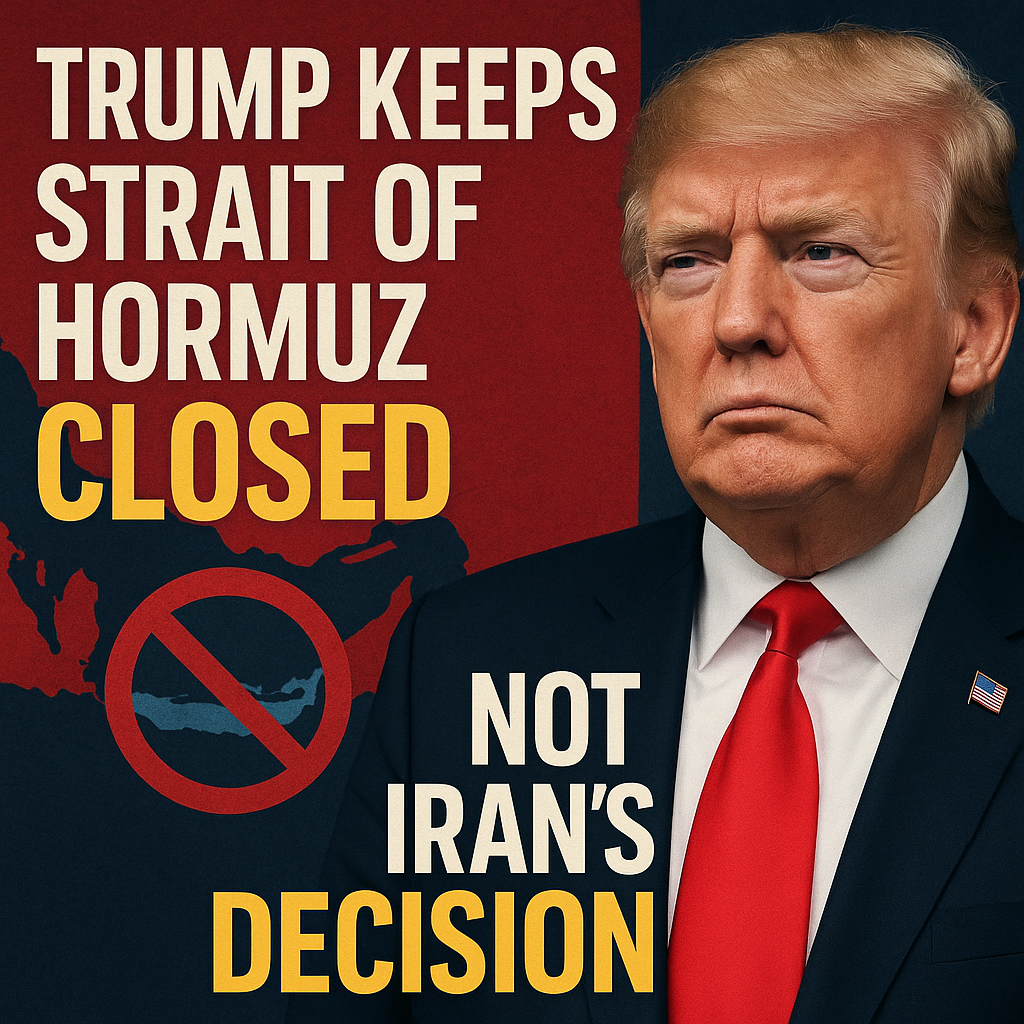
Trump Keeps Strait of Hormuz Closed, Not Iran’s Decision

Trump Keeps Strait of Hormuz Closed, Not Iran’s Decision
Recent developments have seen former President Donald Trump assert that he is the key figure keeping the Strait of Hormuz closed, contrary to Iran’s claims of control over this strategically vital waterway. This assertion highlights the ongoing tensions in the region and raises intriguing questions about geopolitics and regional stability.

Understanding the Strait of Hormuz
The Strait of Hormuz is a narrow passage connecting the Persian Gulf and the Gulf of Oman and is one of the most crucial maritime chokepoints in the world. Approximately 20% of the global oil supply navigates this route, making it a focal point for international trade and energy security. The waterway’s significance has also made it a hotspot for military presence and geopolitical maneuvering.


Trump’s Assertions and Implications
In recent statements, Trump has emphasized that the closure of the Strait is not dictated by Iranian authorities but rather a decision influenced by U.S. policy. His comments come amid heightened tensions between Washington and Tehran, which have further complicated international relations.


Trump argues that U.S. military presence in the region—and the readiness to confront perceived threats—maintains pressure on Iran, thereby preventing them from acting aggressively in the Strait. In his view, the closure serves as a strategic lever to deter Iranian advances and protect global shipping lanes.
However, perspectives on this issue differ. Some experts believe Trump’s comments oversimplify a complex situation. According to a report by Al Jazeera, Iran maintains that any obstruction of maritime navigation would originate from U.S. actions, casting doubt on Trump’s narrative. The tensions and countermeasures between these nations create a cycle of antagonism that often clouds the actual mechanisms influencing navigation through the Strait.
Iran’s Role: A Counter-Narrative
Conversely, Iranian officials have frequently stated that they control the Strait of Hormuz and would close it in response to threats against their national security. This claim points toward their military capabilities, including naval assets stationed in the Gulf.
Reports from various news outlets reveal that Iranian military exercises near the Strait are often viewed as displays of power, showcasing their readiness to respond to any encroachment. In light of Trump’s statements, Iranian leaders seem to perceive an external attempt to erode their sovereignty, using the closure narrative to rally domestic support and maintain a stance of defiance against Western influence.
The Larger Geopolitical Landscape
The dynamic plays out against a backdrop of shifting alliances and regional aspirations. Saudi Arabia, a U.S. ally, concurrently engages in its own military buildup, aiming to assert its influence in the Gulf. With Iran and Saudi Arabia as historical rivals, their contest for regional dominance often finds expression through proxy conflicts across the Middle East. This tension spills over to impacts in the Strait, whereby any military action could rapidly escalate into a broader conflict.
Moreover, the involvement of other international players complicates the scenario further. For instance, China and Russia have interests in maintaining peace in the region, often aligning with Iran to prevent unilateral actions by the U.S. Understanding these intricate relationships can help elucidate why narratives like Trump’s and Iran’s are both influenced by and reflective of broader geopolitical themes.
Conclusion: A Balance of Narratives
The statements regarding control over the Strait of Hormuz reveal deeper thematic undercurrents affecting U.S.-Iran relations and the geopolitical stability of the Middle East. While Trump’s stance emphasizes American influence, Iran asserts its agency over a critical resource and security corridor.
As the situation evolves, the lack of consensus around control of the Strait underscores the complexities of international diplomacy. Both sides, while holding firmly to their narratives, engage in a tug-of-war that could have severe implications for global oil markets and regional security.
For now, the closure of the Strait hinges not just on the claims of one nation or the other, but rather on the intricate web of alliances, threats, and responses that characterize this volatile geopolitical theater. Only through careful navigation of these relationships can a more stable approach to ensuring free passage through the Strait be achieved.















