
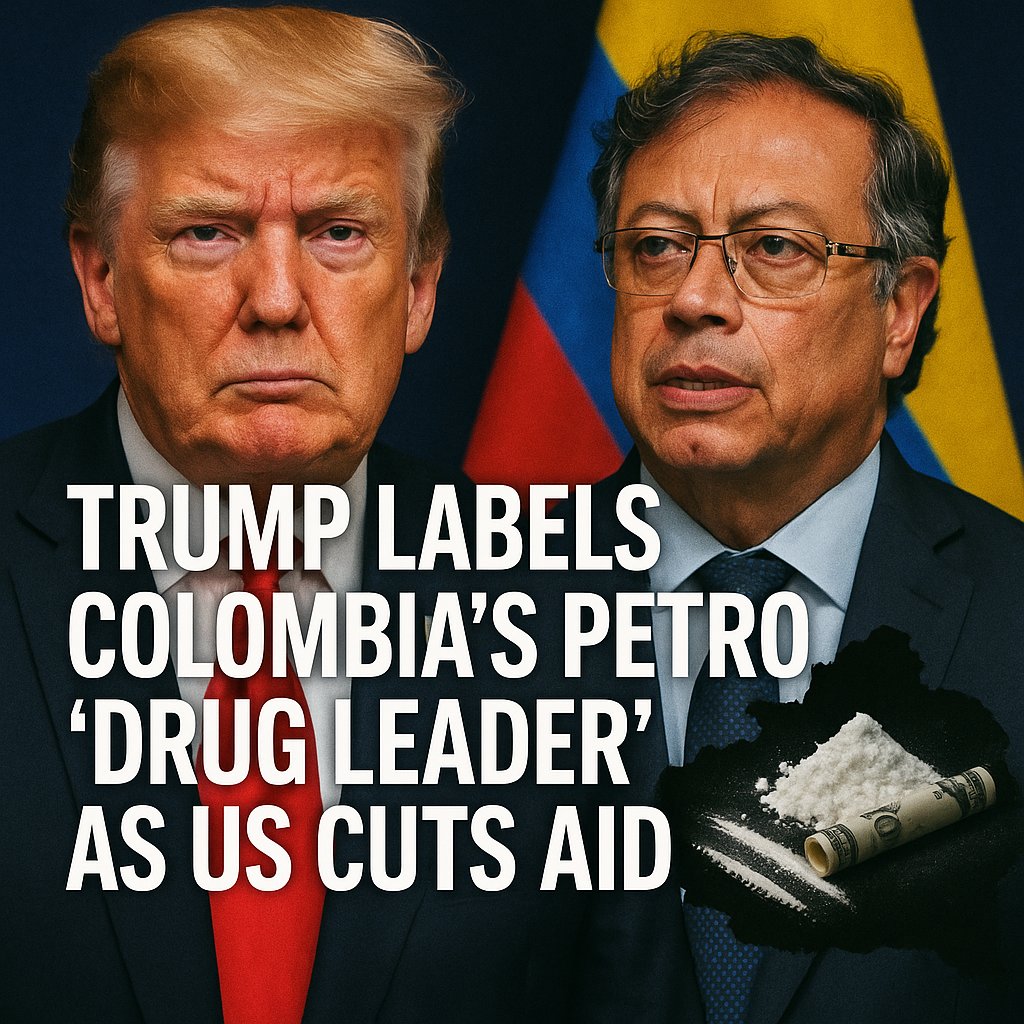
Trump Labels Colombia’s Petro ‘Drug Leader’ as US Cuts Aid

Trump Labels Colombia’s Petro ‘Drug Leader’ as US Cuts Aid
In a recent political uproar, former U.S. President Donald Trump has publicly labeled Colombia’s President Gustavo Petro as a “drug leader,” a statement that has ignited discussions on international relations and drug policy. This declaration comes on the heels of announcements regarding U.S. cuts to aid for Colombia, raising questions about the future of bilateral relations and the broader implications for Colombia’s struggle with narcotics.

The Context: U.S.-Colombia Relations
Historically, the relationship between the United States and Colombia has been complex and multifaceted. The U.S. has invested billions in Colombian drug war efforts over the decades, aiming to combat cocaine trafficking and insurgency. However, recent shifts in U.S. strategy—coupled with growing criticisms of Colombia’s governance—are creating a new backdrop for diplomatic relations.


Following Trump’s provocative comments, many are left wondering how this rhetoric aligns with U.S. foreign policy goals. Political analysts underscore that the timing of these remarks coincides with a significant reduction in U.S. aid earmarked for Colombia. According to reports from Al Jazeera, the U.S. plans to cut military assistance, emphasizing a shift from hard power to a more nuanced diplomatic approach. This decision suggests that rather than prioritizing security, the U.S. may seek to focus on broader developmental initiatives.


Diverse Perspectives on Petro’s Administration
Petro, who took office in August 2022, came into power vowing to tackle inequality and rebuild Colombia’s fragile state institutions. His progressive agenda has garnered both support and criticism. Supporters argue that he is attempting to address systemic issues that contribute to drug violence, while detractors—many of whom align with Trump’s views—warn that Petro’s policies may inadvertently enable the very narcotics strategies they seek to dismantle.
On one hand, Sky News highlights that Petro’s administration is navigating a challenging landscape, marked by increased violence from drug cartels. Critics assert that his approach may lack efficacy, leading to setbacks in established anti-drug campaigns. The tension is palpable, as these skeptics echo sentiments similar to Trump’s harsh assessments, warning that Petro’s government could destabilize efforts made over the last two decades.
Conversely, proponents argue that labeling Petro as a “drug leader” oversimplifies the complexities of Colombia’s drug crisis. They suggest that such inflammatory rhetoric can undermine constructive dialogue necessary for implementing effective policies. Indeed, a closer examination of Colombia’s drug problem reveals a nuanced reality: it is shaped by historical roots, socioeconomic disparities, and the continuous evolution of criminal organizations.
Implications of Aid Cuts
The proposed cuts to U.S. aid could have far-reaching consequences for Colombia as it grapples with ongoing economic challenges and the burgeoning drug trade. As the U.S. shifts its focus, there are concerns that vital support for reinstating law and order, particularly in rural regions, may evaporate. Critics of the aid cuts argue that such a reduction could lead to a power vacuum, allowing drug cartels to thrive unchallenged.
However, some analysts suggest that these changes could prompt Colombia to develop a more self-reliant strategy for dealing with drug-related issues. The idea is that without heavy reliance on U.S. funding, the Petro administration might feel pressured to innovate more sustainable solutions that address the roots of drug trafficking—such as poverty and lack of access to education.
Still, uncertainties loom over the effectiveness of these proposed strategies. The Colombian public remains deeply divided on Petro’s policies, with many expressing skepticism about whether his administration can deliver on its promises amid intense external pressure and internal dissent.
The Bigger Picture: A Shift in Global Perspective
Trump’s statements, while controversial, are reflective of a broader conversation about how international narratives shape democratic governance and policy implementation in Colombia. As a global player, the U.S. carries significant influence, and its actions resonate well beyond its borders. Countries like Colombia, often viewed through a lens of drug-related stigma, grapple with the fallout of international perceptions.
Moreover, this situation raises questions about the ethical implications of U.S. involvement in Latin America. If the U.S. continues to label leaders and nations in this manner, it risks perpetuating a cycle of punitive diplomacy that may not address the underlying issues faced by these countries.
Colombia’s future—and indeed its international relations—may hinge on how effectively Petro can navigate these turbulent waters while managing the expectations and criticisms from powerful allies. As both nations recalibrate their approaches, the potential for a more collaborative effort that balances security concerns with socioeconomic development remains an open, crucial question.
In summary, the dialogue surrounding Trump’s comments about Petro and the implications of U.S. aid cuts underscores the intricate web of international relations, national policy, and the pressing need for comprehensive solutions to complex issues like drug trafficking. As debates continue, it is imperative to remain engaged with the multifaceted realities of Colombia’s situation, recognizing that simplistic labels do not capture the entirety of a nation’s struggles and aspirations.















