
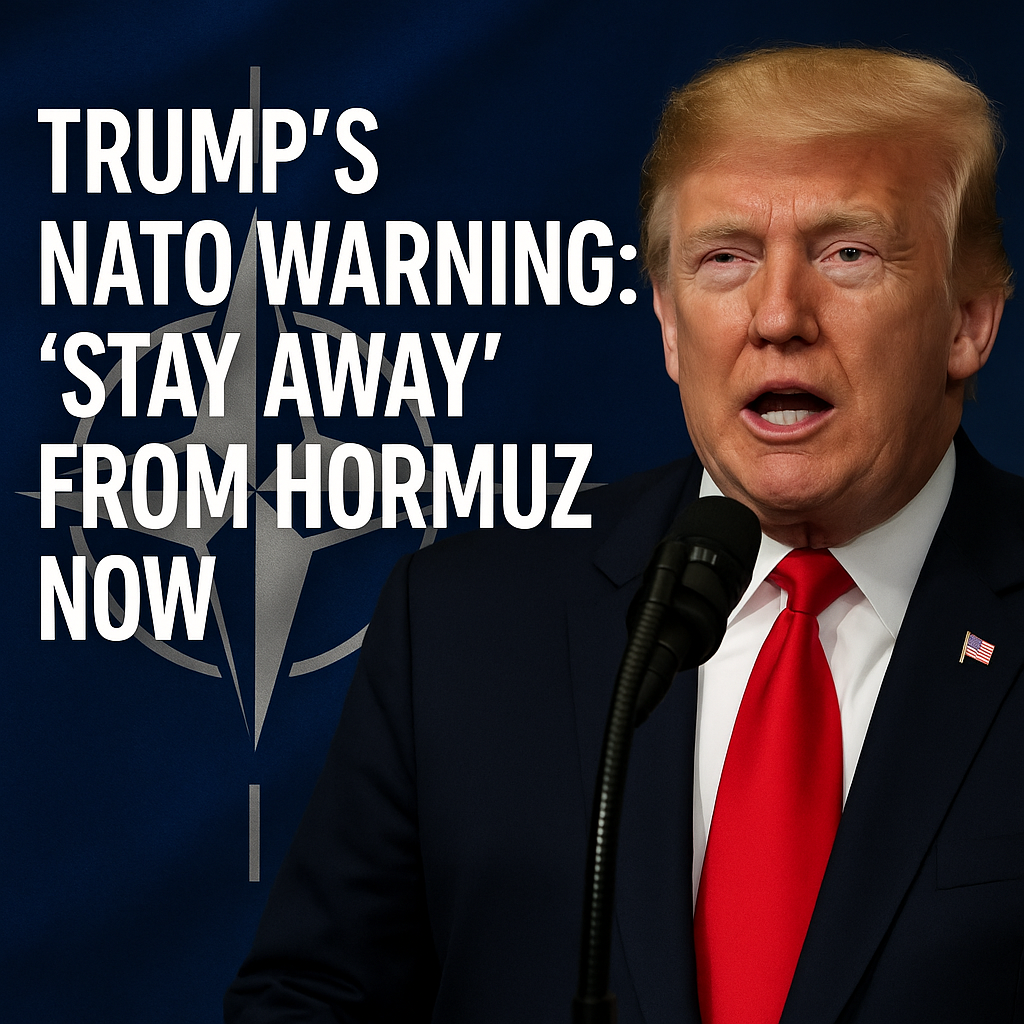
Trump’s NATO Warning: ‘Stay Away’ from Hormuz Now

Trump’s NATO Warning: ‘Stay Away’ from Hormuz Now
Former President Donald Trump’s recent statement urging NATO to “stay away” from the Strait of Hormuz has garnered significant attention and mixed reactions across the political spectrum. This provocative remark raises important questions about military strategy, international alliances, and U.S. foreign policy.

The Context of Trump’s Statement
Trump’s warning emerged in light of heightened tensions in the Middle East, particularly involving Iran and maritime security in the Strait of Hormuz, a critical channel for oil transportation. His assertion that NATO should avoid engagement in this strategically vital region is part of his broader skepticism towards multilateral military commitments, particularly those involving U.S. allies.


In a recent interview, Trump commented, “NATO is a useless organization when it comes to conflicts that matter, and we should keep them away from Hormuz.” This statement not only reflects his isolationist philosophy but also highlights his perception of NATO as increasingly irrelevant in contemporary geopolitical conflicts. Critics argue that such sentiments risk undermining longstanding alliances, complicating the U.S.’s capacity to exert influence in volatile areas.


Diverging Perspectives on NATO’s Role
Opinions about Trump’s assertion differ widely. Proponents of his view highlight that NATO should focus on its original purpose—collective defense in Europe—rather than extending its reach into the Middle East. Their argument rests on the premise that intervention in regions like Hormuz does not align with NATO’s charter and could escalate existing tensions with Iran, leading to further conflict rather than stability.
On the other hand, advocates for NATO’s involvement in the region argue that the alliance plays a crucial role in ensuring maritime security, particularly for the flow of oil, which is vital for the global economy. According to a report from Al Jazeera, a continued NATO presence could act as a deterrent against Iranian aggression, ensuring safe passage for vessels transiting through the strategically significant strait.
Key Arguments For and Against NATO’s Role in Hormuz:
– For NATO Involvement:
– Enhances maritime security and ensures free navigation.
– Strengthens alliances and collective defense against regional threats.
– Provides a coordinated response to potential conflicts.
– Against NATO Involvement:
– Diverts focus from European defense needs.
– Risks entangling NATO members in conflicts that don’t directly involve them.
– Can be perceived as provocation by regional powers like Iran.
The Implications of Isolationism
Trump’s urging to “stay away” from Hormuz reflects a broader trend of isolationism that has emerged in U.S. politics. This approach raises concerns about the future of international diplomacy and the U.S.’s role as a global leader. Withdrawing from global hotspots can lead to a power vacuum, as demonstrated in previous conflicts where a lack of U.S. presence allowed extremist groups to gain footholds.
Several analysts, including geopolitical experts featured in Sky News, caution that this isolationist perspective may be shortsighted. “While it’s important to reassess military commitments,” they argue, “abandoning strategic partnerships can lead to increased instability, not just in the Middle East, but globally.” Without practical support or oversight, regional players might engage in unchecked aggression, further complicating diplomatic relations.
A Balanced Approach: Navigating Complexities
As the debate continues, a balanced approach may be necessary—one that does not wholly reject either the traditional role of NATO or the emerging necessity for a reevaluation of commitments. The contemporary geopolitical landscape is riddled with complexities, from Chinese expansionism in the South China Sea to Russian aggression in Eastern Europe.
Exploring collaborative security arrangements that involve NATO may be a path forward. Expanding NATO’s framework to include cooperative security measures without deep involvement in regional conflicts could maintain alliances while reducing direct military engagement. This nuanced strategy could appease calls for both a strong U.S. presence and the desire for non-interventionism that resonates with parts of the American electorate.
Conclusion: The Path Ahead
Trump’s directive to NATO reflects a significant cultural and political shift in U.S. foreign policy thinking. As NATO contemplates its role in a rapidly evolving international landscape, leaders must tread carefully, balancing calls for non-involvement with the need for collective security. Engaging in open dialogues about the future of military partnerships may yield more comprehensive solutions that promote stability without compromising national interests. The complexities of global politics mean that there are no easy answers, but discussions grounded in mutual respect and understanding may pave the way toward a more secure future.















